 English
 Dutch
Dutch Japanese
 Korean
 Chinese
Turkey in July: Weather, Sea Temperatures and Where It’s Cooler
Turkey in July: Istanbul 29.7 °C (85 °F), Ephesus 36.4 °C, Cappadocia nights 13.7 °C, sea 24–28 °C. Where it’s cooler and private routes from USD 1,690.



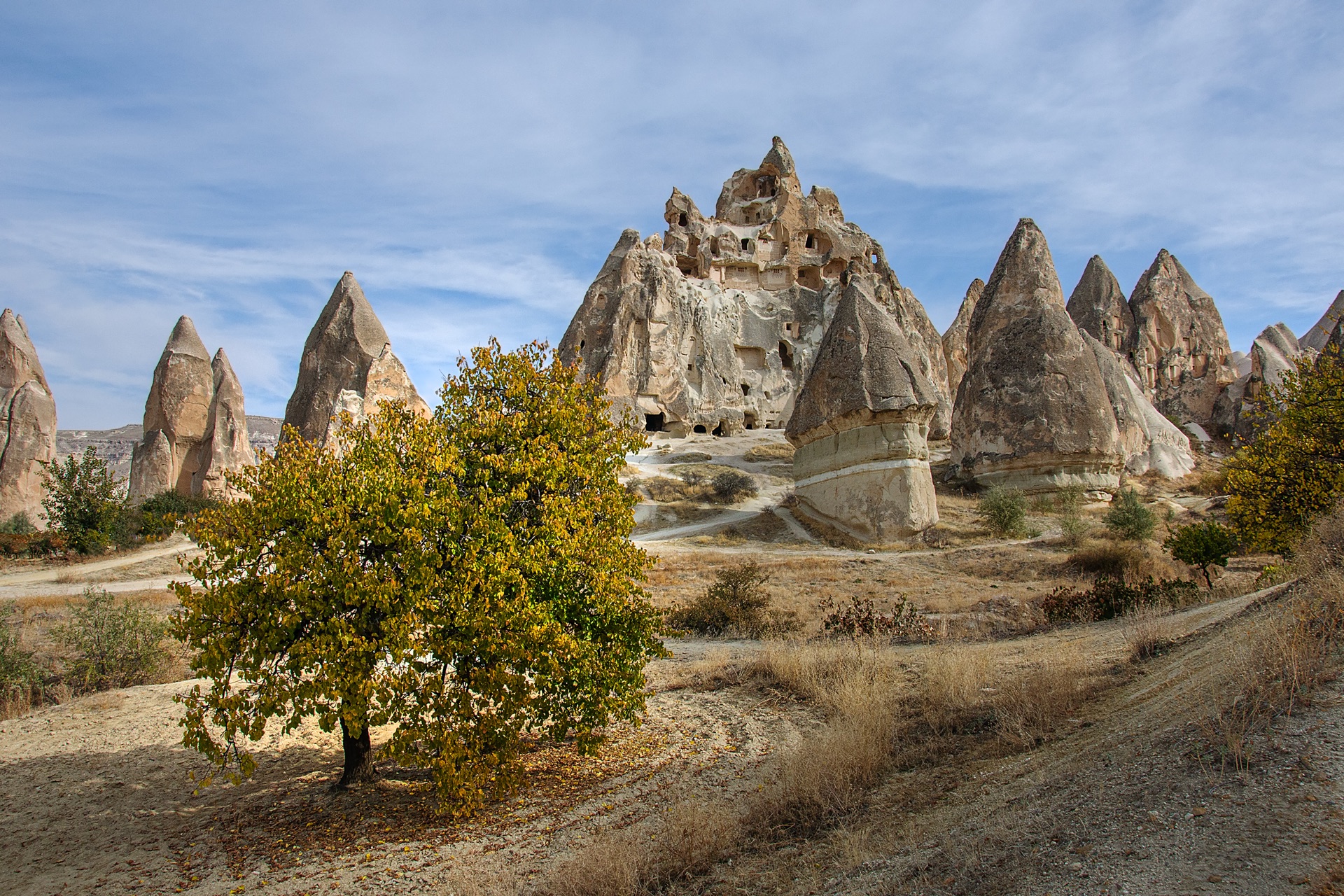
Quick Answer: Turkey in October is warm on the coast and cold at dawn inland. The sea is still 26.1 °C, Cappadocia’s hot air balloons fly on roughly 90% of mornings, and no later month holds both. Long-term station records show the temperature in Turkey in October ranging from 26.6 °C by day in Antalya to 20.6 °C in Istanbul, while Cappadocia reaches 18.3 °C in the afternoon and falls to 6.8 °C before dawn. The month turns around the twentieth, when daylight drops under eleven hours and the coast starts closing. Land arrangements for a private Turkey tour cost USD 1,690–4,450 per adult. That covers a private vehicle with driver, a licensed local guide in every region and hand-picked 4-5 star (boutique) hotels with family rooms, plus breakfasts, listed entrance fees and the route’s domestic flights. Turkey Family Tours is TURSAB-licensed (no 13538), and every enquiry is answered with a written day-by-day plan and a fixed quote within 24 hours. Get a Private Quote →
Turkey in October is the month its coast and its interior finally agree. The weather in Turkey in October is two climates: the Mediterranean holds 26.1 °C against a 20.6 °C Istanbul afternoon, and Cappadocia’s hot air balloons fly on roughly 90% of mornings. The hinge between the two falls near the twentieth.
Planning a private Turkey tour?
We build family-paced private itineraries with hand-picked 4-5 star hotels and send a written plan and fixed price within 24 hours.
October is the last month of the year that holds a swimmable sea and a 90% hot air balloon rate together, and the only one that adds full autumn colour to both. In July the Mediterranean is perfect and Cappadocia is 30 °C of glare on a treeless valley floor. In November the interior is beautiful and the sea has dropped below the line children will stay in. October is the narrow overlap, and it is narrow on purpose: roughly three weeks wide.
Three numbers carry the month. The Mediterranean averages 26.1 °C across October and is still 25.4 °C after the fifteenth. Cappadocia’s hot air balloons fly on about 90% of mornings, among the highest rates of any month. And Istanbul sits at 20.6 °C by day. That is walking weather for a full day in Istanbul’s old city without a forced midday break.
What you give up is daylight and certainty. Istanbul loses an hour and twenty minutes of daylight across the month, from 11.7 hours on the first to 10.4 on the last. Rain arrives too: nine or ten wet days in Istanbul, though only five on the Mediterranean. And the second half of the month is measurably a different holiday from the first, which is the single most useful thing to understand before choosing dates.
For a family choosing between the shoulder months, the decision is usually made by one question: does the trip need swimming in it? If yes, October, and preferably the first three weeks. Our 12 days in Turkey route fits that window, with two nights each at Antalya and Fethiye, the stretch that stays swimmable all month. If no, November gives you emptier sites and wider availability for the same monuments. Our month-by-month guide to visiting Turkey sets the whole year side by side.
A five-day Istanbul, Cappadocia and beach trip in the last week of the month. The coastal flight costs an afternoon, the sea sits at 25.4 °C under a 24 °C sky that makes it feel colder, and the day ends at 17:41 in Cappadocia. We move the beach into the first half of the month or drop it. Dropped, the last week suits our 7 day Turkey itinerary instead, with two Cappadocia mornings at peak autumn colour and an Ephesus day as the crowds thin.
Three things move at once around 20 October, and they move in the same direction. The sea drops below the line at which children will stay in it. Daylight falls under eleven hours, which shortens what fits between breakfast and sunset. And the seasonal coastal businesses begin standing down for the winter: gulets, beach clubs, some paragliding operations. Which side of the twentieth a family lands on decides most of what the tailor-made itinerary can hold.
The sea passes 26 °C around the fifteenth and daylight passes eleven hours around the twentieth, and the coastal businesses follow within days. That is why the same itinerary priced for 8 October and 28 October is not the same holiday, even though the brochure text is identical.
Until roughly the twentieth, a route can hold everything a family wants: Istanbul, Cappadocia, Ephesus and a genuine beach day. The Mediterranean sits between 25 and 27 °C through that stretch. Sunset in Cappadocia is after 18:00, so a hot air balloon morning and a full valley afternoon fit into one day without rushing either. Gulet day-sails out of Fethiye and Göcek run on their normal schedule.
The main autumn half-term week lands in the last third of the month.
After the twentieth the coast becomes a place families look at rather than swim in. The water is still 25.4 °C on paper. But the air is falling towards 24 °C, and a low sun takes the warmth out of a wet child within minutes. In exchange the interior improves. Cappadocia’s autumn colour is at its peak in the valleys, and the light stays low from morning to dusk. Crowds at Ephesus and Pamukkale thin noticeably.
The last ten days also contain 29 October, Republic Day, which is a national holiday with real operational consequences, covered further down. And they contain the week in which the rest of the world changes its clocks and Turkey does not.
Families whose priority is the interior and its colour should aim for the last week. Families with children under ten who expect to swim should aim for the first two.
The Mediterranean holds 26.1 °C through October, warmer than the afternoon air in Istanbul. Sea temperature lags air temperature by about a month, which is what makes an October beach day work at all: the water is still carrying September’s heat while the land has already let go of it. Antalya and Fethiye stay swimmable for the whole month, and the Aegean does not.
These are ten-year October averages of sea-surface temperature from the Open-Meteo marine reanalysis (Copernicus CMEMS and ERA5), split into the first and second halves of the month.
| Coast | 1–15 October | 16–31 October | September | November |
|---|---|---|---|---|
| Antalya (Konyaaltı) | 26.9 °C | 25.4 °C | 29.1 °C | 23.4 °C |
| Fethiye / Ölüdeniz | 26.4 °C | 25.5 °C | 28.0 °C | 23.5 °C |
| Bodrum | 24.5 °C | 23.7 °C | 26.1 °C | 22.1 °C |
| Kuşadası (Ephesus coast) | 23.3 °C | 21.7 °C | 24.9 °C | 20.4 °C |
| Çeşme / Izmir | 22.7 °C | 21.3 °C | 24.0 °C | 20.2 °C |
| Istanbul (Marmara) | 21.2 °C | 19.0 °C | 23.8 °C | 16.7 °C |
The practical threshold for a child who is not a competitive swimmer is around 24 °C. Below that they get in, shout, and get out. On that line, Antalya and Fethiye work all month. Bodrum works comfortably for the first fortnight and becomes borderline afterwards. Kuşadası, Çeşme and the Marmara coast are for adults who like a cold swim, not for a family beach afternoon.
This is why an October route that promises swimming should be planned around the Antalya–Fethiye stretch rather than the Aegean, which is what our 10-day Istanbul, Cappadocia and Antalya route is built on. Families go to the Aegean for Ephesus and Pamukkale in October. The Mediterranean coast around Antalya is where they go to get wet.
A 25 °C sea under a 26 °C afternoon is a holiday. The same 25 °C sea under a 24 °C afternoon and a low sun is a brief, brave dip. Antalya’s air averages 26.6 °C by day across October, on a downward slope throughout. By the final week, the gap between getting out of the water and being warm again has stretched from seconds to minutes. Pack a proper towel and something with sleeves, and plan swimming for the middle of the day, not after four o’clock.
Unheated outdoor hotel pools cool much faster than the sea, because they are shallow and lose heat every night. By mid-October many are colder than the Mediterranean twenty metres away. If a pool matters to your family, the question to ask before booking is whether it is heated, not whether it is open. Ask whether it is heated before booking a night on the Antalya coast. By the last week of the month that single word decides whether the pool gets used.
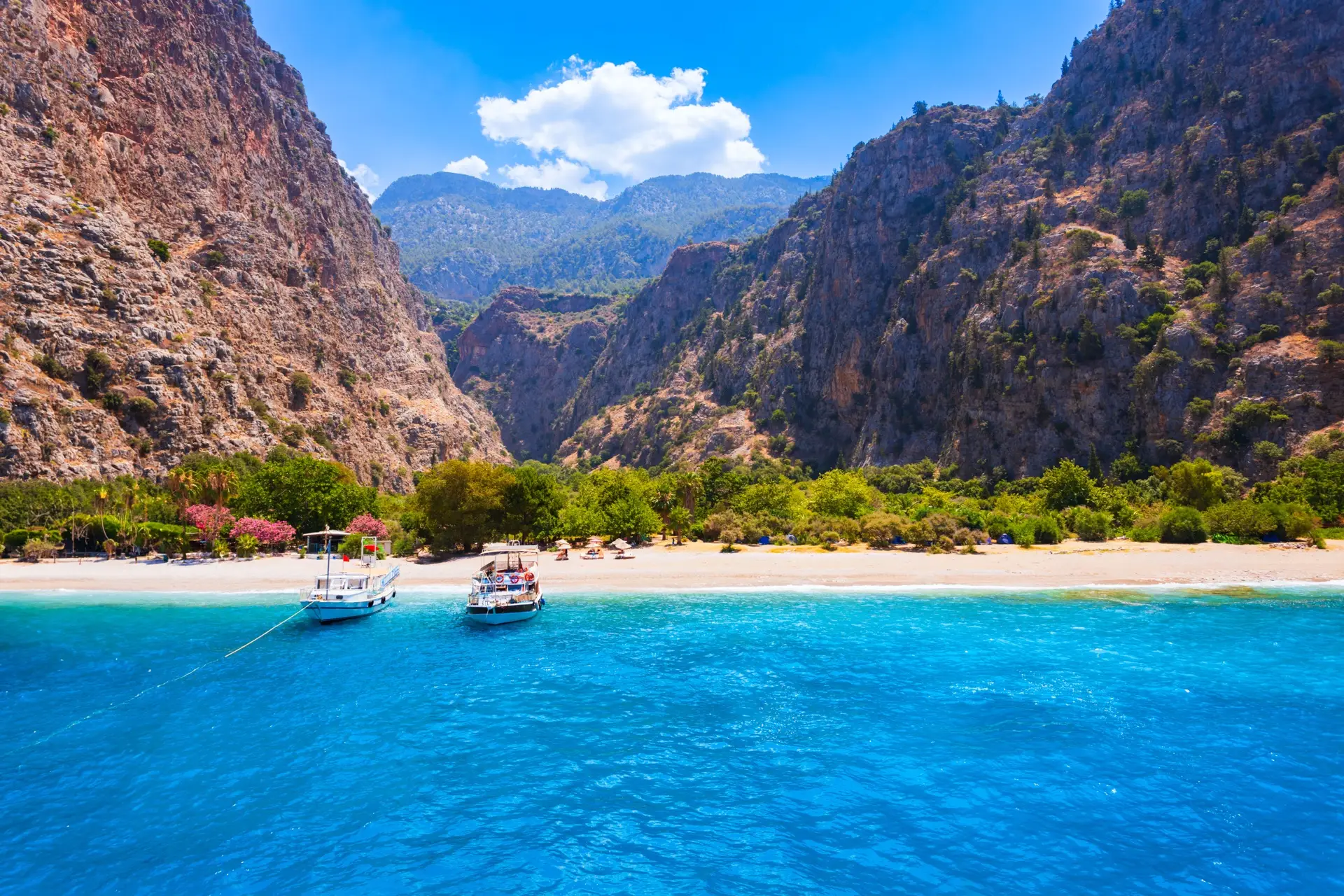
The weather in Turkey in October is two seasons in one country: 26.6 °C (80 °F) by day in Antalya, 6.8 °C (44 °F) before dawn in Cappadocia, and both readings can land in the same family’s week. Istanbul sits between the two at 20.6 °C (69 °F) and is the wettest of the three, with 9.5 rain days across the month.
Cappadocia swings 11.5 degrees inside a single October day, from 18.3 °C in the afternoon to 6.8 °C before dawn. That daily range, not the average, is the real signature of Turkey’s weather in October, and it is the number families plan a suitcase around. Since the hot air balloons launch before sunrise, the temperature families stand in for the most photographed hour of the trip is the 6.8, not the 18.3.
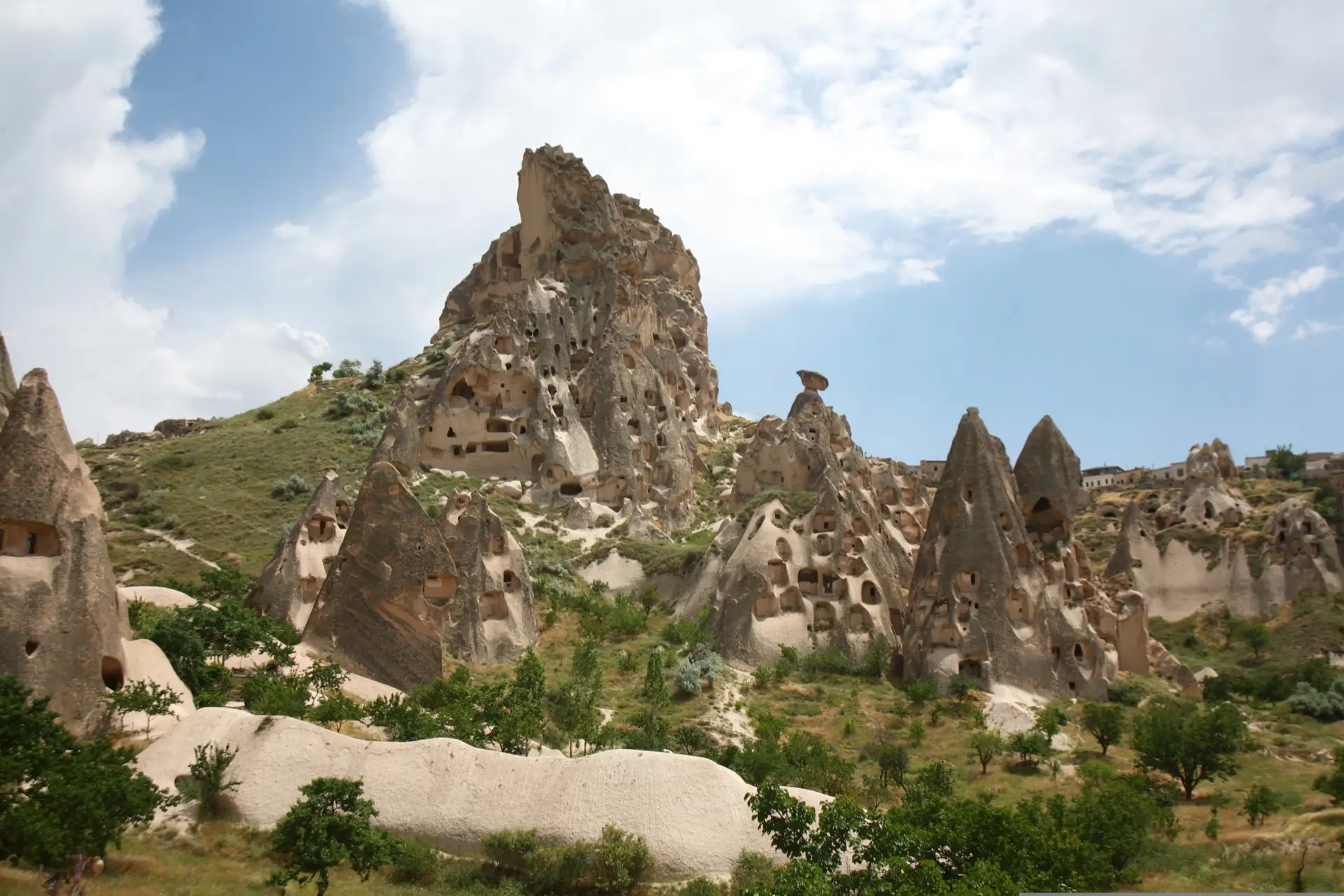
Long-term station normals from the Turkish State Meteorological Service, by region:
| Region | Daytime high | Night low | Rain days | September high | November high |
|---|---|---|---|---|---|
| Istanbul | 20.6 °C | 13.7 °C | 9.5 | 25.9 °C | 16.1 °C |
| Cappadocia (Nevşehir) | 18.3 °C | 6.8 °C | 7.0 | 24.5 °C | 11.8 °C |
| Antalya | 26.6 °C | 15.4 °C | 5.4 | 31.2 °C | 21.4 °C |
| Fethiye (Muğla) | 26.1 °C | 14.1 °C | 4.9 | 30.3 °C | 21.5 °C |
| Kuşadası / Ephesus (Aydın) | 26.4 °C | 12.9 °C | 5.5 | 32.2 °C | 20.0 °C |
| Pamukkale (Denizli) | 24.0 °C | 11.6 °C | 5.8 | 30.3 °C | 17.6 °C |
| Izmir | 24.1 °C | 14.7 °C | 5.3 | 29.3 °C | 18.7 °C |
| Çanakkale (Troy, Gallipoli) | 20.9 °C | 12.2 °C | 6.4 | 26.5 °C | 16.1 °C |
| Ankara | 20.0 °C | 7.2 °C | 6.9 | 26.1 °C | 13.1 °C |
The hottest part of Turkey in October is the Mediterranean coast: Antalya at 26.6 °C by day, Kuşadası 26.4 °C and Fethiye 26.1 °C, and nothing inland comes closer than Pamukkale’s 24.0 °C. Antalya runs 8.3 °C warmer by day than Cappadocia. That gap is wider than September’s 6.7 °C. It is why one packing list has to cover two climates, a problem the summer months never set a family. Most families arriving from a coastal week into Cappadocia underestimate it. In bright sun on a valley floor, 18 °C feels like 24, right up until the sun drops behind the rim.
Göreme sits high on the Anatolian plateau, with almost no tree cover and no sea to moderate it. Clear autumn skies let the day’s heat radiate straight out after sunset, which is exactly the same clear, still air that makes the hot air balloons fly. The cold dawn and the high fly rate are the same weather. You do not get one without the other.
Averages hide the tails. An October week in Istanbul can deliver four consecutive days at 24 °C and then a Black Sea front that drops it to 15 with rain for two. Nothing in the table predicts which week you will get. Forecasts eight weeks out are worthless here. Build a route that works wet or dry, which mostly means not putting your only Bosphorus cruise on your only Istanbul afternoon.
October crowds fall unevenly: a Fethiye beach loses most of its traffic within three weeks of the charter season ending, while an Istanbul queue only shortens from about ninety minutes to about thirty. Two forces drive the drop, and only one of them touches the cities: school calendars abroad, and the end of the charter-flight season on the coast.
Coastal resorts lose their volume the moment the summer charter programmes wind down. Beaches around Fethiye, Kalkan and Kaş that were shoulder-to-shoulder in August have visible sand in October. The boat harbours thin out as the blue cruise season runs to its close at the end of the month. This is the biggest single change between an August and an October coastal day, and it is why the photograph above looks the way it does.
Istanbul is a year-round city of well over fifteen million people, and its major sites are busy in every month that is not January. Hagia Sophia and the Basilica Cistern still have queues in October. The difference is that the queue is thirty minutes rather than ninety, and that the Grand Bazaar is walkable at normal pace. Do not plan an October Istanbul day as though the city has gone quiet. Plan it as though the city is briefly reasonable.
The classical sites drop noticeably but stay busy, and a family notices the difference most at the gate, less so inside. Ephesus is at its best entered from the upper gate at opening time. In October the site is genuinely pleasant to walk, because the marble is not reflecting 38 °C back at you. Pamukkale’s travertines are barefoot terrain, and October water is cool but bearable. Take families there in the morning. Cappadocia is the exception that gets busier relative to summer, because the hot air balloon-flying season is at its best and everyone knows it.
Autumn half-term breaks in several Northern Hemisphere school systems cluster in the last third of October, and they move families into the same cave hotels and the same hot air balloon baskets. If your dates are flexible and you are not tied to a school calendar, the first two weeks have wider availability and fewer people than the last two for exactly this reason. If you are tied to half-term, book earlier. The lead-time section below sets out the windows.

Museums, domestic flights and Cappadocia’s hot air balloons run all month in October. What stands down partway through is the seasonal coastal trade: gulet day-sails, beach clubs and unheated pools. At Turkey Family Tours we build private Turkey tours around the three that do not stop, and treat the three that do as optional extras rather than fixed days.

| What | October status | Notes |
|---|---|---|
| Museums and archaeological sites | Open all month | Winter hours run from the start of October; last entry is earlier than in September |
| Cappadocia hot air balloons | Open all month | Peak-quality season; roughly 90% of mornings fly |
| Domestic flights | Normal | Frequency to coastal airports thins late in the month |
| Gulet day-sails, Fethiye and Göcek | Running, winding down | Season closes around the end of October |
| Ölüdeniz paragliding | Weather-dependent | Flies most days; autumn wind cancels more often than summer |
| Beach clubs and unheated pools | Patchy after mid-month | Many close; heated hotel pools continue |
| Whirling dervish and evening shows | Normal | Indoor, unaffected |
| Cappadocia ATV and horse riding | Normal | Better than summer; no heat |
Turkish museums and archaeological sites operate summer hours and winter hours, and the switch is already in force on the first of the month. Winter hours mean an earlier last entry. At some sites the ticket office stops selling ninety minutes before the gate closes. Combined with sunset arriving forty-five minutes earlier by the end of the month, a late-October afternoon holds meaningfully less than an early-October one. Current times for state museums are published by the Ministry of Culture and Tourism’s museums directorate. The imperial palaces, Dolmabahçe among them, keep their own schedule at Milli Saraylar.
Because the vehicle and the guide are yours for the day, the fix is ordering rather than cutting. A late-October Ephesus day starts at the upper gate at opening and finishes at the Basilica of St John. A Pamukkale day puts the travertines first and Hierapolis second. None of that is possible on a coach that leaves when it leaves. It is why a tailor-made route is worth more to a family in October than in June.
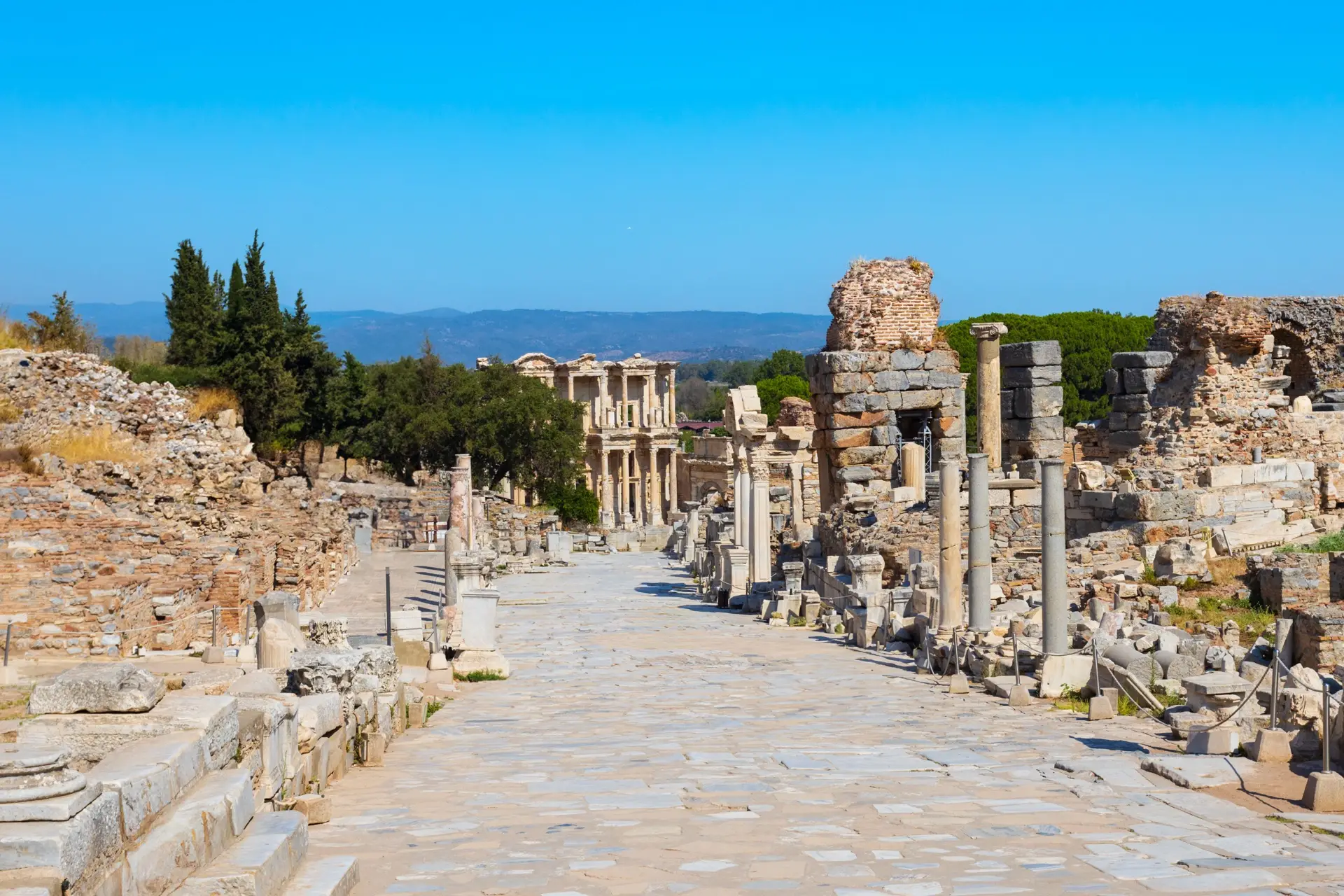
Walking-heavy days improve. The climb up to Uchisar Castle, the full circuit of Ephesus, the hill at Pergamon: all of these are punishing in August and comfortable in October. So is the Göreme Open-Air Museum, which is why we run it first thing on private Cappadocia tours. Its frescoed rock churches are visited one small dark room at a time, and in summer the queue in the sun is the whole experience.
One October suitcase has to cover a 26 °C swim in Antalya and a 6.8 °C hot air balloon field in Cappadocia, often four days apart. Families who pack for the average of those two are wrong twice.
A t-shirt, a fleece or light jumper, and a windproof outer shell will handle every situation October produces except heavy rain. The shell matters more than its thickness. Cappadocia’s dawn cold is a wind-chill problem on an open plateau rather than an air-temperature one. A thin windproof layer beats a thick woolly one the wind goes straight through. Everything comes off by ten in the morning and goes back on at five.
A heavy winter coat, snow boots and thermal base layers belong on a December trip, and families comparing the two should read the month-by-month guide before packing either. Nowhere on a standard October route goes below freezing. Nor does anyone need a separate smart outfit. Turkish restaurants at the level our hotels sit in have no dress code beyond clean and tidy.
Istanbul records 9.5 days with measurable rain in October and Fethiye records 4.9. Rain returns to Turkey this month, but unevenly, and it rarely arrives as a full lost day. Those two numbers are not the same holiday risk for a family, and they should not be planned for the same way.

Autumn rain here is typically front-driven: a few hours of real rain, then it clears. It is not all-day grey drizzle. In practice, a rainy October day in Istanbul costs a family a morning, not a day. Keep one covered option in reserve for each city stay and the morning is absorbed.
Istanbul has more covered content than any other stop on a Turkey route, and our private Istanbul Old City tour already links most of it. What a wet October morning becomes:
Cappadocia is harder, because its content is outdoors. But the underground cities at Derinkuyu and Kaymaklı are, by definition, indoors. So are the rock-cut churches of the Göreme Open-Air Museum, the pottery workshops at Avanos and the carpet ateliers. Rain also grounds hot air balloons, covered below.
Ephesus and Pamukkale are genuinely exposed. Ephesus in rain is walkable but unpleasant, and the Terrace Houses (quoted on request, and under a modern roof) become the best part of the visit. Pamukkale’s travertines in rain are slippery and the pools are cold. With only 5.5 and 5.8 wet days respectively, the odds are good. When they go against a family, the fix is swapping the day, which a private route can do and a coach tour cannot.
Two rules do most of the work. First, never make a single afternoon load-bearing. If the Bosphorus cruise or the hot air balloon flight only exists on one day of the trip, weather owns your holiday. Second, put the outdoor content early in each city stay, so there is a spare day behind it. We build every October route this way, and it is the reason a private structure is worth more in this month than in July, when nothing needs rescheduling.
Roughly 90% of October mornings fly in Cappadocia, among the highest rates of any month, against about 75% in November and considerably less in winter. The reason is the same clear, settled, low-wind autumn air that produces those 6.8 °C dawns. Our Cappadocia hot air balloon guide covers how families book and what the morning looks like.
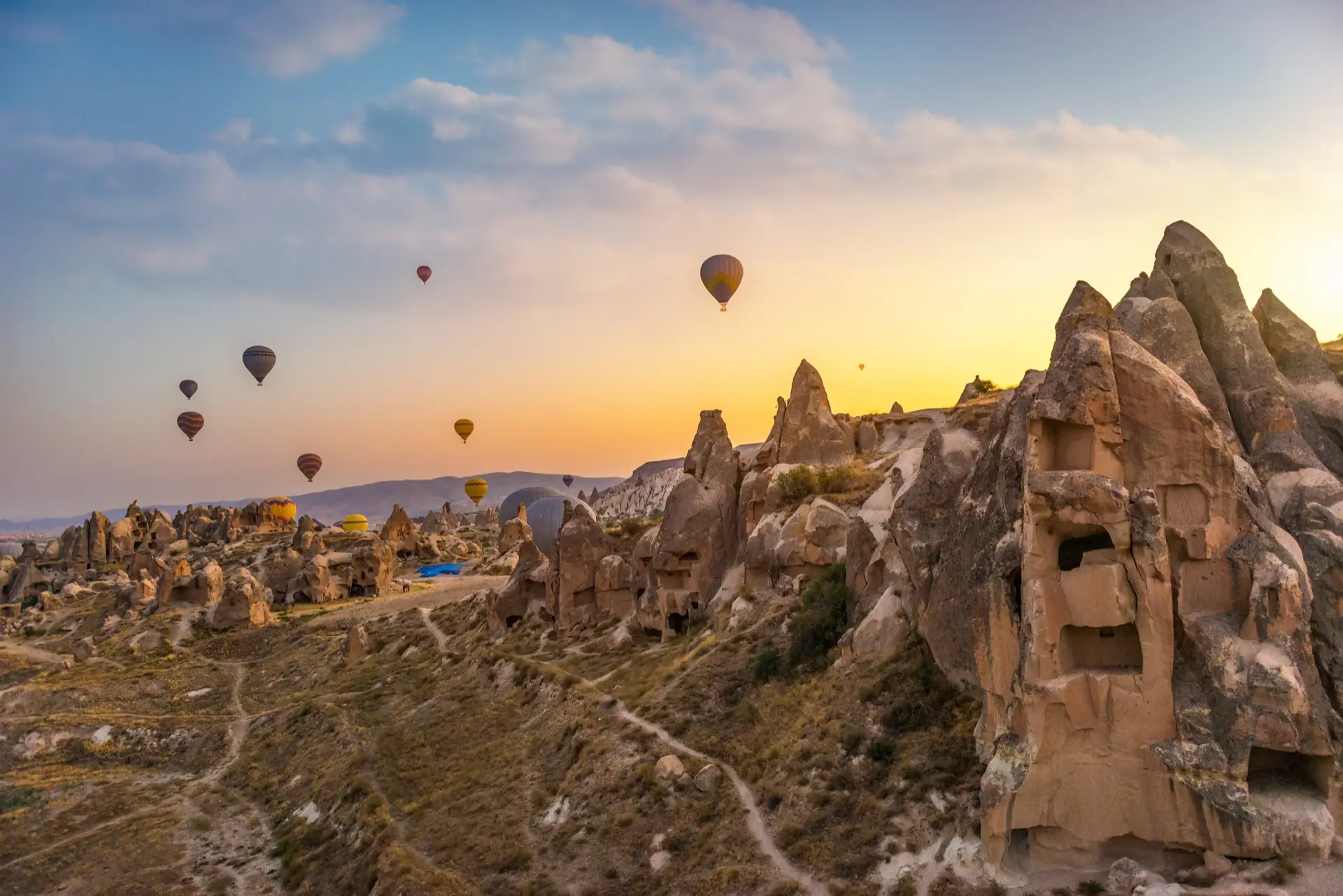
Hot air balloon flights are grounded by wind at altitude, not by cold and not usually by cloud. October’s dominant pattern over the Anatolian plateau is high pressure and calm mornings, which is close to ideal. The call is made by the Turkish civil aviation authority at first light on the morning itself, per operator, not by the hotel and not by us. When it is a no, it is a no for everybody in the valley.
Pick-up from a Göreme cave hotel is around 05:15 at the start of the month and 05:45 at the end. It tracks sunrise, which slips from 06:37 to 07:07. You will stand in a field at close to 7 °C for thirty to forty minutes while the envelope inflates. The burners are directly overhead once you are airborne, so the basket itself is warm. The waiting is the cold part. Hats, gloves, and a coat over the layers you will not need by nine.
Cancellation is a weather decision, not a commercial one, and roughly one October morning in ten goes that way. At Turkey Family Tours we handle it the same way every time:
Hot air balloon capacity is finite and October is peak. Baskets in the last third of the month, overlapping the half-term cluster, are the tightest of the season outside high summer. Operators, basket sizes and what the different flight lengths buy you are set out in the guide linked above. Families should book the hot air balloon at the same time as the trip, not on arrival.
Cappadocia’s poplars turn yellow from the middle of October and hold their colour for around three weeks. The poplars, vines and orchards turn at different times at different altitudes, so a route that gains altitude follows the colour: valley floors first, the plateau after.
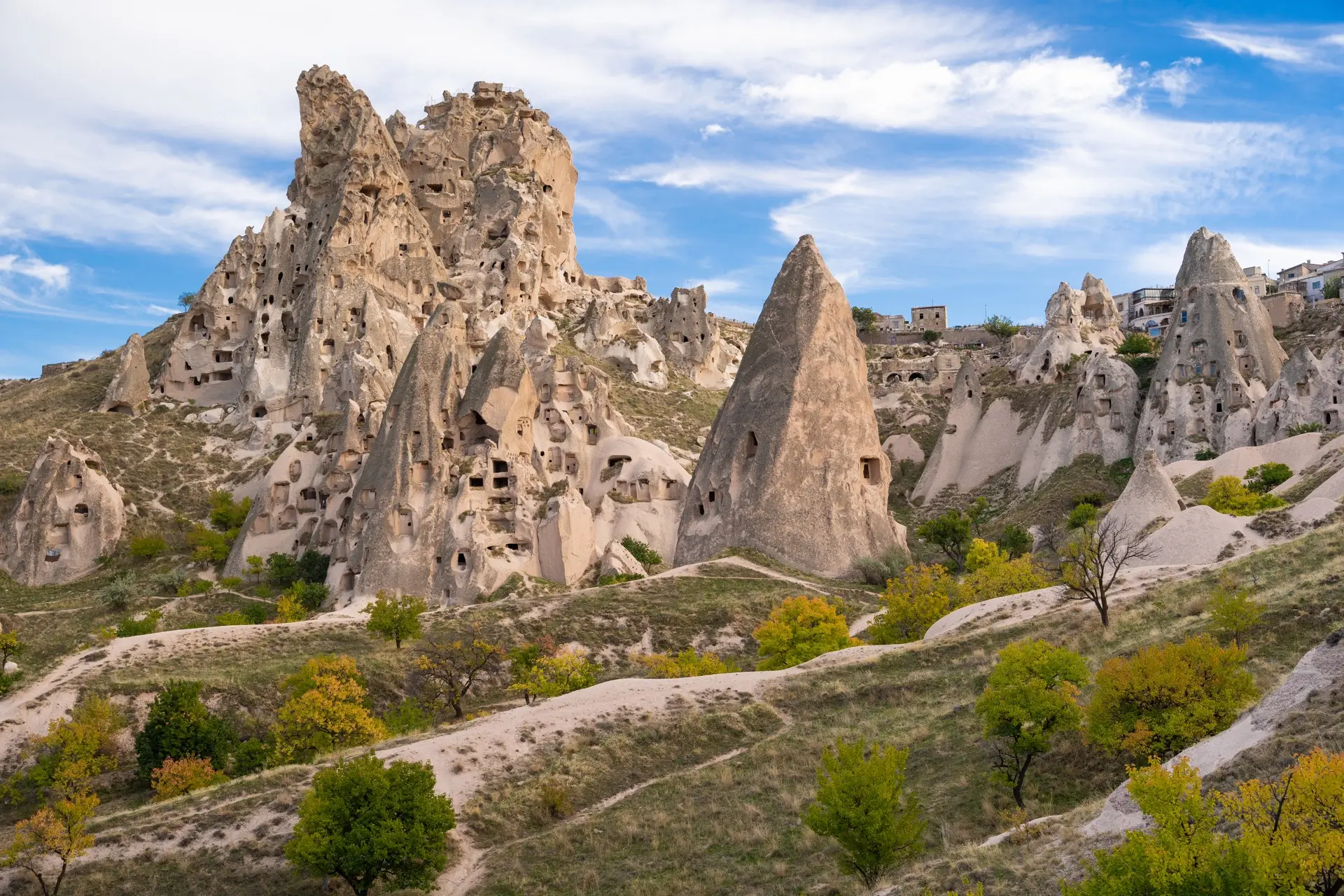
The poplar stands along the valley floors go yellow first, and hold longest. Love Valley, Pigeon Valley and the Ihlara gorge are the strongest of them, and a family walking any of the three in the last ten days sees the month at its best. Against pale volcanic rock and a hard blue autumn sky, it is the strongest photographic combination the region offers all year. If photography matters to your family more than swimming, book the last ten days.
Cappadocia is a wine region, and the grape harvest runs through late September and October. The vines around Ürgüp and Ortahisar turn red and gold while the cellars are working. That makes an October vineyard stop a different visit from the same stop in June.
Istanbul’s colour is later and subtler. The great plane trees along the Bosphorus villages and in the palace gardens hold their leaves into November. The Princes’ Islands in October are pine, sea air and a ferry with seats free. Ferries run all year, the ride takes around 90 minutes, and almost nobody puts it on a first-time itinerary.
The Mediterranean and Aegean coasts stay green. Olive, pine and citrus do not turn, so a coastal October looks much like a coastal September. If autumn colour is part of what your family wants, it has to come from the interior legs, Cappadocia above all. The route needs to reach them after the middle of the month.
29 October is Republic Day, Turkey’s national day, and it falls on the same date every year. The afternoon of the 28th is a half-day holiday. For a visiting family it is neither a problem nor a bonus, just a day to plan around in advance.
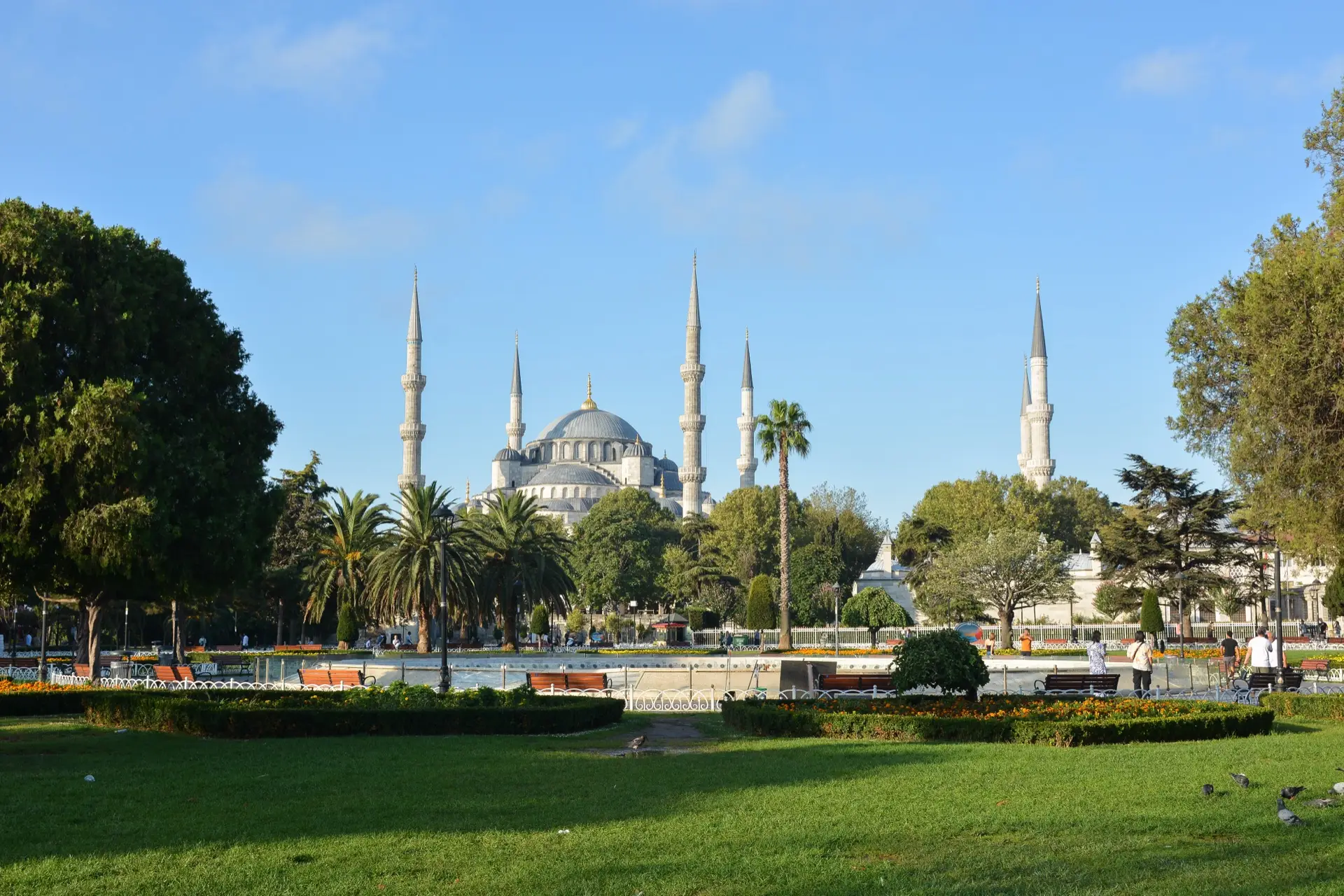
A family with an Istanbul day on the 29th loses nothing on the Old City route. What changes and what does not:
The Bosphorus carries a naval and civil procession, the bridges and public buildings are lit, and there are fireworks over the water after dark. Turkish families are out in numbers along the shore. Background on the national calendar is published at Go Türkiye, the official tourism portal.
If your dates cover the 29th, the sensible shape is to be in Istanbul for it and not in transit. Airport transfers on that day take longer, and an inter-city flight scheduled for the afternoon of the 29th is an avoidable irritation. Where a route has flexibility, we move the internal flight to the 28th morning or the 30th. The 29th stays a walking day with an evening on the water. Domestic flights themselves run normally. It is the road time either side of them that changes.
Turkey stopped changing its clocks and stays on UTC+3 permanently, all year. October is the month in which most of the world moves theirs. The clocks move in opposite directions in the two hemispheres, but because Turkey sits between them, the effect is the same either way: the gap to home widens by an hour. It can widen in the middle of a trip, and almost nobody expects it. We flag it in writing on every October itinerary that crosses a changeover weekend.
| Where you fly from | What happens in October | When | Effect on the gap to Turkey |
|---|---|---|---|
| Northern Hemisphere | Clocks go back an hour | Last Sunday of October | Gap widens by 1 hour, mid-trip for many October dates |
| Southern Hemisphere, October changeover | Clocks go forward an hour | First Sunday of October | Gap widens by 1 hour, usually before departure |
| Southern Hemisphere, September changeover | Already moved forward | Late September | No change inside October |
| Zones that change in November | No October change | First Sunday of November | Stable all month |
| Anywhere with no daylight saving | Clocks never move | — | Stable all year |
| Turkey | Never changes | — | UTC+3, every day of the year |
A family whose home clock sits an hour ahead of GMT, flying out on 20 October and home on the 30th, leaves with a 2-hour difference to home and returns with a 3-hour one. Home changed while they were away. Two things follow. Any connecting flight on the return leg has a schedule that shifted underneath it. And the window for calling home moves an hour later on the last two days of the trip. Southern Hemisphere families meet the same widening at the start of the month instead of the end, which usually falls before departure rather than mid-trip.
Because Turkey never falls back, October evenings get dark early on Turkish time and stay that way. Istanbul’s sunset moves from 18:45 on the first of the month to 18:00 on the last. Cappadocia’s moves from 18:23 to 17:41. Sunrise slides the other way, from 07:01 to 07:34 in Istanbul.
| Place | 1 October sunrise / sunset | 31 October sunrise / sunset | Daylight |
|---|---|---|---|
| Istanbul | 07:01 / 18:45 | 07:34 / 18:00 | 11.7 h → 10.4 h |
| Cappadocia (Göreme) | 06:37 / 18:23 | 07:07 / 17:41 | 11.8 h → 10.6 h |
| Antalya | 06:52 / 18:40 | 07:20 / 18:00 | 11.8 h → 10.7 h |
An hour and twenty minutes is one full site visit. A late-October day that starts at 09:00 has usable light until about 17:30, which comfortably holds Ephesus and lunch but does not also hold Pamukkale. That arithmetic drives the itinerary lengths in the next section. It is also why we start touring days earlier in the second half of the month instead of squeezing the same list into less daylight.
October gives families 10.4 hours of daylight by the end of the month and a sea still at 25.4 °C. Those two facts push the route in opposite directions, so the answer to “how many days” depends on whether the coast is in the plan at all. A trip that skips the beach fits comfortably into a week. A trip that includes it needs ten days to avoid becoming a series of airport mornings.
| Length | What it holds in October | Swimming? | From (per adult) |
|---|---|---|---|
| 5 days | Istanbul and Cappadocia, one hot air balloon attempt | No | USD 1,690 |
| 8 days | Istanbul, Cappadocia, Pamukkale, Ephesus | Marginal | USD 2,790 |
| 10 days | Istanbul, Cappadocia, Antalya, with real beach time | Yes | USD 3,490 |
| 14 days | All of the above, unhurried, plus coastal days | Yes | USD 4,450 |
Istanbul and Cappadocia in five days is the most common first trip a family takes. Our 5-day Istanbul and Cappadocia route is the fixed version of it. October suits that shape well: walking weather in the city, high fly rates in the valleys, no heat anywhere. What it cannot hold is the coast, and no package shorter than a week can. Compare lengths in the Turkey tour packages. Do not try to add a beach to five days in October. The flight time costs a family a whole afternoon, in a month with only ten and a half hours of daylight to give.
Adding Pamukkale and Ephesus is where October’s shorter days start to bite. Both are outdoor sites, with early last entries once winter hours begin. Families who want Ephesus without Pamukkale can drop to the 7-day Istanbul, Cappadocia and Ephesus route, which buys back an afternoon. It works better in the first half of the month, when there is an extra hour and a quarter of daylight. Our 8-day Istanbul, Cappadocia, Pamukkale and Ephesus route is built around that constraint.
Ten days is the length at which October’s particular gift becomes available without rushing: a 26 °C sea in the same trip as a hot air balloon flight. Istanbul, Cappadocia and Antalya, with two or three genuine coastal days rather than a token afternoon. If a family asks us which month to do the 10-day Istanbul, Cappadocia and Antalya route in, October is the answer, and the first three weeks of it.
Two weeks in October buys a family something specific that shorter trips cannot: redundancy. A second hot air balloon morning if the first is grounded, a spare day when Istanbul rains, an unhurried Ephesus rather than a 90-minute march. Given that October has around nine or ten wet days in Istanbul and a one-in-ten hot air balloon cancellation rate, that slack is what saves the trip. The 14-day private Turkey tour is the route that absorbs a bad day without losing anything. Families who want the slack but not the full fortnight take the 12-day version instead.
Land arrangements run USD 1,690 to 4,450 per adult, roughly USD 315–350 per person per day. That covers hand-picked 4-5 star (boutique) hotels with family rooms, breakfasts, a private vehicle with driver, a licensed local guide in every region, all listed entrance fees, airport transfers and the domestic flights the route uses. International flights, lunches and dinners are yours. The hot air balloon flight and the Pamukkale antique pool are priced as optional extras rather than folded into the headline.
Two things sell out in October and nothing else does: Cappadocia cave hotel family rooms, and hot air balloon baskets in the last third of the month. Everything else in the country has availability late. Those two do not, and they are the two families care most about on a short Istanbul and Cappadocia trip.
Full choice. Every cave hotel family room, any hot air balloon operator, the domestic flight times that suit the itinerary rather than the ones left over. If your dates cross the half-term cluster in the last third of the month, this is when to be booking, not in September.
Still workable, and the most common window in practice. Cave hotels lose their family and connecting rooms first, while the standard doubles remain long after. Hot air balloon capacity is fine outside half-term. This is the point at which the route gets built around what is available. Any substitution is named in writing before the deposit.
Possible, and we run it for families every October, but with real substitutions. Expect a different hotel from the one you saw, and expect the hot air balloon to need booking on whichever morning has space. The trip is still good. The specific rooms are not guaranteed. Payment is a 25% deposit to reserve, with the remaining 75% paid on arrival in Turkey by card or cash. A late booking does not mean paying everything up front.
The Mediterranean runs 28–29 °C in September, 26.1 °C in October and 23.4 °C in November, while hot air balloon fly rates run about 92%, 90% and 75%. Those two rows decide most family bookings in the autumn. Each of the three gives up something the other two keep.
| What families ask about | September | October | November |
|---|---|---|---|
| Mediterranean sea | 28–29 °C | 26.1 °C | 23.4 °C |
| Istanbul by day | 25.9 °C | 20.6 °C | 16.1 °C |
| Cappadocia by day / before dawn | 24.5 / 10.5 °C | 18.3 / 6.8 °C | 11.8 / 2.5 °C |
| Hot air balloon fly rate | ~92% | ~90% | ~75% |
| Istanbul wet days | 5.5 | 9.5 | 11.3 |
| Daylight, end of month | 11.8 h | 10.4 h | 9.5 h |
| Coastal season | Full | Closes around the twentieth | Closed by mid-month |
| Autumn colour in Cappadocia | Green, harvest under way | Full gold, second half | Bare by mid-month |
September wins on sea and loses on crowds and heat. November wins on emptiness and rates and loses the coast outright. October is the only one of the three that holds a swimmable sea, a 90% hot air balloon month and full autumn colour in the same four weeks. If a family can only travel in one of them and swimming matters, October is the last call of the year.
October is a good time to visit Turkey, and it is the last month of the year that gives a family a swimmable sea, peak hot air balloon conditions and full autumn colour in the same trip. The Mediterranean averages 26.1 °C, Cappadocia’s hot air balloons fly on roughly 90% of mornings, and Istanbul sits at a walkable 20.6 °C. The trade-offs are daylight, which falls from 11.7 to 10.4 hours across the month, and rain, which returns to Istanbul at around nine wet days. The month is also two months in one: the first three weeks are the coastal version and the last ten days are the autumn-colour version. Our best time to visit Turkey guide compares all twelve.
Turkey in October runs from 26.6 °C by day in Antalya to 18.3 °C in Cappadocia, with Istanbul at 20.6 °C, an 8.3-degree spread between coast and plateau. The nights matter more than the days. Cappadocia falls to 6.8 °C before dawn, which is the temperature you stand in waiting for a hot air balloon, while Antalya holds 15.4 °C overnight. Ephesus and Pamukkale sit in between at 26.4 and 24.0 °C by day. Istanbul sits in the middle of the big three by temperature and is comfortably the wettest. These are long-term station normals from the Turkish State Meteorological Service, so any individual week can run several degrees either side of them. Region-by-region detail sits in our Cappadocia guide.
You can swim in Turkey in October on the Mediterranean coast for the whole month. Antalya holds 26.9 °C in the first half and 25.4 °C in the second. Fethiye stays within half a degree of it. Bodrum works comfortably to mid-month at 24.5 °C. The Aegean is the cut-off. Kuşadası drops to 21.7 °C and Çeşme to 21.3 °C late in the month, which is an adult swim rather than a family beach afternoon. After the twentieth the falling air temperature matters more than the water, so swim in the middle of the day. Unheated hotel pools cool faster than the sea, so ask whether the pool is heated before booking a night on the Antalya coast.
Rain in Turkey in October is regional rather than national. Istanbul averages 9.5 days with measurable rain, Cappadocia 7.0, and the Mediterranean coast around 5, with Fethiye driest at 4.9. Autumn rain here usually arrives as a few hours of real rain followed by clearing, not an all-day grey. On a private route a wet Istanbul morning is re-ordered into Hagia Sophia, the Basilica Cistern and the Archaeological Museums, and the Bosphorus cruise moves to another afternoon. The genuinely exposed sites are Ephesus and Pamukkale, where the fix is swapping days rather than pressing on.
Hot air balloons fly in Cappadocia on roughly 90% of October mornings, among the highest of any month and well above November’s 75%. Flights are grounded by wind at altitude, and the civil aviation authority makes that call at first light on the morning itself, per operator. Pick-up from a Göreme hotel is about 05:15 early in the month and 05:45 late. Families wait in a field at close to 7 °C, so take a hat and gloves. We schedule the attempt on the first Cappadocia morning, so a two-night stay keeps a second chance. If it is cancelled we rebook it or refund the hot air balloon cost in full. Details in our Cappadocia hot air balloon guide.
Turkey does not change its clocks in October or in any other month. It stays on UTC+3 all year. Your home country probably does not. The Northern Hemisphere goes back on the last Sunday of October and part of the Southern Hemisphere goes forward on the first Sunday. Because Turkey sits between them, both moves widen the gap to Turkey by an hour. Some zones do not change until November. A family whose home clock sits an hour ahead of GMT and who travels across the last weekend leaves with a 2-hour difference to home and returns to a 3-hour one, so check any connecting flight on the return leg. Turkish sunset falls from 18:45 to 18:00 in Istanbul across the month regardless.
Five days covers Istanbul and Cappadocia with one hot air balloon attempt, and it is the right length for a first October trip that skips the coast. Ten days is the length October is built for, because it adds Antalya and real beach time while the sea is still 25–27 °C. Eight days reaches Pamukkale and Ephesus but feels tight once daylight drops to 10.4 hours late in the month. Fourteen days is the version with slack in it, which matters when Istanbul averages 9.5 wet days and one October morning in ten is grounded. Compare lengths on our 10-day route.
A private Turkey tour in October costs USD 1,690 to 4,450 per adult for land arrangements, or roughly USD 315–350 per person per day. Five days across Istanbul and Cappadocia starts at USD 1,690, ten days with Antalya at USD 3,490, and fourteen days at USD 4,450. The full package range lists what each length holds. That covers hand-picked 4-5 star (boutique) hotels with family rooms, breakfasts, a private vehicle with driver, a licensed local guide in every region, all listed entrance fees, transfers and the domestic flights the route uses. International flights, lunches and dinners are not included, and the hot air balloon flight is a priced extra. Children get 40% off at ages 4–6 and 70% off at ages 0–3, with the adult rate from age 7.
Book an October Turkey trip three to four months ahead if your dates cross the autumn half-term cluster in the last third of the month, and six to eight weeks otherwise. Only two things are genuinely tight: Cappadocia cave hotel family rooms, which go before the standard doubles, and hot air balloon baskets in the half-term week. Everything else has late availability. Under three weeks still works, with substitutions we name in writing before the deposit. Reserving takes a 25% deposit, with the remaining 75% paid on arrival by card or cash, and your first written day-by-day plan comes back within 24 hours. Start from a private quote.
Payment is a 25% deposit to reserve your October dates, with the remaining 75% paid on arrival in Turkey in cash or by credit card. Cancellations must be made in writing and the deposit is non-refundable. Cancelling less than 7 days before the tour, or not showing up, means the full fee is due. A grounded hot air balloon is handled separately from this: we rebook it or refund the hot air balloon cost. Turkey Family Tours is TURSAB-licensed under number 13538, trading as Skylux Edition Travel, and the same terms are printed on every one of our tour pages.
Two decisions carry an October route: which side of the twentieth your coastal days sit on, and which morning the hot air balloon attempt goes on. Getting it right means the hot air balloon attempt on the first Cappadocia morning and the coastal days before the twentieth. It also means outdoor sites early in each stay, and touring starting earlier once daylight drops under eleven hours. Getting it wrong means the same list of places in the same order as a July trip, with less light and a grounded hot air balloon on the final morning.
Turkey Family Tours is a Turkish operator, based here, running one family at a time, licensed by TURSAB under no 13538 and rated 5.0 from 41 reviews on TripAdvisor. Tell us your dates, the ages of your children and whether swimming has to be in the trip. You will get a written day-by-day plan and a fixed total within 24 hours, with the hotels named. If the month itself is still open, start from the one that suits your family. Nothing in that total moves afterwards.
If your family is still choosing between months, September is hotter with a warmer sea and more crowds, and November is quieter, at shoulder-season rates, with the coast closed. Our full range of private Turkey tours shows what each length holds, and the Turkey travel guide covers the practical side.



Tell us about your family — we reply within 24 hours.