Turkey in September: Warm Sea, Thin Crowds and the Grape Harvest
Quick Answer:Turkey in September is late summer on the coast and early autumn at night on the plateau, and it is a good time for a family trip. The Mediterranean at Antalya holds 28–29 °C, the warmest sea of the year in the first ten days, while Istanbul runs 25–28 °C and Cappadocia 24–27 °C with 10–14 °C dawns. Queues at Hagia Sophia and Ephesus drop 10–20% from the first week as Northern Hemisphere schools go back, the Cappadocia hot air balloon fly rate holds at about 92%, and the Göreme vineyards are picked through the month. Every site, resort and ferry keeps summer hours to the 30th. A private Turkey tour in September costs USD 1,690–4,450 per adult for 5 to 14 days, with a licensed local guide and a private vehicle with driver in every region. Turkey Family Tours is TURSAB-licensed (no 13538) and answers every enquiry with a written plan and fixed quote within 24 hours. Get a Private Quote →
Turkey in September keeps a 28–29 °C sea under air that has dropped 5–7 °C from August. Queues at Hagia Sophia and Ephesus thin by 10–20%, and the Cappadocia grape harvest runs under the sunrise hot air balloons. This guide covers the weather region by region, where the water is still warm, how busy each site is week by week, what is open, and how many days the month needs.
By Fatih — Founder & Tour Director, Turkey Family Tours · TURSAB licence 13538 · Last updated: August 2026
Turkey in September — Table of Contents show / hide
September lead time: 8–14 weeks for most dates. The 20–30 September band is the exception — cave-hotel family rooms tighten from mid-June and hot air balloon baskets 8–10 weeks out. Check your dates →
Is September a Good Month to Visit Turkey? The Short Verdict
September is a good time to visit Turkey for a family trip: the sea holds 28–29 °C, Istanbul runs 25–28 °C and the Cappadocia hot air balloon fly rate sits at about 92%. It is the only month that holds a warm sea and a full walking day at Ephesus at the same time. The water has not yet given back its summer heat, while the air at Antalya has already come down from August’s 36–40 °C to 31–34 °C. That Istanbul band is the one where a family can tour from 09:00 to 18:00 without a midday retreat. The Cappadocia hot air balloon fly rate is among the year’s highest, the main sites are quieter from the first week, and summer opening hours run to the 30th. Our 12 day Turkey itinerary is built on that pairing: two nights each at Antalya and Fethiye on a 28–29 °C sea, and later a Kuşadası night for Ephesus.
Who September Works For
Families who want the sea and the sites in one trip — no other month pairs a warm Mediterranean with an Ephesus afternoon the children can actually walk
Families with pre-school children — the first ten days are the emptiest the major sites get all warm season, and there is no term calendar to work around
Southern Hemisphere term-break families — the last ten days line up with the between-terms window, and a 12- or 14-day circuit fits it without compression. Our 2 week Turkey itinerary gives four days to the Fethiye and Antalya coast, where the sea still holds 28 °C after the 20th
Families who want the hot air balloon to be near-certain — a second held morning drops the miss risk below 1%
Who Should Choose Another Month
A beach-only holiday after the 20th — the sea is still 28 °C, but coastal availability narrows on the term-break cluster in the same week the weather starts to soften; July or the first half of August holds the beach case better
A hiking-led Cappadocia trip — midday still reaches 28–30 °C on exposed rock; October and April walk more comfortably
Anything built around snow or the winter cultural calendar — that is December or January, not September
The Two Plans September Punishes
The first is a beach-only five-day break in the last week of the month. The water is fine, but coastal availability narrows on the term-break cluster in the same band where daylight falls below 12 hours and Istanbul picks up its first fronts. If the dates are fixed to that week, the better trip moves inland and spends its days on Cappadocia and the Aegean sites. The second is a one-night Cappadocia stop when the hot air balloon is the point of the trip. One morning leaves roughly a 1 in 12 chance of a weather hold with no second attempt; a second night is the one change that fixes it.
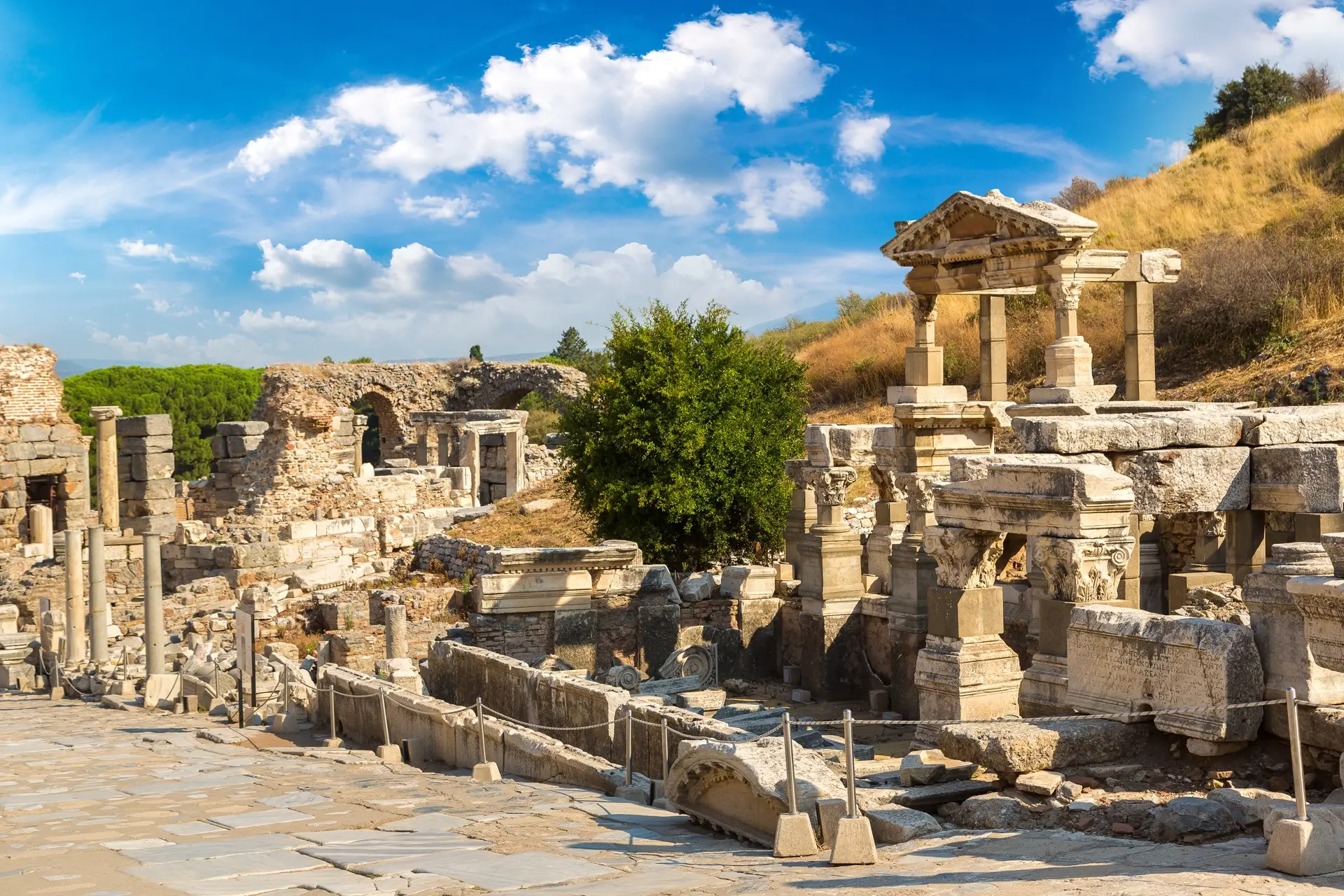
Ephesus reopens to full afternoon touring in September — the 14:00–17:00 block is walkable again at 29–33 °C, so the Aegean day stops being a race against noon.
Turkey Weather in September: Still Summer on the Coast, First Cool Nights on the Plateau
Turkey weather in September runs 31–34 °C at Antalya, 29–32 °C on the Aegean coast and 25–28 °C in Istanbul, with about one rain day on the coast and 4–6 in Istanbul. Cappadocia reaches 24–27 °C by afternoon but starts the day at 10–14 °C.
The split is by altitude, not latitude. At sea level the month is late summer. On the Anatolian plateau the season has already turned at night: the day swings 13–17 degrees between dawn and mid-afternoon. Istanbul sits between the two, with 17–19 °C evenings. The long-term normals below come from the Turkish State Meteorological Service (MGM) station records; sea figures are from the Open-Meteo marine archive (CMEMS/ERA5, ten-year September mean).
Region
City
Daytime High
Night Low
Sea Temp
Rain Days
Northwest / Marmara
Istanbul
25–28 °C
17–19 °C
24 °C
4–6
Central Anatolia
Cappadocia
24–27 °C
10–14 °C
—
2–3
Mediterranean
Antalya
31–34 °C
20–23 °C
28–29 °C
1
Aegean coast
Bodrum / Fethiye
29–32 °C
19–21 °C
26–28 °C
1
Aegean inland
Ephesus (Selçuk)
29–33 °C
16–18 °C
—
1
Limestone plateau
Pamukkale
30–34 °C
15–17 °C
—
1
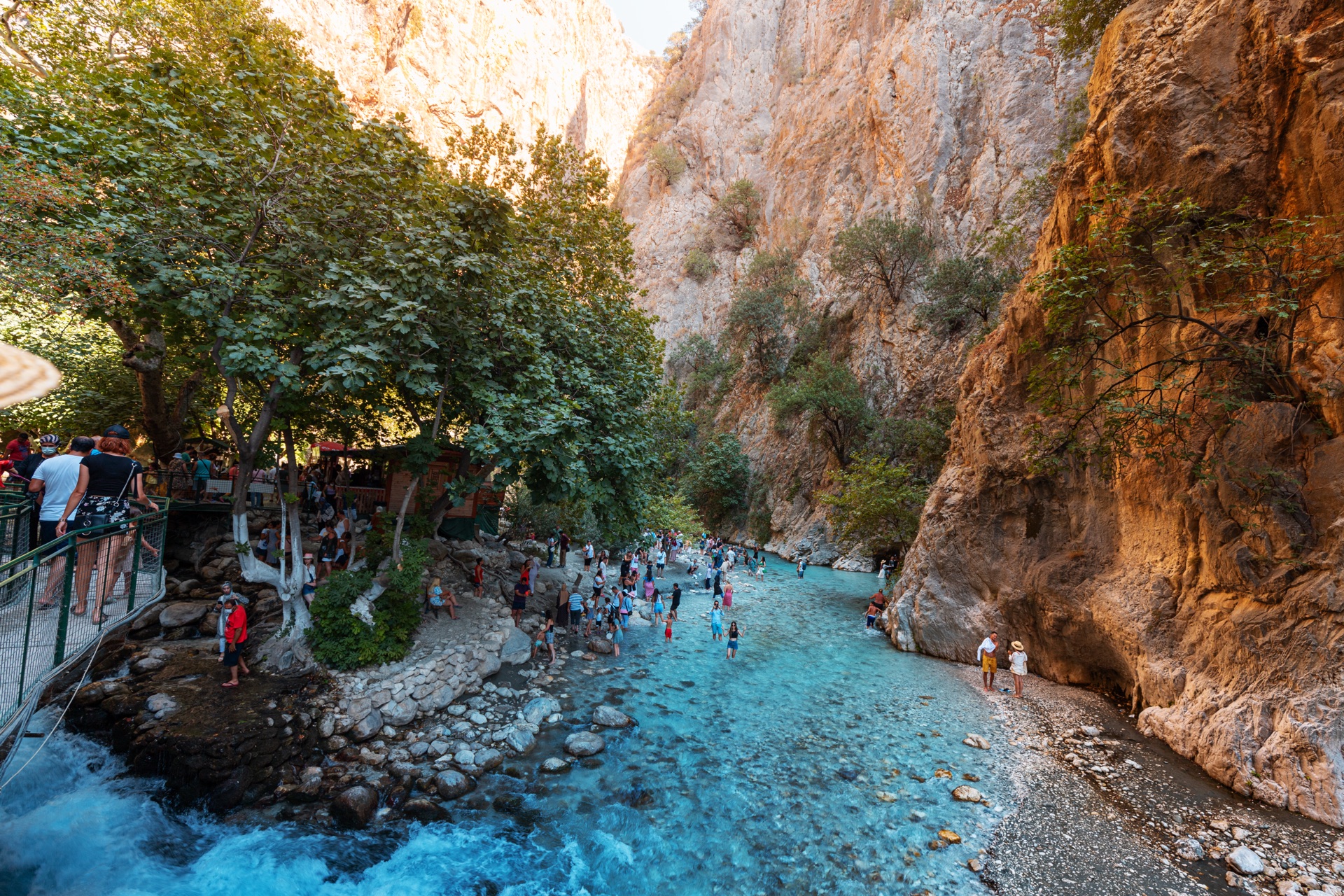
On the ground, the coast is hot but no longer extreme, so a beach afternoon with children does not need the midday-only structure of July and August. Inland, the midday surface heat that makes Pamukkale’s travertines hard work in August has gone, and the terraces are walkable barefoot through the whole morning. Cappadocia is the one place where a fleece comes out of the bag — for the hot air balloon launch field at dawn and the cave-hotel terrace after dark, not for the day itself.
Early, Mid and Late September Are Three Different Weeks
1–10 September: the sea peaks at about 30 °C on the Mediterranean and the coastal air still touches 34 °C. Northern Hemisphere schools have just gone back, so families with pre-school children get near-empty sites
10–20 September: the quietest band of the whole warm season. Coastal air drops to 31–33 °C, the sea holds 29 °C, and cave-hotel choice is at its widest. This is the band that suits families with flexible dates
20–30 September: daylight falls to about 12 hours, Istanbul picks up its first autumn fronts, the sea eases to 28 °C, and the Southern Hemisphere term break lands on Göreme’s cave hotels
When the First Autumn Front Arrives
Istanbul records 4–6 rain days in September, almost all of them in the last ten days. They are short afternoon fronts, not all-day rain, and they change the order of a day instead of cancelling it. When one lands, the family goes indoors and the day stays full: the Basilica Cistern, the Topkapı Harem, the Museum of Turkish and Islamic Arts or the Grand Bazaar. The outdoor blocks — the Bosphorus cruise, the Princes’ Islands, the Sultanahmet walk — move to the next clear morning. On the coast and in Cappadocia the same fronts are rarer still, at 1–3 rain days for the month.
Sea Temperatures in September: The Year’s Warmest Water
Sea temperature in Turkey in September is 28–29 °C on the Mediterranean at Antalya, 28 °C at Fethiye, 25–27 °C on the Aegean at Bodrum and about 24 °C in the Marmara at Istanbul. The first ten days are the year’s warmest water, because the sea stores heat for weeks after the air has started to cool. The Mediterranean that peaks at 28–30 °C in late August barely moves through most of September, while the air above it drops 5–7 degrees. The ten-year September means from the Open-Meteo marine archive (CMEMS/ERA5): Antalya 29.1 °C, Fethiye 28.0 °C, Bodrum 25.8 °C, the Marmara at Istanbul 23.9 °C. For comparison, the same archive puts the Mediterranean at 26.1 °C in October and the Aegean at 23–24 °C.
Where
September Sea Temperature
What It Means for a Family
Antalya, Belek, Side (Mediterranean)
28–29 °C (30 °C in the first ten days)
Unlimited time in the water for children of any age; the warmest sea of the year
Fethiye and Ölüdeniz Blue Lagoon
28 °C
Calm, warm shallows; the meltemi wind eases and the beach-club crowds leave by mid-month
Bodrum and Çeşme (Aegean)
25–27 °C
Still full-day swimming; cooler than the Mediterranean by two or three degrees
Warm in any month; the September bonus is the walkable terraces around it
When the Sea Starts to Cool
What changes from July and August is the air, not the water. At 31–34 °C a family can stay on the beach through the afternoon instead of retreating at noon, and Aspendos or Perge fit into a mid-morning without the 07:00-only rule of high summer. From about the 20th the Mediterranean eases toward 28 °C and the Aegean toward 25 °C. Both are still swimming temperatures, and they stay so into the first three weeks of October.
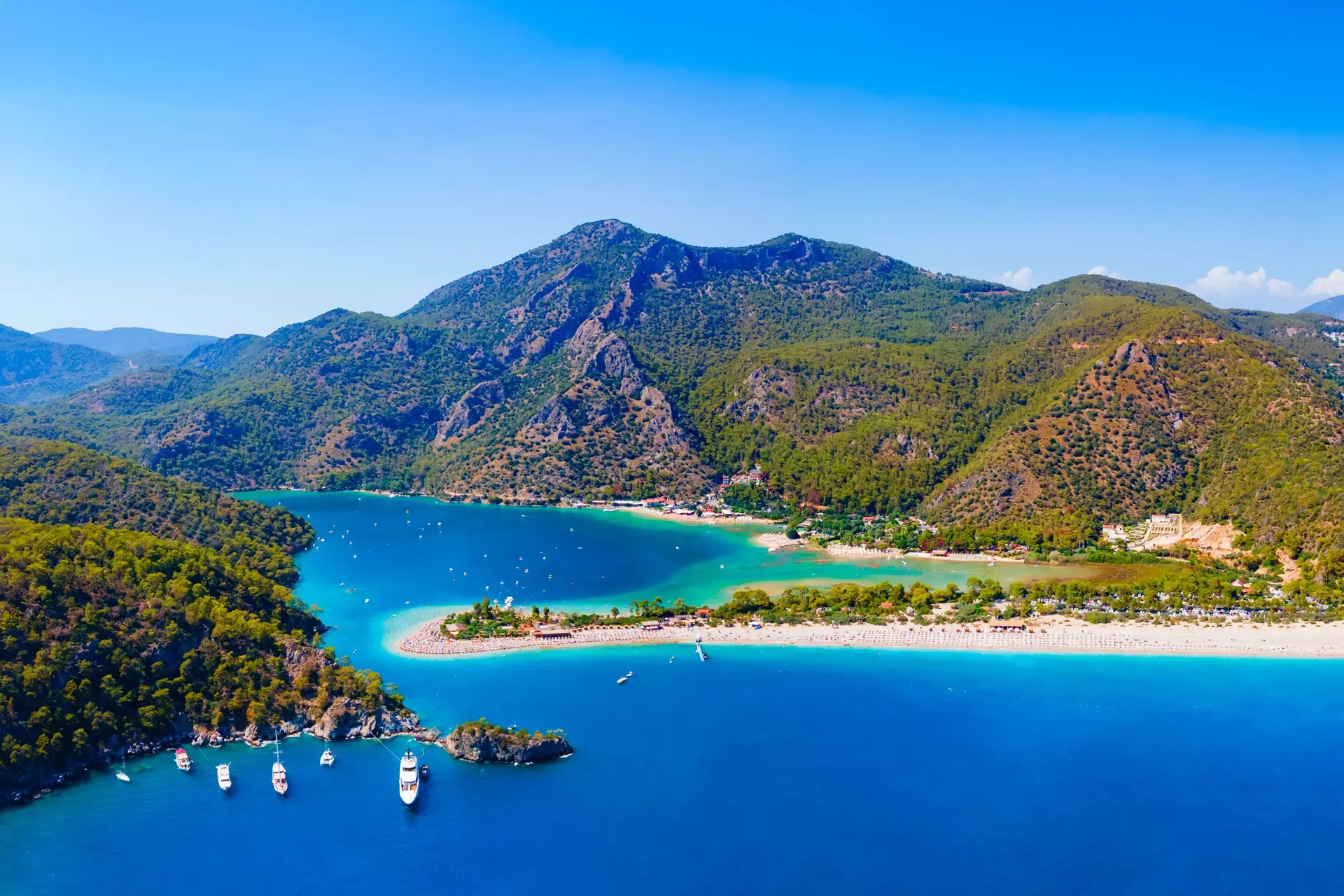
Ölüdeniz Blue Lagoon — the Aegean holds 25–28 °C in September, with the meltemi easing and the beach-club crowds gone by mid-month.
How Crowded Is Turkey in September? The Week Europe Goes Back to School
Turkey in September is 10–20% quieter at the major sites than in August, and the month empties in three dated steps. Northern Hemisphere schools go back in the first week, and the queues at Hagia Sophia, Ephesus and the Pamukkale terraces shorten almost overnight. Turkish schools reopen around the second week (MEB sets the date each year), which takes the domestic families off the Antalya beaches and out of Cappadocia. Then, from about the 20th, one group comes the other way: Southern Hemisphere schools break between terms, and a concentrated cluster of Southern Hemisphere families lands on Göreme’s limited cave-hotel stock. The middle of the month, 10 to 20 September, is therefore the quietest ten days of the whole warm season.
Hagia Sophia and Topkapı: noticeably fewer visitors inside from the first week; a 09:00 entry still beats the day-trip coaches, but the general line is short by 10:30
Ephesus: the marble street is walkable from the 08:00 opening through mid-morning, and the afternoon block reopens because the coach groups have thinned with the heat
Antalya and the Aegean beaches: sunbed rows open up after the first week and Bodrum restaurants take same-week bookings once the beach clubs empty
Cappadocia sunrise: hot air balloon counts ease from the 80–120 of an August morning, which shows in every photograph
Cappadocia hotels, last ten days: the one place that behaves like peak season — cliff-face family suites for 20–30 September tighten from mid-June
School-Holiday Windows That Land in September
Three groups get a clean window in September: families from the Southern Hemisphere on the between-terms break, families with children under school age, and families with a one-week mid-term break.
School Holiday Window
Best September Dates
Booking Lead Time
Southern Hemisphere term break (late September–early October)
20–30 September outbound; 10–14 day circuits fit the full break
10–14 weeks (book by mid-June for first-choice cave hotels)
Under-school-age families (no term constraint)
10–20 September — the quietest warm window of the year, with the widest property choice
8–12 weeks
One-week mid-term breaks (varies by school system)
5-day Istanbul–Cappadocia circuit with weekend travel days
8–12 weeks
The Grape Harvest in Cappadocia — the One Thing You Can Only See in September
Picking runs from the first week of September into early October in the valleys around Göreme, Ürgüp and Avanos. It is the only month of the year when the landscape under the hot air balloon launch fields is a working one. For a family choosing between September and October for a Cappadocia leg, it is the clearest single reason to take September. The vines sit in volcanic soil in shallow bowls between the fairy chimneys, which is why the rows look scattered from the ground and read as a pattern from the air.
The sunrise flight crosses those working rows at 300–600 metres, so families see the baskets and the pickers below before breakfast. Back on the ground, the valley walk between Göreme and Çavuşin passes the same vineyards at eye level. Roadside stalls sell the fresh crop and the boiled-down grape molasses the region is known for, and children are usually handed a bunch to try without anyone asking. Village presses in Ürgüp and Avanos take visitors in through the picking weeks. A licensed local guide arranges the stop on the day, not in advance, because harvest dates move with the weather.
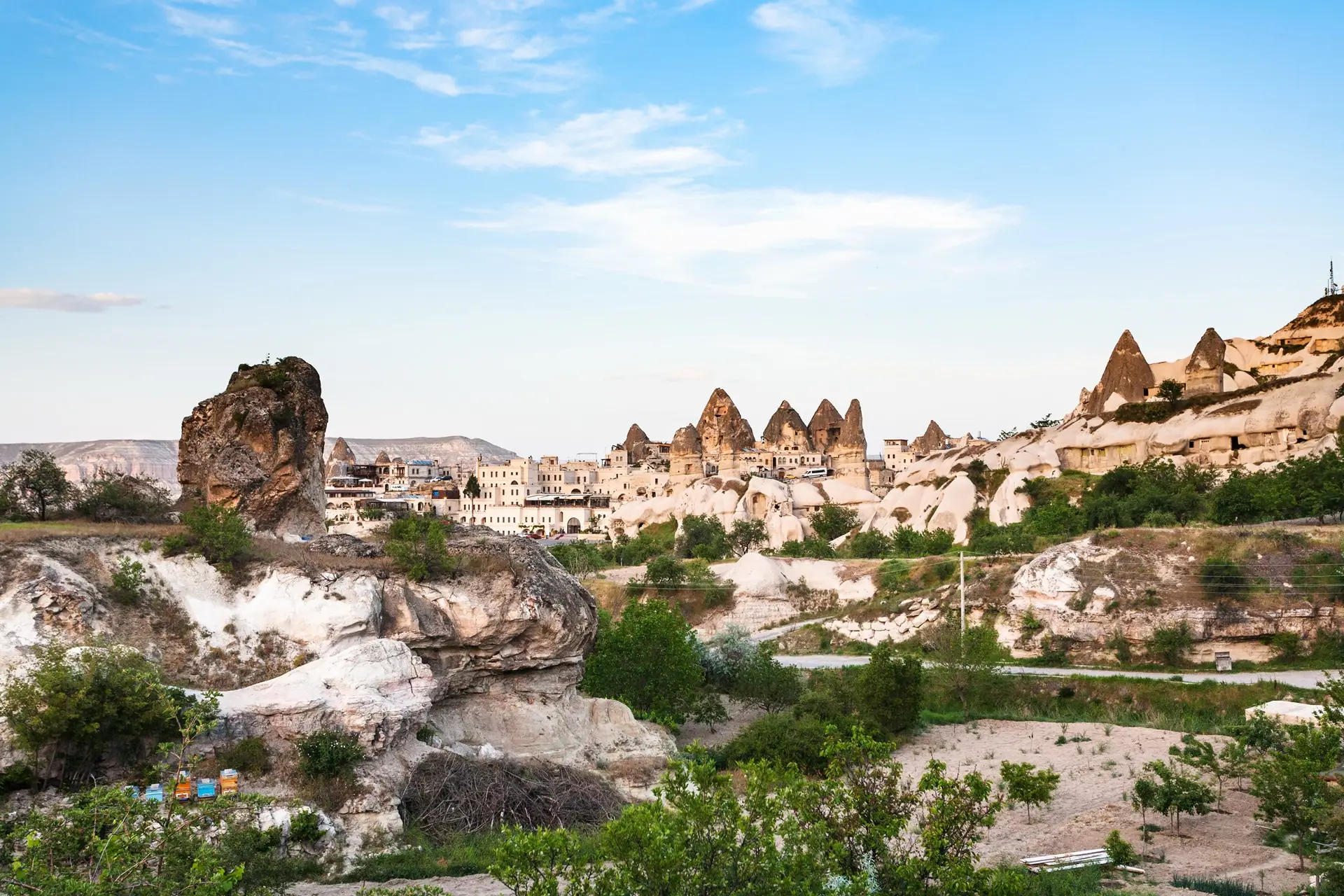
The worked valley floor below Göreme. Picking runs from the first week of September into early October in these bowls, the only weeks of the year when the ground under the launch fields is being worked.
How the Harvest Fits a Route
The harvest does not need its own day. On the 5-day and 10-day circuits it sits inside the second Cappadocia afternoon, after the underground city and before the cave hotel. On the 11-day overland route it stretches further, because the drive from Ankara to Cappadocia crosses the same vine country on the way in. Late-September departures catch the pressing instead of the picking, which is quieter and better for younger children.
Thirteen Hours of Daylight — How September Reshapes the Touring Day
September daylight runs about 13 hours on the 1st and just under 12 hours by the 30th, a loss of roughly an hour and a quarter across the month. That is the biggest planning difference between an early and a late September departure. Unlike July and August, none of that daylight is spent hiding from the heat, so a September day holds three or four full stops instead of two plus a long lunch retreat.
What We Change as the Month Goes On
The hot air balloon pickup slides later — about 04:45 in the first week and closer to 05:15 by the last, because lift-off tracks first light, not the clock
Ephesus and Pamukkale reopen in the afternoon — the 14:00–17:00 block is walkable again, so the Aegean day stops being a race against noon
The Bosphorus sunset cruise moves forward — Istanbul sunset falls from about 19:35 to 18:50 across the month, so a late-September family boards earlier and still eats dinner on time
The last site of the day changes — in early September we can add an outdoor stop after 17:00; from about the 20th that slot goes to an indoor site or an early dinner instead
Pamukkale’s travertines stay walkable right through the morning in September, without August’s midday surface heat.
Hot Air Balloons Over the Harvest: September in Cappadocia
Cappadocia hot air balloon flights in September carry a ~92% launch rate — the opening of the autumn window that, with April–May, sits among the year’s most reliable flying spells. See our full Cappadocia hot air balloon guide for booking timing, operator selection, child-age policies, and weather-cancellation rules.
Cappadocia launches on roughly 11 September mornings out of 12. Two Cappadocia nights mean a rare weather hold costs the family a lie-in, not the flight.
Why the ~92% Fly Rate Matters
Operators fly only when pre-dawn wind conditions meet the safety thresholds set by the Turkish Directorate General of Civil Aviation (SHGM). The September figure is among the highest of any month, and the balloon guide sets it against the full year. September’s autumn-onset stability keeps the rate close to the summer peak:
Stable autumn air — the plateau’s overnight cooling steadies as summer thermals fade; mornings sit at the warm end of the autumn range
In context — roughly 1 in 12 mornings sees a weather hold; a 2-night stay drops the double-miss probability below 1%
Harvest below the basket — September flights cross vineyard rows mid-picking between Göreme, Ürgüp and Avanos
Thinner sky — balloon counts ease from the 80–120 of August peak mornings (the SHGM daily cap is about 150); more open sky in every photograph
What the September Hot Air Balloon Morning Looks Like
A September hot air balloon morning runs from a 04:45 pickup to a 07:45 return — about three hours door to door, roughly 45 minutes later than the midsummer schedule because dawn arrives later.
04:45 — Hotel pickup from Göreme, Ürgüp, or Uçhisar (private van); dawn arrives later than midsummer
05:45 — First basket lift into the pre-sunrise band
06:00–06:45 — Sunrise over the tuff valleys and harvest-season vineyards
07:15–07:30 — Landing; juice or champagne toast (non-alcoholic option available)
07:45 — Return to cave hotel; Turkish breakfast before the morning activity block
September Hot Air Balloon Pricing and Lead Time
A standard 60–75 minute flight runs USD 250–350 pp in September, and most operators will not carry children under 6. For late-September term-break dates the slot should be confirmed by mid-July; mid-month dates hold availability closer to departure. Basket sizes, child-age rules and cancellation terms are in the balloon guide.
Where to Go in Turkey in September: Region by Region
Where to go in Turkey in September: Antalya and the Mediterranean coast for a 28–29 °C sea under 31–34 °C air, Cappadocia for the grape harvest and one of the year’s most reliable hot air balloon months, Istanbul for full 09:00–18:00 touring days at 25–28 °C, and Ephesus and Pamukkale for afternoon walking that August does not allow. The Aegean at Bodrum and Fethiye holds 25–28 °C water with the beach-club crowds gone by mid-month. The notes below cover each stop in turn; the weather table above has the numbers side by side.
Istanbul in September
Istanbul runs 25–28 °C through September, and that band is what puts the city back on a continuous 09:00–18:00 schedule for a family. Daytime highs of 25–28 °C mean Sultanahmet, the Grand Bazaar, and the Bosphorus waterfront run comfortably from morning to evening — the two-window heat regime of July–August is gone. Hagia Sophia’s halls run noticeably quieter once Northern Hemisphere schools resume in the first week. Evenings cool toward 17–19 °C; a light layer covers the Bosphorus dinner cruise. Our Istanbul planning guide breaks the city down neighbourhood by neighbourhood, from Sultanahmet to the Bosphorus villages.
Full-day touring returns: continuous 09:00–18:00 sightseeing blocks — roughly one more major site per day than an August schedule
Quieter halls: 10–20% fewer visitors inside Hagia Sophia and Topkapı from the first week — and timed entries put your family straight through
Evenings: 17–19 °C with outdoor dining through the month; sunset moves from 19:35 to 18:50 across September
Sea still swimmable: the Marmara and Bosphorus beaches hold ~24 °C for a Princes’ Islands swim stop
Istanbul runs 25–28 °C through September, and the Bosphorus sunset cruise moves forward from about 19:35 to 18:50 across the month.
Cappadocia in September
Cappadocia in September pairs the ~92% hot air balloon fly rate with the region’s harvest season. The vineyard valleys between Göreme, Ürgüp and Avanos pick grapes through the month, and sunrise flights cross working harvest rows. Days reach 24–27 °C with cool 10–14 °C nights, the first sign of plateau autumn. The Göreme valleys are a UNESCO World Heritage site. Valley hikes run in full-day windows again; the 06:00–10:00-only rule of high summer no longer applies. The cliff-face properties hold September space into early summer — book by mid-June for late-September dates. Our Cappadocia planning guide sets out the valley structure, the cave-hotel tiers and the hiking routes.
Hot air balloon reliability: a 2-night stay keeps the second morning as backup and drops the double-miss risk below 1%
Harvest season: September grape picking across the vineyard valleys, with the presses running by the third week
Full-day hiking: Rose Valley, Pigeon Valley, and Love Valley open all day at 24–27 °C daytime highs
Cave hotel access: shoulder-season availability — the cliff-face Göreme rooms that August books out months ahead remain bookable into early summer for most September dates
Cool nights: 10–14 °C — pack a fleece for the hot air balloon morning and evening terraces
Antalya and the Mediterranean Coast in September
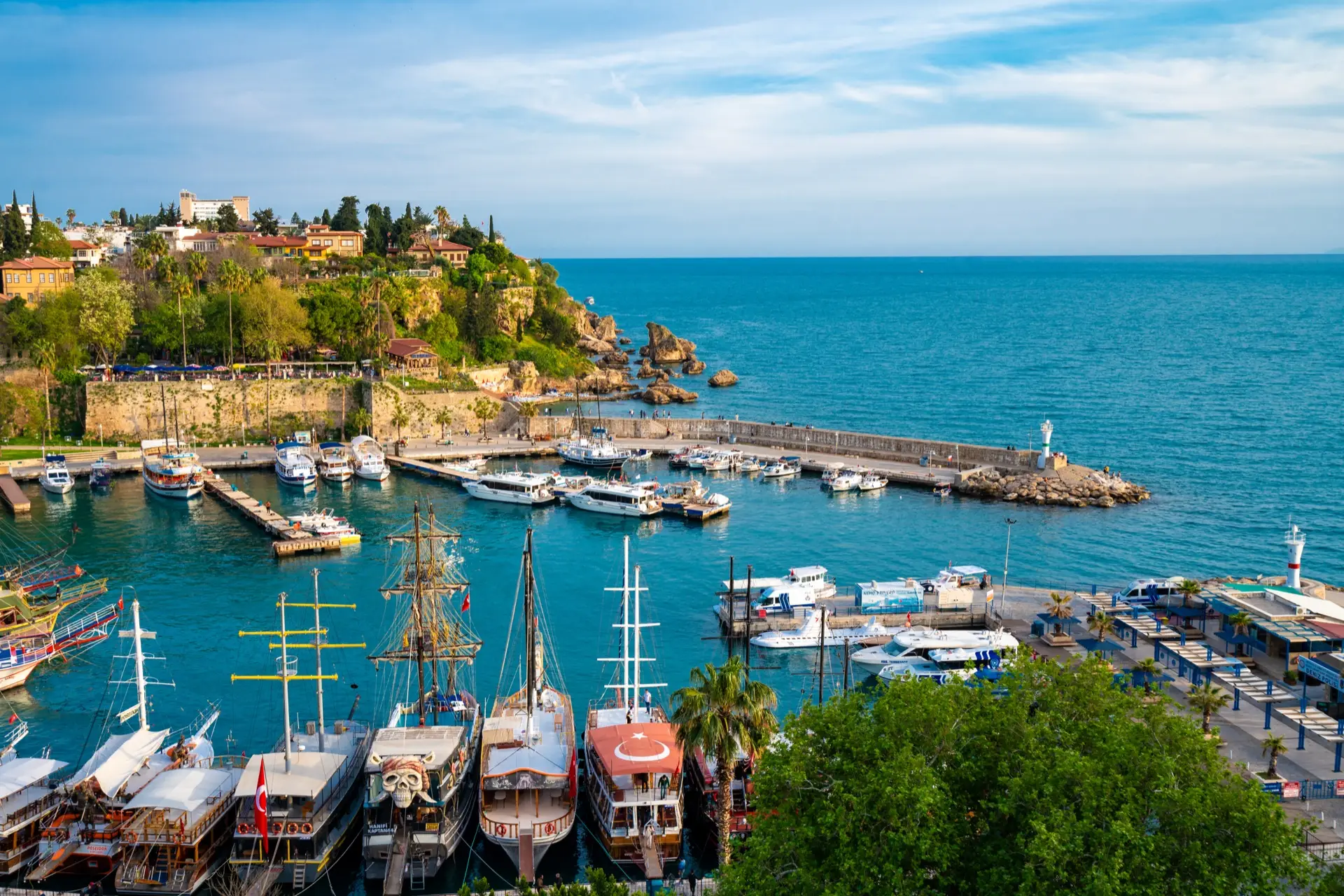
Antalya in September holds a 28–29 °C sea under daytime highs of 31–34 °C, down from August’s 36–40 °C. Konyaaltı Beach and the Belek resort corridor stay fully open with thinner crowds after the first week. Aspendos and Perge move back into comfortable mid-morning visits. The beach-by-beach Antalya planning covers Kaleiçi old town, the beach zones, and day-trip sequencing.
Water temperature: about a degree and a half off the August peak; comfortable for children of any age through the month
Air relief: 31–34 °C daytime — hot but manageable; beach days no longer need the strict midday-only structure
Aspendos Roman Theatre: comfortable at mid-morning again — the stage building and the full 15,000-seat cavea still standing, without the 07:00-only constraint
Resort availability: Belek family resorts move off peak-season sell-out, with wider availability through the shoulder season
Pamukkale in September: morning entry still beats the tour-coach waves, and the travertines are walkable through the whole morning without August’s surface heat
Antalya’s old harbour below the Kaleiçi walls. The sea cools far more slowly than the air, so a September afternoon here runs 31–34 °C over water still within a degree of the August peak — which is why a September beach day with children no longer needs a midday retreat.
Aegean Coast (Bodrum, Çeşme, Fethiye) in September
The Aegean is the month’s quietest warm-water option for a family with strong swimmers: 26–28 °C water, the meltemi wind easing, and the summer beach-club crowds gone by mid-month. Ölüdeniz Blue Lagoon stays calm and warm, and Bodrum restaurants take same-week bookings once the beach-club crowds leave. Ephesus — the region’s cultural anchor — returns to full-morning walkability at 29–33 °C. Our Turkey Travel Guide covers the full Aegean route.
Water temperature: 25–28 °C Aegean — peak-summer warmth without peak-summer beach density
Ölüdeniz Blue Lagoon (Fethiye): calm, warm shallows through September; paragliders still descend from Babadağ all day
Ephesus in comfort: morning entry still recommended to beat coach groups, but the marble streets stay walkable well past midday
Ephesus and Pamukkale in September
Ephesus runs 29–33 °C in September with one rain day in the month, so the marble main street is walkable from the 08:00 opening through mid-morning instead of the July–August dawn-only window. The Library of Celsus and the Great Theatre take direct sun after 11:00, so your guide reverses the standard route and holds both under morning light. Pamukkale sits at 30–34 °C on the limestone plateau, where the white travertine reflects heat back at walking level. Families walk the terraces barefoot before 10:00 and take Hierapolis in the afternoon. Both fit a single day between Cappadocia and the coast on the 8-day, 10-day and 11-day circuits.
What Is Open in September, and Which Events Are On
Everything is open. September is the last full month of summer hours in Turkey, and nothing seasonal closes before the 30th. Hagia Sophia, Topkapı, Ephesus and the Pamukkale terraces keep their summer opening times. The Bosphorus ferries and the Princes’ Islands boats run the summer timetable. The beach clubs at Ölüdeniz and the paragliding launches on Babadağ work all day to the end of the month, and the Belek and Side resorts are fully staffed. There is no national public holiday in the month. The calendar runs clear from Victory Day on 30 August to Republic Day on 29 October, so no site or bazaar has a holiday closure to plan around. Go Türkiye carries the official opening times for the sites named here.
What Is On in September
The Cappadocia grape harvest — picking in the Göreme, Ürgüp and Avanos valleys from the first week into early October (the harvest section above)
The Bozcaada vintage festival — the Aegean island off the Troy coast celebrates its own harvest in early September, a day-trip add-on for families already on the Gallipoli–Troy leg
Istanbul’s outdoor season — rooftop and waterfront dining runs all month at 17–19 °C evenings, and the sunset Bosphorus cruise still sails in daylight, an hour earlier by the 30th than on the 1st
What September does not have is autumn colour, which arrives in Cappadocia’s valleys in October, and the winter balloon odds that start to fall in November.
What to Pack for a September Trip
One September itinerary can hold a 33 °C Antalya afternoon and a 10 °C Cappadocia hot air balloon dawn inside 48 hours, so the packing problem is range, not temperature. Layers matter more than heavy clothing.
What
Why in September
A fleece or light insulated jacket per person
Cappadocia dawns run 10–14 °C on the launch field, even when the afternoon reaches 27 °C
Closed walking shoes with grip
Ephesus is polished marble and Pamukkale is wet limestone; both are walked barefoot or in grip shoes, never in sandals
Swimwear packed at the top
The sea is 28–29 °C and Cleopatra’s Pool at Hierapolis is warm all month
Sun hats and high-factor sunscreen
Midday UV is still at summer strength inland, even with the air 5–7 °C below August
A light rain shell for Istanbul
4–6 rain days, nearly all after the 20th, in short afternoon bursts
Long trousers or a scarf for the Blue Mosque and Süleymaniye
Shoulders and knees covered; scarves are lent at the door but a family’s own is easier with children
A refillable bottle per child
Full touring days return in September, so more of the day is spent walking than on a July trip
Layers for the hot air balloon morning specifically
A 04:45 pickup, an open basket at altitude and a 28 °C breakfast two hours later
September vs August vs October: Where Each Month Wins
Across the three months the sea cools by about two degrees a month and the Cappadocia hot air balloon fly rate slips by a point or two. Families with flexible dates weigh those numbers against crowds and cost, and each month wins a different dimension. For the full 12-month picture, our Best Time to Visit Turkey hub grades every month on the same family-travel dimensions. The table below isolates the transition months.
Dimension
August
September
October
Cappadocia hot air balloon fly rate
~93%
~92%
~90%
Mediterranean sea temperature
28–30 °C (peak)
28–29 °C
26–27 °C (first 3 weeks)
Istanbul daytime high
30–32 °C (hottest)
25–28 °C
20–22 °C
Antalya daytime high
36–40 °C (extreme)
31–34 °C
26–29 °C
Crowd density
Peak (domestic adds pressure)
Shoulder (10–20% lower)
Shoulder
Seasonal tier
Peak
Shoulder
Shoulder
Booking lead time
14–20 weeks (longest)
8–14 weeks
8–14 weeks
School-holiday alignment
Summer break + international school summer
Southern Hemisphere term break (late month)
Autumn half-term breaks + term-break tail
Signature seasonal layer
Peak-sea beach season
Grape harvest in Cappadocia; warm sea + cool cities
Full autumn colour in the valleys
When September Wins
September wins on conditions. The sea sits within a degree of the August peak, the hot air balloon fly rate within two points of it, and full-day city touring — with sites 10–20% quieter than the peak weeks. It is the strongest month of the year for families with children under school age, who can travel outside every term calendar and take the mid-September quiet window. It is also the natural fit for Southern Hemisphere term-break families in the final week. See our Turkey in August guide and Turkey in October guide for the neighbouring months.
When August Beats September
August beats September when the family is locked to the Northern Hemisphere summer holiday — the single biggest reason to accept peak pricing. It also wins for maximum sea warmth (28–30 °C vs 28–29 °C) and the marginally higher hot air balloon fly rate (~93% vs ~92%). Families who want the full peak-season energy — 80–120 hot air balloons aloft at sunrise, resort programmes at full tilt — find it in August, not September. See our Turkey in August guide for the full peak-season picture.
When October Beats September
October beats September for autumn colour — the vineyard and orchard valleys of Cappadocia turn fully golden in October, where September shows late-summer green with harvest activity. October’s cooler cities (Istanbul 20–22 °C) suit families who prefer crisp walking weather to warm. Swimmers should note the trade: the Mediterranean holds 26–27 °C through October’s first three weeks and slips to 25–26 °C in the last. October also carries autumn half-term school breaks in several systems. See our Turkey in October guide for the full autumn detail. One month past October the trade sharpens again. By November the fly rate is about 75%, Istanbul walks at 16.1 °C, and most seasonal coastal hotels have closed.
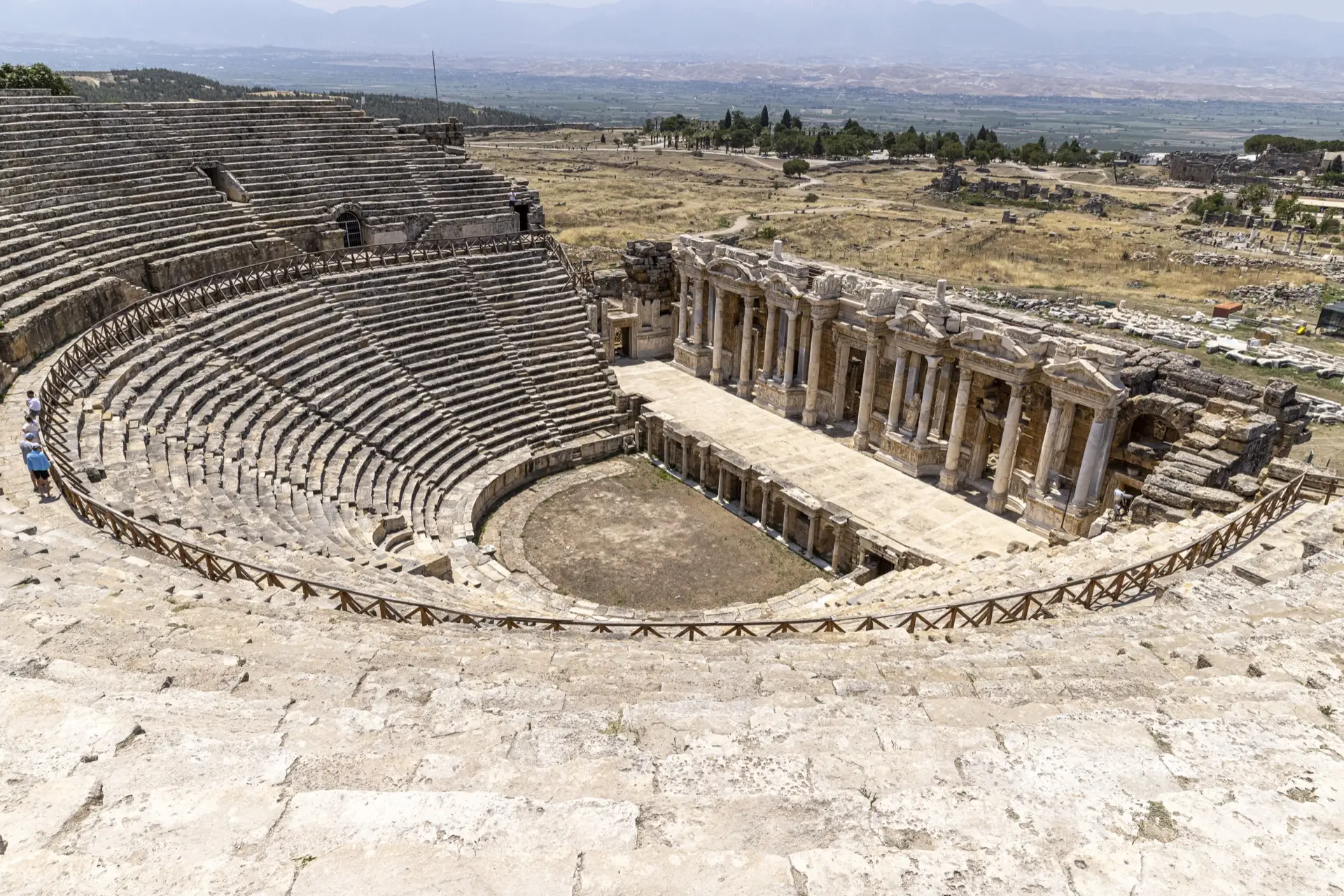
Hierapolis in September — major-site queues run 10–20% below the August peak from the first week of the month.
How Many Days September Needs, and What Each Route Costs
September restores the full touring day, so each day holds roughly one more site than an August day and a route needs fewer days to cover the same ground. Five days covers Istanbul and Cappadocia with the hot air balloon morning and fits a one-week mid-term break with weekend travel days. Ten days is the shortest frame that holds the balloon, the warm sea at Antalya and the Aegean sites in one trip, and it is the shape most September families book. Twelve to fourteen days adds Gallipoli, Troy and the Fethiye coast without compressing anything, and is the natural fit for the Southern Hemisphere term break in the last ten days. Our 7-day, 10-day and two-week itineraries lay each shape out day by day.
Every figure is per adult, twin-share. It covers the private vehicle with driver, a licensed local guide, hand-picked 4-5 star and boutique hotels with family rooms, and breakfasts. All listed site entrances and every domestic flight on the route are included. Children aged 7 and over are quoted as adults; ages 4–6 are discounted 40% and under-4s 70%. The hot air balloon flight sits outside the quote at USD 250–350 pp. See every private Turkey itinerary with its own September pricing.
September Lead Time: Eight to Fourteen Weeks, and the Mid-June Exception
Lead time for a private family tour in September runs 8–14 weeks — June or July booking for most dates — against August’s 14–20-week race. The one exception is the last ten days. Southern Hemisphere schools break between terms from late September, and that sends a two-week booking cluster at Göreme and Uçhisar’s limited cliff-face stock, so the family suites for 20–30 September tighten from mid-June. Mid-month departures hold space into early summer and offer the widest property choice of the entire warm season.
Cave hotels: the first thing to lock on any September route; book by mid-June for late-month dates, by July for the rest
Hot air balloon baskets: fill 8–10 weeks out; we book the flight with the operator once your dates are fixed, and small baskets (8–12 seats) go first
Minimum Cappadocia stay: two nights, so the rare weather hold costs the family a lie-in, not the flight
Frequently Asked Questions — Turkey in September
A private family tour of Turkey in September starts at USD 1,690 pp for a 5-day Istanbul and Cappadocia route. Ten days with Antalya runs USD 3,490 pp, and a two-week Gallipoli-to-Cappadocia circuit USD 4,450 pp. All pricing is per person, twin-share. It covers a licensed local guide and a private vehicle with driver, all domestic flights and site entrances, and hand-picked 4-5 star and boutique hotels with family rooms, including a cave hotel in Cappadocia. September is shoulder season: cave hotels and hot air balloon slots hold wider availability than the August peak. Get a private quote for your September dates →
Late summer on the coast, early autumn at night on the plateau. Antalya runs 31–34 °C by day with a 28–29 °C sea, the Aegean coast 29–32 °C, and Istanbul 25–28 °C with 17–19 °C evenings. Cappadocia reaches 24–27 °C in the afternoon but starts the day at 10–14 °C, which is why a fleece goes in the bag for the hot air balloon morning. Rain stays at about one day on the coast and 4–6 days in Istanbul, nearly all of them short afternoon fronts after the 20th. Daylight falls from 13 hours on the 1st to just under 12 by the 30th. The region-by-region table above gives the night lows and rain days for each stop.
The 8–14 week window is our planning target for September — meaning June–July for most departures. Two pockets tighten earlier. The first week carries summer-tail demand from returning peak-season families. The last week of September is heavier still, because Southern Hemisphere school systems break between terms and a 2–3 week booking cluster lands on Cappadocia cave hotels. September hot air balloon baskets fill 8–10 weeks out. We book the flight with the operator once your dates are fixed, and cave hotels fill before the baskets do. Compared with August’s 14–20 week race, September is a forgiving month to book, but cliff-face Göreme cave hotels remain the first inventory to go. Send your September dates for a held quote.
Cancellations must be made in writing, by e-mail, to Turkey Family Tours (TURSAB-licensed, no 13538). The 25% deposit that reserves your tour is non-refundable for any cancellation. If you cancel less than 7 days before the tour, or do not show up, no refund is given and the full tour fee is due. Because the remaining 75% is paid on arrival in Turkey — in cash or by credit card — cancelling earlier than 7 days simply means the deposit is retained; nothing more is owed. Share your dates via Plan My Trip and these terms arrive in writing with your fixed quote.
The Mediterranean at Antalya holds 28–29 °C, about a degree and a half below the August peak, because the sea releases summer heat slowly. The Aegean at Bodrum and Fethiye holds 25–28 °C, and Ölüdeniz Blue Lagoon remains calm and warm through the month. What changes is everything around the water. Beach crowds thin from the first week and sunbed rows open up. The air cools from August’s 36–40 °C to a comfortable 31–34 °C, which is warm enough for full beach days without the extreme-heat management July and August demand of a family. Our Antalya Travel Guide covers beach-by-beach detail.
Early September (1–10) and late September (20–30) solve different problems for a family. Early September (1–10) keeps near-August sea warmth and long daylight, with summer crowds already draining — the strongest choice for beach-priority families. Late September (20–30) eases Istanbul toward the bottom of its 25–28 °C band, brings the grape harvest across Cappadocia’s valleys, and aligns with the Southern Hemisphere term break — the main September school-holiday window. Lead time runs 8–14 weeks across the month; only the 20–30 September cave-hotel family suites tighten from mid-June. For a 10-day trip, arriving 5–15 September balances warm sea and thinning crowds; arriving 20–28 September fits the term-break calendar.
The fly rates are close: ~92% in September vs ~90% in October — both among the most reliable windows of the year. The difference is at the launch field. September’s pre-dawn sits at 10–14 °C, so children board in a light fleece. October mornings drop to 5–8 °C and need a down layer. September flies over vineyards mid-harvest and valleys still holding summer green; October trades that for full golden autumn colour. Hot air balloon pricing eases from the August peak in both months. For warm-morning comfort with near-identical reliability, September has the edge; for photography of autumn colour, October wins. See our Cappadocia Hot Air Balloon Guide for booking timing and operator selection.
Yes. September is the last full month of summer hours. Hagia Sophia, Topkapı, Ephesus and the Pamukkale terraces keep their summer opening times. The Bosphorus and Princes’ Islands ferries run the summer timetable, and the beach clubs, resorts and paragliding launches on the coast work to the 30th. There is no national public holiday in the month: the calendar runs clear from 30 August to 29 October, so no site has a holiday closure. The only thing that changes is the hour: sunset moves from about 19:35 to 18:50 across the month, so the last outdoor stop of the day shifts earlier from around the 20th. Seasonal coastal hotels begin closing in late October, not September.
Plan a September Route with Turkey Family Tours
At Turkey Family Tours we build September around its two windows. The quiet 10–20 September band suits families with flexible calendars; 20–30 September fits the Southern Hemisphere term break. In both, the cave hotel and the hot air balloon morning are named by date in the plan. Send your group size, the ages of the children and your September window through Plan My Trip, and a day-by-day outline with a fixed quote comes back within 24 hours. Most international visitors enter on the Turkey e-Visa; check the requirement for your passport at evisa.gov.tr before you book flights.
Not sure September is the right month? Our Best Time to Visit Turkey hub grades all twelve months on the same family dimensions, and the August and October guides cover the two neighbours in the same detail. For ground-level planning in each place, the Istanbul, Cappadocia and Antalya travel guides pick up where this page leaves off.
Turkey Family Tours — TURSAB-licensed operator (no 13538), rated 5.0 on Tripadvisor. Private guided tours of Turkey.
The best time to visit Turkey in August: hot inland with dawn starts for the ruins and the Cappadocia balloon, warm seas on the coast — private tour itineraries and costs. TURSAB-licensed.
How many days in Cappadocia? Two nights covers the Göreme valleys, an underground city and the sunrise hot air balloon; one day works from Istanbul but skips the balloon.
The best time to visit Turkey, month by month: ~90–95% Cappadocia hot air balloon reliability from May to October, sea temperatures, school-holiday windows and booking lead times.
Turkey in April splits at the 15th: showers and 17.4 °C highs in Istanbul in the first half, tulips, green Cappadocia valleys and a 21 °C coast in the second. Hot air balloons launch into 5 °C sunrises, and private land arrangements run USD 1,435–4,450 per adult.
Turkey in January is the coldest month of the year: 9.6 °C by day in Istanbul with 16 wet days, 15 °C in Antalya and −3.6 °C nights in Cappadocia. Hot air balloon flights go ahead on 50–60% of mornings, sites are open and quiet, and private routes start from USD 1,435 per adult.
Turkey in February keeps January’s temperatures and gains March’s light: 10.2 °C by day in Istanbul, 15.6 °C in Antalya and −2.6 °C nights in Cappadocia. Antalya gets a third less rain than in January, Istanbul gains 67 minutes of daylight, hot air balloon flights go ahead on 45–55% of mornings, and private routes start from USD 1,690 per adult.
A Cappadocia hot air balloon flight costs USD 250–350 per person, depending on the month. The best months to fly, the official flying-day count, the age limit and what happens when a flight is grounded.
Turkey in May runs 20 to 28 °C by day. Regional weather, sea temperatures from early to late May, holiday dates, hot air balloon odds and private routes.
✦ Tailor-Made
Let's Plan Your Private Turkey Trip
Tell us about your family — we reply within 24 hours.

 English
 Dutch
Dutch Japanese
 Korean
 Chinese