 English
 Dutch
 Japanese
 Korean
 Chinese
Turkey in July: Weather, Sea Temperatures and Where It’s Cooler
Turkey in July: Istanbul 29.7 °C (85 °F), Ephesus 36.4 °C, Cappadocia nights 13.7 °C, sea 24–28 °C. Where it’s cooler and private routes from USD 1,940.



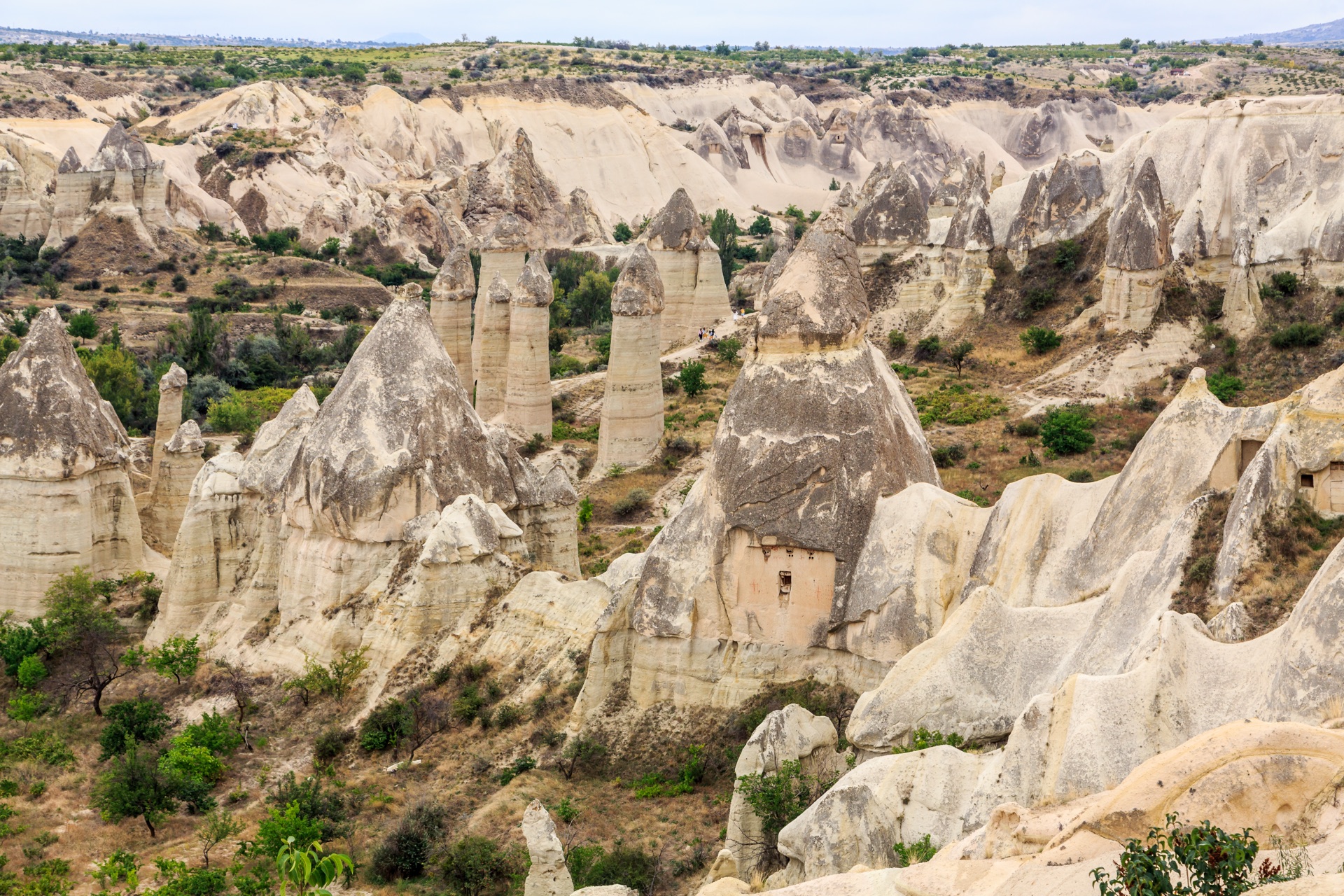
Quick Answer: Turkey in February is still winter, but a drier and brighter one than January. Istanbul reaches 10.2 °C (50 °F) by day, Antalya 15.6 °C (60 °F) and Cappadocia 5.5 °C (42 °F), where nights average −2.6 °C (27 °F). Antalya gets a third less rain than in January, and Istanbul gains 67 minutes of daylight between the 1st and the 28th. February is also Istanbul’s snowiest month, with three to four days of snowfall. Hot air balloon flights in Cappadocia go ahead on about 45–55% of February mornings, so two Cappadocia nights give two launch windows. A private Turkey tour in February costs from USD 1,940 per adult for five days in Istanbul and Cappadocia to USD 4,770 for 12 days. Every route has hand-picked 4-5 star boutique hotels, a licensed local guide and a private vehicle with driver in every region. Turkey Family Tours is TURSAB-licensed (no 13538). A 25% deposit confirms the booking; 75% is paid on arrival. Get a Private Quote →
Turkey in February has January’s temperatures and March’s light. Istanbul reaches 10.2 °C (50 °F) by day, only 0.6 °C above January. Antalya’s rain falls from 226 mm to 148 mm, and the sun sets in Istanbul 33 minutes later on the 28th than on the 1st. The figures on this page are the long-term February normals of the Turkish State Meteorological Service for ten cities. After the weather come rain by coast, snow days in Istanbul, hot air balloon odds, the first week against the last, and private family routes with prices. This page is the February chapter of our guide to the best time to visit Turkey, month by month.
Planning a private Turkey tour?
We build family-paced private itineraries with hand-picked 4-5 star hotels and send a written plan and fixed price within 24 hours.
Turkey weather in February runs from 15.6 °C (60 °F) on an Antalya afternoon to −5.1 °C (23 °F) on a Kayseri night. That is a spread of almost 21 degrees inside one country, so no single forecast fits a route that crosses it. The table gives the February normals for ten cities on or near our private routes. Every figure is from the Turkish State Meteorological Service record for 1991–2020, except the one Istanbul cell marked *.
| City (what it stands for) | Average day high | Average night low | Rain, month total | Wet days in the month | Sunshine per day |
|---|---|---|---|---|---|
| Istanbul | 10.2 °C (50 °F) | 4.2 °C (40 °F) | 71 mm | 13.9 | 3.7 h* |
| Nevşehir (Cappadocia) | 5.5 °C (42 °F) | −2.6 °C (27 °F) | 41 mm | 12.1 | 4.2 h |
| Kayseri (Cappadocia airport) | 6.3 °C (43 °F) | −5.1 °C (23 °F) | 36 mm | 11.4 | 4.0 h |
| Antalya (Mediterranean) | 15.6 °C (60 °F) | 6.4 °C (44 °F) | 148 mm | 10.4 | 5.7 h |
| İzmir (Aegean coast, Ephesus side) | 13.7 °C (57 °F) | 6.2 °C (43 °F) | 101 mm | 10.5 | 5.3 h |
| Aydın (Aegean valleys, Kuşadası side) | 14.9 °C (59 °F) | 5.1 °C (41 °F) | 90 mm | 10.1 | 4.3 h |
| Denizli (Pamukkale) | 12.4 °C (54 °F) | 3.1 °C (38 °F) | 69 mm | 10.5 | 4.5 h |
| Çanakkale (Gallipoli and Troy) | 10.3 °C (51 °F) | 3.5 °C (38 °F) | 71 mm | 10.3 | 4.5 h |
| Ankara | 6.5 °C (44 °F) | −2.2 °C (28 °F) | 35 mm | 11.0 | 3.8 h |
| Konya (on the road to Cappadocia) | 7.0 °C (45 °F) | −3.3 °C (26 °F) | 28 mm | 8.1 | 4.6 h |
* The state record for Istanbul sunshine is incomplete, so the cell uses the 1991–2020 Florya station figure of 103 hours for the month, listed under Climate of Istanbul.
The table splits into two groups. The four coastal and valley cities, from İzmir round to Antalya, sit at 12–16 °C by day and stay above freezing at night. The four plateau cities sit at 5–7 °C by day and drop below zero after dark. Istanbul and Çanakkale are in between, at about 10 °C, with wind off the water. A ten-day family route usually touches all three groups, so one suitcase has to cover that 21-degree spread.
Cold and wet do not go together in Turkey in February. Konya has 28 mm of rain in the month and Kayseri 36 mm. Antalya, ten degrees warmer, has 148 mm. On the plateau the rain often falls as light snow, which is why a Cappadocia valley can be white under a clear sky. For a family, that means dry cold in Cappadocia and mild rain on the coast, and the two need different clothes.
Istanbul has reached 23.4 °C in February and fallen to −9.0 °C, on the state record. Antalya’s February record high is 26.7 °C, and Nevşehir’s record low is −23.6 °C. These extremes are the reason a February route keeps its open-air days movable. Once the family has landed, the five-day forecast sets the order of the days, not the monthly normal.
Turkey is not hot in February: Adana, the warmest of the fourteen cities compared here, averages 16.2 °C (61 °F) by day. Adana is on the eastern Mediterranean, and only that south coast is warm. Antalya follows at 15.6 °C (60 °F). Both are mild spring-jacket afternoons, too cool for the beach. Antalya also has 148 mm of rain, more than twice Istanbul’s 71 mm. The ranking below puts fourteen cities in order of their average February day high, with the month’s rain next to each.
| Rank | City | Average day high, February | Rain, month total |
|---|---|---|---|
| 1 | Adana (eastern Mediterranean) | 16.2 °C (61 °F) | 88 mm |
| 2 | Antalya | 15.6 °C (60 °F) | 148 mm |
| 3 | Aydın (Aegean valleys) | 14.9 °C (59 °F) | 90 mm |
| 4 | Hatay (Antakya) | 14.5 °C (58 °F) | 163 mm |
| 5 | İzmir | 13.7 °C (57 °F) | 101 mm |
| 6 | Denizli (Pamukkale) | 12.4 °C (54 °F) | 69 mm |
| 7 | Bursa | 10.9 °C (52 °F) | 75 mm |
| 8 | Trabzon (Black Sea) | 10.8 °C (51 °F) | 64 mm |
| 9 | Çanakkale | 10.3 °C (51 °F) | 71 mm |
| 10 | Istanbul | 10.2 °C (50 °F) | 71 mm |
| 11 | Konya | 7.0 °C (45 °F) | 28 mm |
| 12 | Ankara | 6.5 °C (44 °F) | 35 mm |
| 13 | Nevşehir (Cappadocia) | 5.5 °C (42 °F) | 41 mm |
| 14 | Erzurum (eastern highlands) | −2.3 °C (28 °F) | 25 mm |
The Mediterranean coast between Antalya and Adana is the warmest part of Turkey in February, at 15.6–16.2 °C by day. The Aegean valleys around Aydın and Kuşadası come next, at about 15 °C. Both are roughly five degrees warmer than Istanbul and ten degrees warmer than Cappadocia. Of the two cities, Antalya is the one that fits a family route. It has direct flights from Istanbul, the Roman sites of Perge and Aspendos, and a walled old town.
Antalya gets twice Istanbul’s rain on fewer days. Its 148 mm falls over 10.4 wet days, which is about 14 mm on each of them. Istanbul’s 71 mm is spread over 13.9 wet days, about 5 mm each. On the ground, Antalya rain comes as a heavy downpour that clears, and the city still gets 5.7 hours of sun a day. Istanbul rain is lighter and lasts longer, under 3.7 hours of sun. A wet day in Antalya costs a family a morning. A wet day in Istanbul is grey from start to finish, and the indoor sites carry it.
The sea around Turkey is at its coldest of the year in February. The Mediterranean at Antalya averages 17.2 °C (63 °F), inside a usual range of 15.3–19.4 °C. The Marmara at Istanbul is just 8.5 °C (47 °F). The ten-year averages below are from seatemperature.info.
| Coast | Average sea temperature, February |
|---|---|
| Antalya (Mediterranean) | 17.2 °C (63 °F) |
| Fethiye (south-west) | 17.2 °C (63 °F) |
| Kuşadası (Aegean, Ephesus side) | 16.1 °C (61 °F) |
| Çanakkale (Dardanelles) | 12.2 °C (54 °F) |
| Istanbul (Marmara) | 8.5 °C (47 °F) |
Most families find anything under 20 °C too cold for children, so February is not a sea month anywhere in Turkey. A family that wants pool time should ask about a heated hotel pool when the route is planned, since not every hotel has one. For the months when the sea is warm enough for children, see our month-by-month guide to Turkey.
In Turkey, 28 February has 58 to 67 minutes more daylight than 1 February, depending on the city. Istanbul goes from 10 h 05 min to 11 h 12 min, a gain of 67 minutes inside one month. That makes the last week of February the better one for open-air days. Rain is also falling away from its January peak on every coast. Temperature is the one thing that hardly moves. For a family with flexible dates, the week matters as much as the region. The sunrise and sunset times below are from the NOAA solar calculator, on Turkey’s year-round UTC+3 clock. They match the timeanddate.com February table for Istanbul to within a minute.
| Place | Sunrise – sunset, 1 February | Sunrise – sunset, 14 February | Sunrise – sunset, 28 February | Daylight gained, 1st to 28th |
|---|---|---|---|---|
| Istanbul | 08:15 – 18:20 | 08:00 – 18:36 | 07:41 – 18:53 | +67 min |
| Göreme (Cappadocia) | 07:47 – 18:01 | 07:33 – 18:16 | 07:15 – 18:32 | +62 min |
| Antalya | 08:00 – 18:21 | 07:47 – 18:35 | 07:30 – 18:50 | +58 min |
| Selçuk (Ephesus) | 08:15 – 18:32 | 08:02 – 18:47 | 07:45 – 19:02 | +61 min |
| Çanakkale (Gallipoli) | 08:23 – 18:32 | 08:09 – 18:48 | 07:50 – 19:04 | +66 min |
Gains are worked out from the exact times, so a figure can differ by one minute from the clock times shown.
About half of the gain comes in the morning and half in the evening. In Istanbul the sun rises 34 minutes earlier on the 28th than on the 1st, and sets 33 minutes later. For a touring day that is one more open-air stop before dusk. For a hot air balloon morning in Göreme it moves the hotel pick-up earlier, because flights launch around sunrise. March gains more still, about 80 minutes in Istanbul, so February is only the start of the change.
Every coast is drier in February than in January, and drier again in March. Antalya drops by 34%, İzmir by 25% and Istanbul by 20%. The state service publishes normals by month, not by week. The months on both sides still show the direction. The last week of February sits closer to March, and the first week closer to January.
| City | January rain | February rain | March rain | Change, January to February |
|---|---|---|---|---|
| Antalya | 226 mm | 148 mm | 91 mm | −34% |
| İzmir | 135 mm | 101 mm | 74 mm | −25% |
| Istanbul | 89 mm | 71 mm | 62 mm | −20% |
Istanbul’s average day high goes from 9.6 °C in January to 10.2 °C in February, a rise of 0.6 °C. The step from February to March is 2.2 °C, almost four times as large. Antalya shows the same shape: 15.0, then 15.6, then 18.0 °C. Cappadocia moves a little more, from 4.0 to 5.5 °C, and then jumps to 10.3 °C in March. A family that picks February for warmth over January will not feel the difference. The gain is in light and in dry hours.
The first half of February suits a short Istanbul and Cappadocia route of 5 to 7 days, with an added Cappadocia night on the five-day version. Our 5 day Turkey itinerary shows the base plan before that extra night: three nights in Istanbul and one in a Göreme cave hotel. Most of it is indoors or in a heated cave room, so the darker half of the month costs a family little. The second half suits the longer routes that add Ephesus, Pamukkale or Antalya, because open-air days get more light and less rain. Our all-road route also comes back into play from mid-February. If the dates are flexible, the last ten days of the month are the pick for any route of eight days or more. Our 8 days in Turkey plan fits that window, with two Kuşadası nights for Ephesus at about 14 °C and Pamukkale at 12.4 °C.
Istanbul in February averages 10.2 °C (50 °F) by day and 4.2 °C (40 °F) at night, with 71 mm of rain over about 14 wet days. February is also Istanbul’s snowiest month, with 3.5 days of snowfall, and one of the two quietest at the great monuments.
Istanbul’s Florya weather station counts 3.5 days with snowfall in an average February, against 2.7 in January and 0.6 in March. The deepest snow cover of an average February is 7.5 cm. The station figures are listed under Climate of Istanbul. Sunshine is 3.7 hours a day, up from under three in January. The Bosphorus wind makes 10 °C feel colder on the water than in the old city.
Istanbul is built on steep hills, so on a snow day traffic slows, and ferries and domestic flights can run late. Snow rarely settles for more than a day. A private family tour absorbs it better than a fixed group timetable does. The guide swaps the order of the days, and the vehicle is never far. The reward is the old city under snow, with white domes on the Blue Mosque and an almost empty Hippodrome.
The big sights of the old city sit within ten minutes of each other by walking, and most are under a roof. A wet-day order that works with children runs like this:
February is one of the two quietest months of the year in Turkey, so a family with children rarely waits long at any of these doors.
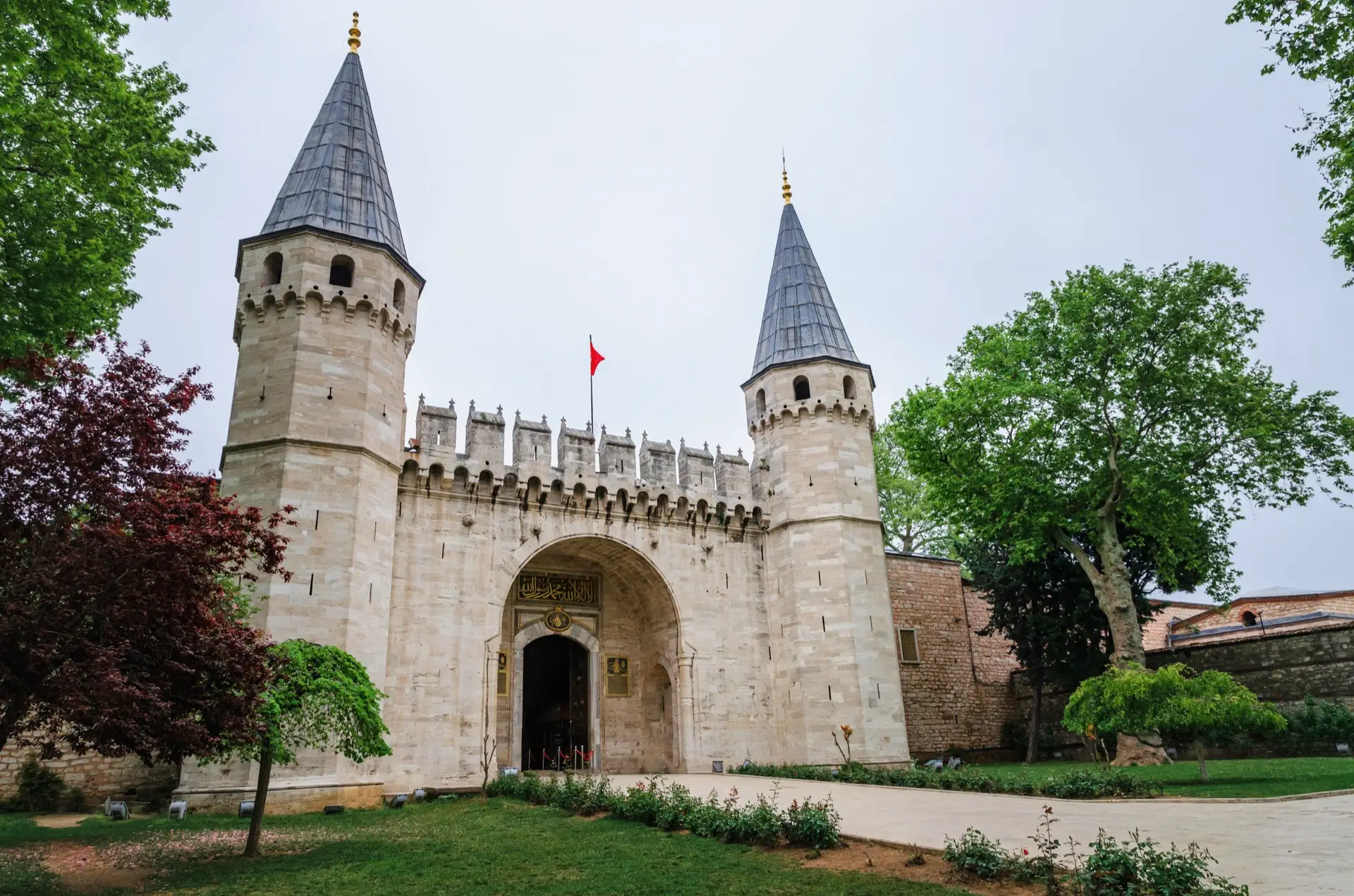
Public Bosphorus ferries sail all year, and every boat has a closed, heated saloon. A February cruise is a window seat with a glass of tea, and a few minutes on deck when the palaces go by. Our Istanbul Bosphorus cruise guide compares the public boats with a private yacht.
The Private Istanbul Old City Tour covers the wet-day sequence in one day from USD 220 per adult. The five-day private Istanbul package is USD 1,645 per adult with two adults sharing. For the neighbourhoods and the day-by-day order, see our Istanbul travel guide.
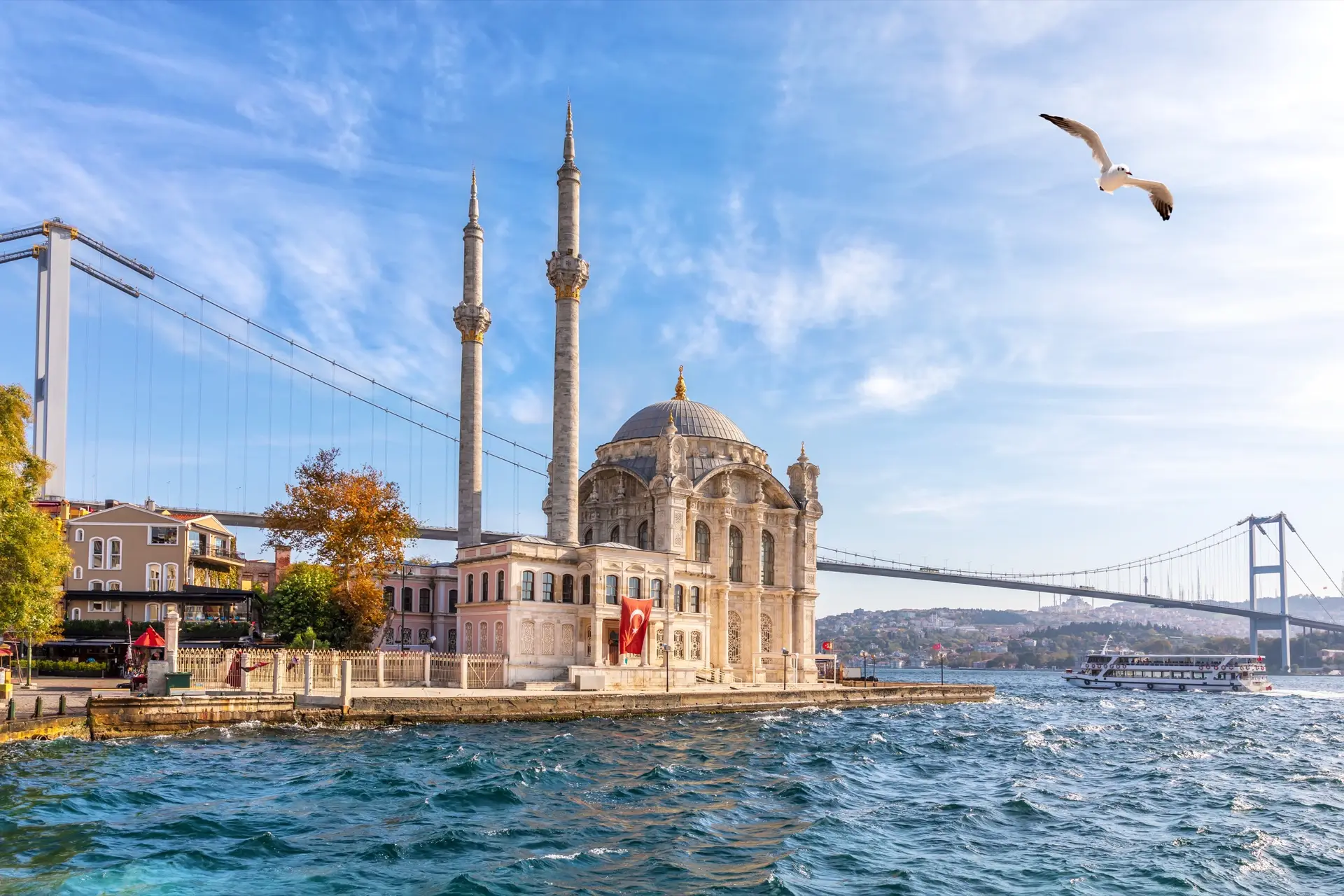
Hot air balloons in Cappadocia fly on about 45–55% of February mornings. That is the lowest band of the year, below 50–60% in January and 60–70% in March. The days themselves are cold and mostly dry. Nevşehir averages 5.5 °C (42 °F) by day and −2.6 °C (27 °F) at night, with 41 mm of rain or snow in the month. Sunrise in Göreme is at 07:33 in mid-February, so a flight morning starts with a hotel pick-up between 06:00 and 06:30.
Wind and poor visibility ground hot air balloon flights in Cappadocia, not cold. Winter fronts crossing the plateau bring both, and February still has plenty of them. The Turkish civil aviation authority, SHGM, gives or refuses permission at first light each day. No operator can fly without it. When a morning is cancelled, the family gets the hot air balloon fee back, refunded in full. The flight is an optional extra on our routes, booked with the operator once the family confirms it.
One Cappadocia night gives one launch window, and in February that is close to a coin toss. Two nights give two windows, and a family’s chance of at least one flight rises to roughly 70–80%. The last column below shows the chance that at least one of two mornings flies.
| Month | Hot air balloon mornings flown, Cappadocia | Nevşehir day high | At least one flight in two mornings |
|---|---|---|---|
| January | 50–60% | 4.0 °C (39 °F) | 75–84% |
| February | 45–55% | 5.5 °C (42 °F) | 70–80% |
| March | 60–70% | 10.3 °C (51 °F) | 84–91% |
The last column treats each morning as a separate draw. In practice bad weather comes in runs of two or three days, so read it as the upper end. A third night lifts the February figure to about 85%. Our Cappadocia hot air balloon guide lists the fly rate for all twelve months.
The day plan does not depend on the flight. Göreme Open-Air Museum, part of a UNESCO World Heritage site, the underground city at Kaymaklı and the Uçhisar viewpoint are all open in winter. Kaymaklı is underground and out of the wind, which makes it the warmest stop of a February day. Its tunnels are low and narrow in places, so adults stoop and children do not. On a snow day the valleys are at their best, and a short walk in Love Valley or Pigeon Valley is easy in boots. Cave rooms in the Göreme boutique hotels we use are heated, and the rock walls keep that warmth in overnight.
The shortest way in is the Private 2-Day Cappadocia Tour from Istanbul, from USD 1,030 per adult with flights. It has one launch window. So does the five-day Istanbul and Cappadocia route, unless a Cappadocia night is added. Every route of seven days or more has two Cappadocia nights. The second window falls on the morning of the onward flight, so it holds when that flight leaves late enough. Our Cappadocia travel guide covers the valleys, the towns and how the days fit together.
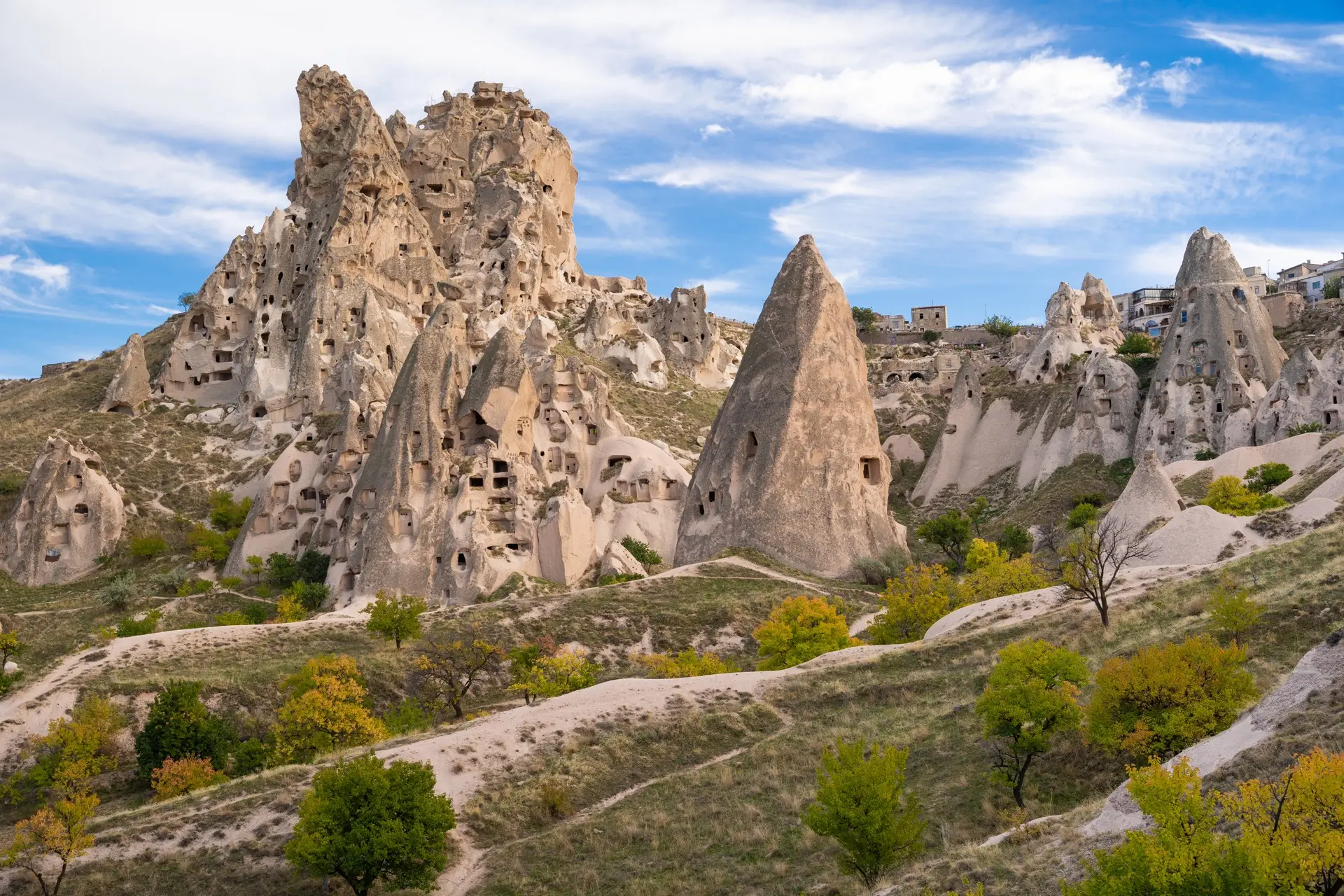
Antalya in February averages 15.6 °C (60 °F) by day and 6.4 °C (44 °F) at night, with 5.7 hours of sun a day. Antalya is warmer than Istanbul, İzmir and Cappadocia in February, and wetter than all three. The city gets 148 mm of rain on about ten wet days. The sea at Antalya is 17.2 °C (63 °F). February in Antalya is a month for Roman cities and the old town, with the snow of the Taurus mountains behind the bay.
Two days in three are dry in Antalya in February, and the dry ones are bright. Those days go to the open-air sites. Perge is a Roman city with a long colonnaded street, about 18 km east of the centre. Aspendos has the best-preserved Roman theatre in Turkey, and in February a family often has the upper rows alone. Kaleiçi, the walled old town above the harbour, fills a late afternoon by walking. Summer afternoons at these sites reach 34 °C. At 15 °C, children last far longer on the stones.
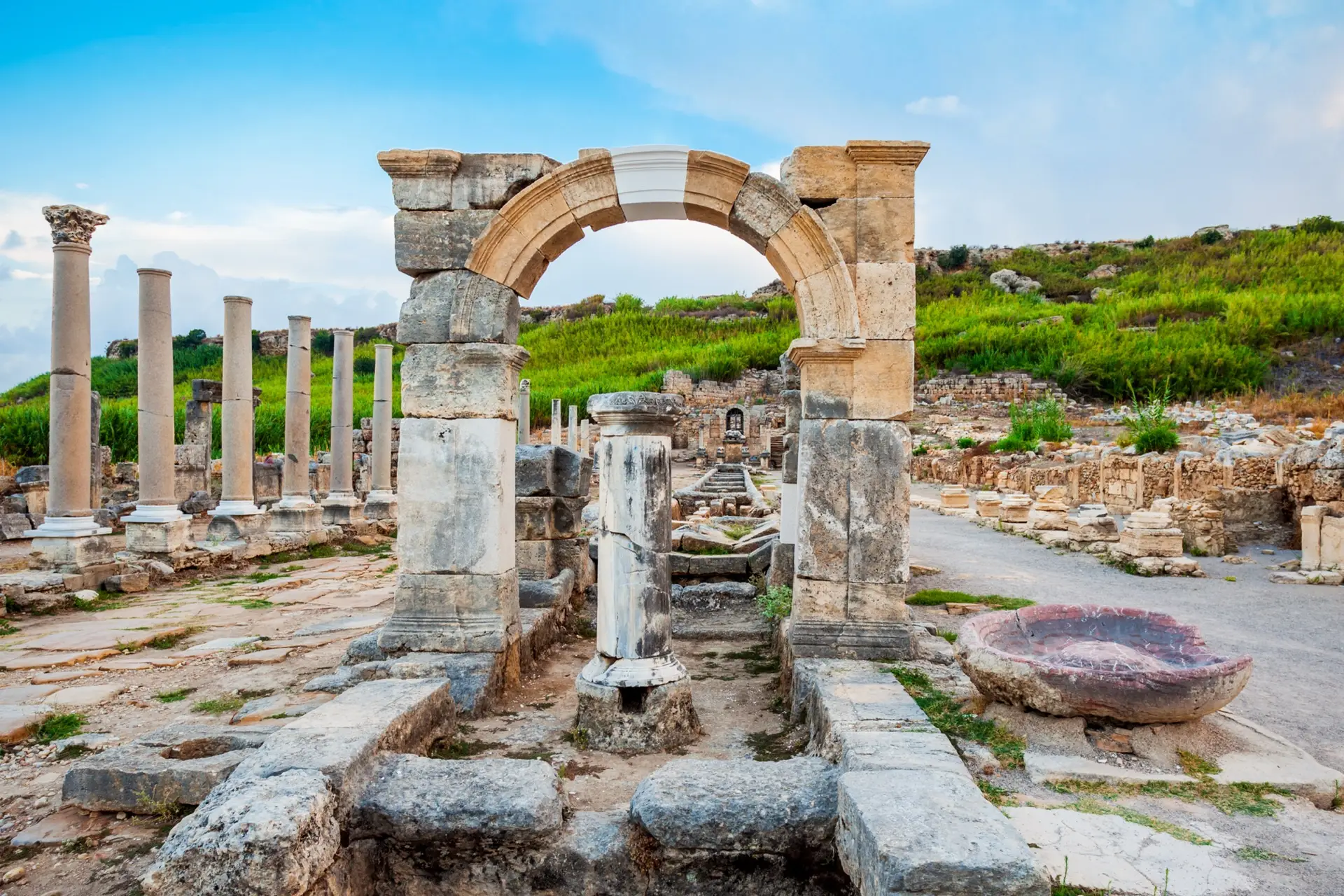
The Antalya Archaeological Museum holds the statues found at Perge, so it pairs well with the site itself. The Düden and Kurşunlu waterfalls run at their fullest after the winter rain. The Lower Düden falls drop straight off the cliff into the sea. The view from the park beside them needs only a short break in the rain.
Many seasonal beachfront hotels close from November to March or April, at Side, Alanya and Belek among other towns. Beach clubs and most daily boat trips stop with them. The city itself does not close. Hotels in Kaleiçi and the city centre, restaurants, museums and every ancient site stay open. February is also citrus season here, and oranges are sold by the roadside across the Antalya plain. On the 12-day private route, the Fethiye day runs on land, at Saklıkent Gorge, the Ölüdeniz Blue Lagoon and the ghost village of Kayaköy. It does not depend on a boat.
The 10-day route through Istanbul, Cappadocia and Antalya is from USD 4,010 per adult. Our Antalya travel guide covers the old town, the Roman sites and how many days the city needs.
Ephesus in February is about 14 °C (57 °F) by day. The site lies between İzmir, at 13.7 °C, and Aydın, at 14.9 °C. Pamukkale is cooler and higher, at 12.4 °C (54 °F) by day and 3.1 °C (38 °F) at night. Frost is rare at Ephesus and possible at Pamukkale before sunrise. Both sites are open all winter and close to empty. İzmir airport is about 70 minutes from Istanbul by air.
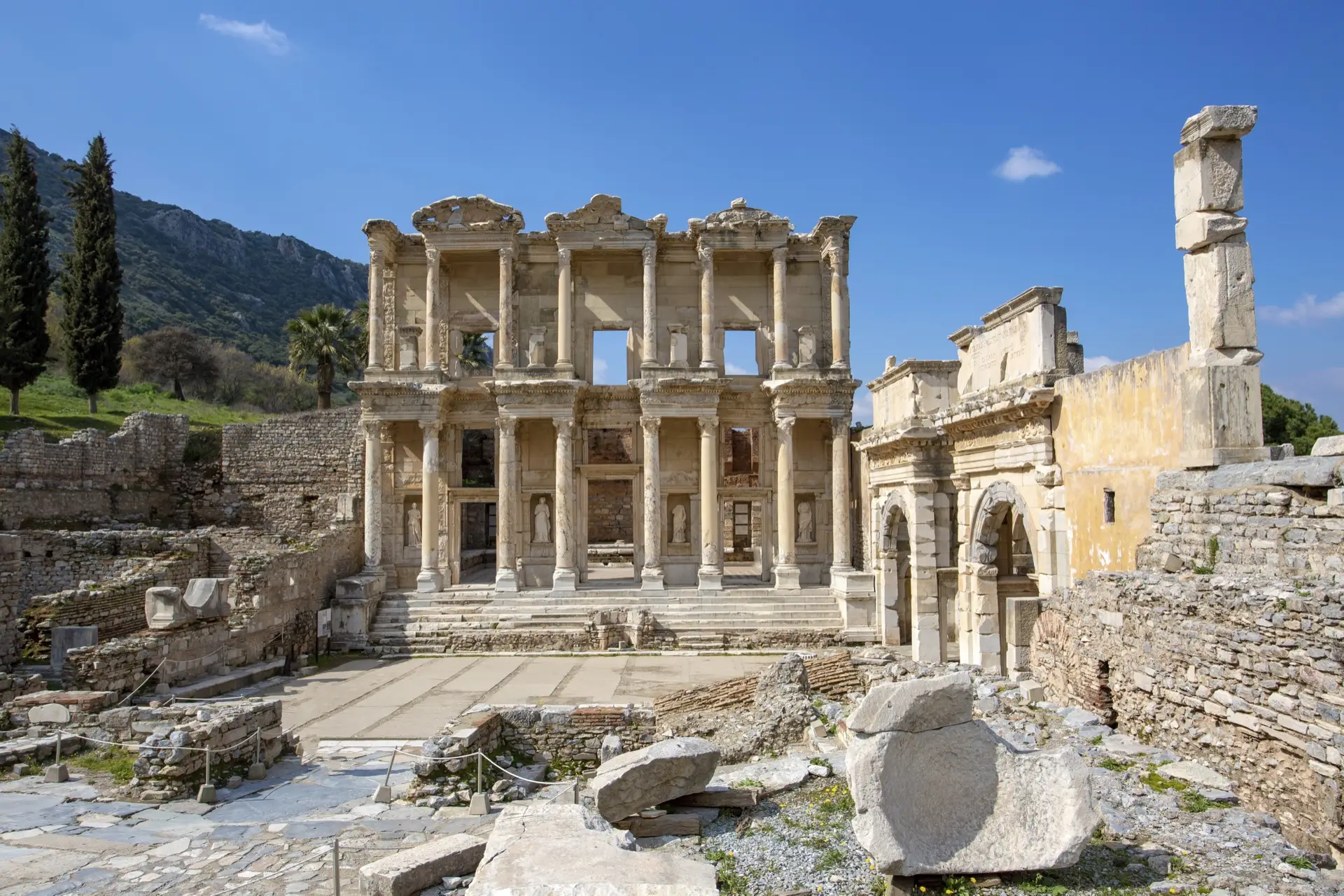
Ephesus is a walk of about two hours downhill on Roman marble, from the upper gate to the Library of Celsus and the great theatre. Wet marble is slippery, so shoes need a proper grip. The street is uneven and stepped, so a baby carrier works and a pram does not. There is no shade on the site, which is a problem in July and a gift in February. We place Ephesus in the middle of the day, when the stone is driest and the light is best on the library front. The Terrace Houses are roofed, so they work in any weather. They are a separate ticket and are not included in our tour price. Our Ephesus travel guide sets out the route through the site and what each stop is.
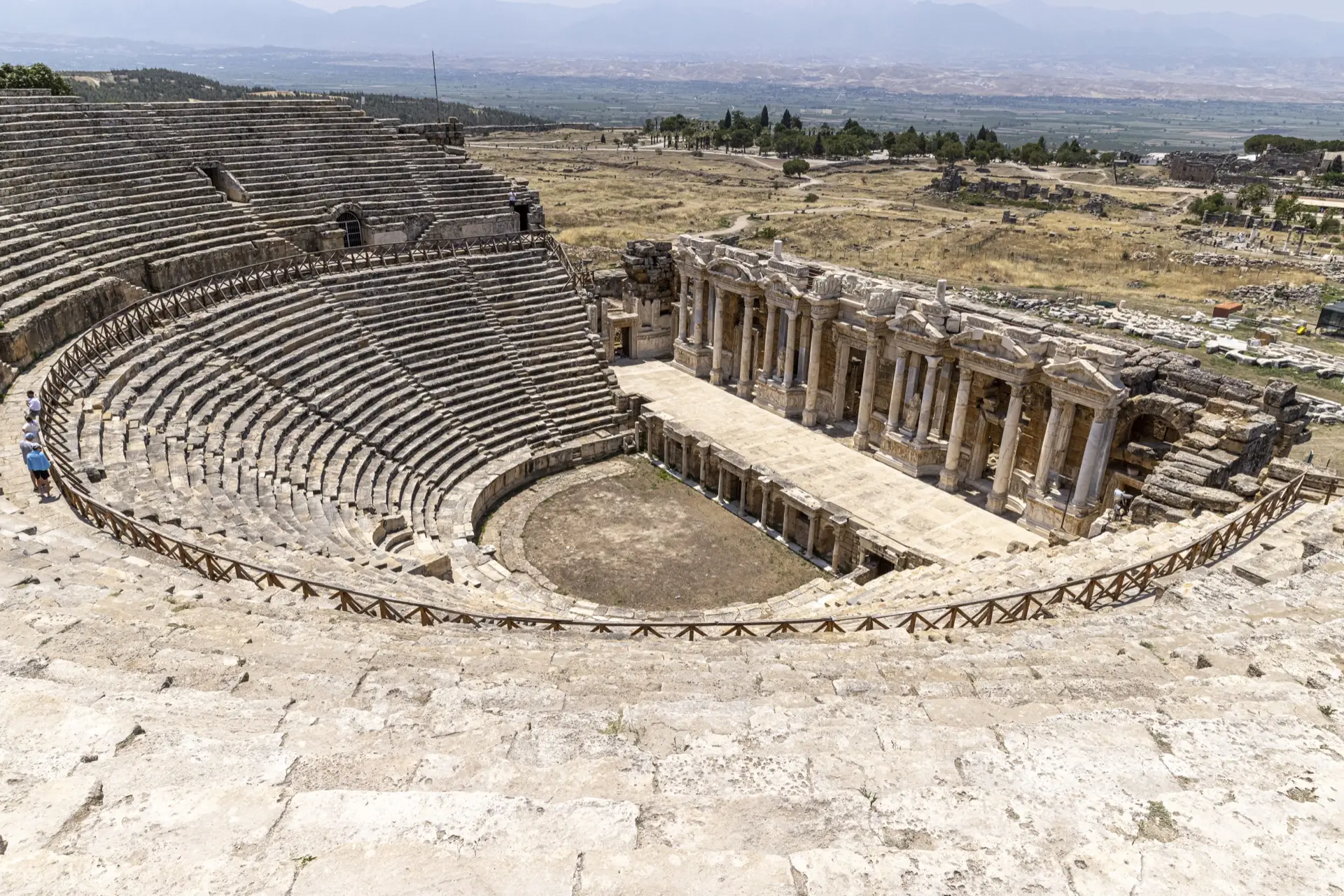
Shoes come off on the white travertines of Pamukkale in every season. The terraces are a protected UNESCO site, listed together with the Roman city of Hierapolis above them. In February the water running over the terraces is warm at the top of the slope and cool by the bottom. The air is 12 °C. The walk is fine for children for 20 to 30 minutes, with a towel and dry socks waiting at the end. The Antique Pool beside the ruins is filled by a thermal spring at about 36 °C (97 °F), and it has its own ticket. Steam rises off it on a cold morning. Our Pamukkale travel guide explains the gates, the pool and the theatre.
Almond trees are the first to flower on the Aegean coast, and in most years they open during February. The Datça peninsula, further south, holds an almond blossom festival in the month. It shows that the Aegean turns towards spring weeks before Istanbul and the plateau.
The seven-day route with Ephesus is from USD 2,815 per adult. The eight-day route adds Pamukkale and is from USD 3,205. From Istanbul, the Private Ephesus Day Trip with flights is from USD 630 per adult, and the Private 2-Day Ephesus & Pamukkale Tour from USD 1,140 per adult.
At 10.3 °C (51 °F) with wind, Gallipoli is the first of three hard parts of a February route. The other two are the east, at −2.3 °C by day, and the long road days across the plateau. None is closed, but each changes the plan for a family with children.
Çanakkale averages 10.3 °C by day and 3.5 °C at night in February, with 71 mm of rain, but wind sets how cold it feels. The Gallipoli peninsula is a ridge between two seas. Its cemeteries and memorials stand on open ground, and a northerly wind makes 10 °C feel close to freezing. A family with a personal link to Gallipoli will still find the visit worth it, and the sites are almost silent in winter. Pack hats, gloves and a windproof layer for this day. Troy is more sheltered and takes about 90 minutes. Our Gallipoli travel guide describes the battlefield stops. The 10-day route with Gallipoli and Troy is from USD 3,815 per adult. The Private 2-Day Gallipoli & Troy Tour from Istanbul is from USD 945 per adult.

Erzurum averages −2.3 °C (28 °F) by day and −12.6 °C (9 °F) at night in February. Mount Nemrut’s summit road is usually closed by snow, and the high passes around Lake Van can shut for days. We quote eastern routes on request, as a private operator does for any part of the country. For the east, that quote will name dates from May onwards.
Our 11-day private tour by road crosses the plateau with no internal flights: Istanbul to Ankara, Cappadocia, Konya and Pamukkale. Those are drives of three to six hours through the coldest part of the table above. We do not recommend the route from mid-December to mid-February. In the second half of the month the roads are usually clear and the days are longer. The route then works, from USD 4,365 per adult.
February is a good time to visit Turkey for a family that accepts 10.2 °C afternoons in Istanbul in exchange for empty sites. About 2.1 to 2.3 million foreign arrivals cross the border in a typical February, against about 7 million in July. The figures come from the Ministry of Culture and Tourism border statistics. That makes February one of the two quietest months of the year, level with January, at under a third of July’s crowd. The price of that quiet is cold, rain and a hot air balloon that flies on 45–55% of mornings.
| What February gives | What February costs |
|---|---|
| Under a third of July’s foreign arrivals at every major site | Day highs of 5–16 °C, and nights below zero on the plateau |
| A third less rain in Antalya than in January | Still about 14 wet days in Istanbul |
| 67 more minutes of daylight by the 28th | Sunset by about 19:00 at the latest, and nearer 18:00 early in the month |
| The best chance of the year to see Istanbul under snow | Snow can delay a flight or a ferry by some hours |
| Ephesus and Aspendos at 14–16 °C with no midday heat | Sea at 17 °C; beach clubs and most boat trips shut |
| The same per-adult tour price as in any other month | Hot air balloons fly on 45–55% of mornings |
February suits a family that wants history, food and winter scenery, and can give the trip 7 to 10 days. It suits children who are happy in a coat and boots, and who would like a snowball fight in a Cappadocia valley. It suits a family that wants Perge and Aspendos at 15 °C and not at 34 °C.
A family whose trip depends on swimming should look at June to September. If one hot air balloon morning has to be close to certain, May, September and October are safer, at about 90% of mornings. A family that dislikes grey weather but can move by a few weeks should compare Turkey in March and Turkey in April. Istanbul gains about 2 °C in March and the rain keeps falling away. Our twelve-month comparison ranks every month against the others.
Turkey Family Tours quotes one per-adult price for each route, all year. The seven-day route is USD 2,815 per adult in February, as it is in May. In February the days are shorter, the sites are emptier, the coast is mild rather than hot, and the hot air balloon needs two mornings. The Turkey tour cost guide shows what goes into the per-adult price.
The best things to do in Turkey in February depend on the sky, because Istanbul has about 14 wet days and Antalya 10. A dry day goes to Ephesus, Perge, Aspendos or the Pamukkale travertines. A wet day goes to Hagia Sophia, the Basilica Cistern, Topkapı Palace and the covered bazaars of Istanbul. A snow day goes to the Cappadocia viewpoints and the underground city at Kaymaklı. A private route lets the guide move each item to the day that fits the family.
For how these pieces fit into one route, see our guide on how to plan a trip to Turkey. Our page on the best places to visit in Turkey covers each region in turn.

A February touring day in Turkey runs from about 09:00 to 17:30, which is eight to eight and a half hours on the ground. Two limits set it. The first is sunset, between 18:01 and 19:04 depending on the place and the week. The second is the winter timetable: state museums and ancient sites close earlier than in summer until the end of March. The exact hours are set site by site on the Turkish Museums pages.
| Place | Sunrise, mid-February | Sunset, mid-February | What we place in the last hour |
|---|---|---|---|
| Istanbul | 08:00 | 18:36 | Grand Bazaar, Spice Bazaar or the Basilica Cistern |
| Göreme (Cappadocia) | 07:33 | 18:16 | A sunset viewpoint, then the pottery workshops of Avanos |
| Antalya | 07:47 | 18:35 | Kaleiçi old town and the harbour |
| Selçuk (Ephesus) | 08:02 | 18:47 | Şirince village or the İsa Bey Mosque in Selçuk |
| Pamukkale | about 07:55 | about 18:40 | The travertines, which face south-west and catch the sunset |
Ticketed open-air sites go between 10:00 and 15:00, when it is warmest and every gate is open. Indoor stops, bazaars and old-town walks take the last hour or two, because they stay open after the ancient sites close. There is no midday heat to sit out, so lunch is short and the day loses nothing to a siesta. In July the same family would lose two or three hours to the heat.
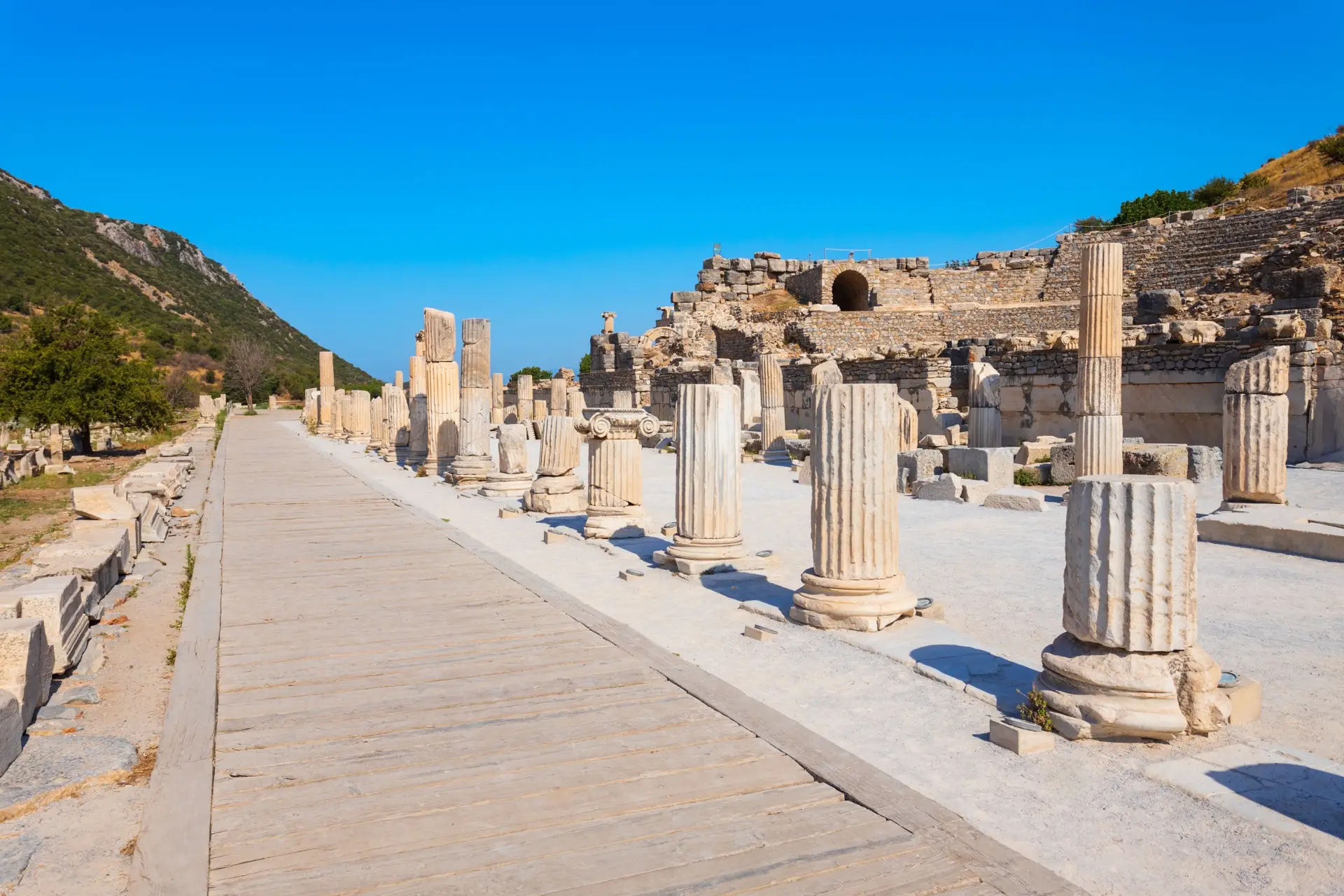
Topkapı Palace is closed on Tuesdays, Dolmabahçe Palace on Mondays and the Grand Bazaar on Sundays. On a five-day family trip one wrong weekday can cost a main sight. We set the order of the Istanbul days around these closures before the quote goes out.
An internal flight takes about half a touring day in February. The flight from Istanbul to Kayseri or Nevşehir is about 75 minutes, but airport time doubles it. We aim for early flights, so the rest of the day still holds three or four short stops. Our guide to door-to-door flight times from Istanbul compares the flight with the road.
A private Turkey tour in February costs from USD 1,940 per adult for five days in Istanbul and Cappadocia to USD 4,770 for 12 days. Those are the prices with two adults sharing. The per-adult price falls as the party grows, because the guide and the vehicle are shared by more people. The table shows six routes that work in February, with the price per adult for two, four and six adults.
| Route | Days | Per adult, 2 adults | Per adult, 4 adults | Per adult, 6 adults | Better half of February |
|---|---|---|---|---|---|
| Istanbul & Cappadocia | 5 | USD 1,940 | USD 1,670 | USD 1,550 | Either |
| Istanbul, Cappadocia & Ephesus | 7 | USD 2,815 | USD 2,420 | USD 2,250 | Either |
| Istanbul, Cappadocia, Pamukkale & Ephesus | 8 | USD 3,205 | USD 2,755 | USD 2,565 | Second half |
| Istanbul, Cappadocia & Antalya | 10 | USD 4,010 | USD 3,450 | USD 3,210 | Second half |
| Istanbul, Cappadocia, Ephesus, Gallipoli & Troy | 10 | USD 3,815 | USD 3,280 | USD 3,050 | Last ten days |
| Cappadocia & the Turquoise Coast | 12 | USD 4,770 | USD 4,095 | USD 3,815 | Second half |
The 14-day private route, from USD 5,395 per adult, also runs in February. For a family already in Istanbul with four spare days, the 4-Day Gallipoli, Troy, Ephesus & Pamukkale Tour is from USD 1,575 per adult. All our routes are listed on the private Turkey tour packages page.
From 1 to about 14 February the five-day and seven-day routes are the natural fit. Two or three Istanbul days are mostly under a roof. Cappadocia often adds snow, a heated cave room and one or two hot air balloon mornings. The seven-day route then ends on the Aegean at about 14 °C. Every route of seven days or more has two Cappadocia nights. The five-day route has one, and a second can be added when the quote is written.
From mid-February the eight, ten and 12-day routes make more sense. Each adds open-air days at Pamukkale, Antalya or along the Lycian coast. Those days gain most from 30 extra minutes of evening light and from rain that is falling away. On the 12-day route the Fethiye day is Saklıkent Gorge, Ölüdeniz and Kayaköy, all reached by road.
This is the day order of our seven-day family route, with each day marked for February weather.
Every route includes hand-picked 4-5 star boutique hotels with breakfast and the internal flights. It also covers a licensed local guide and a private vehicle with driver in every region, and the entrance fees listed in the programme. Not covered are international flights, lunches, dinners and the optional hot air balloon flight. Three separate tickets are also extra: the Topkapı Harem, the Ephesus Terrace Houses and the Antique Pool at Pamukkale. Children aged 4 to 6 pay 60% of the adult price, and children under 4 pay 30%. From age 7 the adult price applies.
What to wear in Turkey in February is set by a gap of about 18 degrees. An Antalya afternoon is 15.6 °C and a Cappadocia night is −2.6 °C. Layers solve it better than one heavy coat each. Istanbul calls for a waterproof coat with a hood, a warm mid-layer and water-resistant shoes. Cappadocia calls for an insulated jacket, a thermal base layer, hat, gloves and boots with a grip. Antalya calls for a light waterproof, long sleeves and sunglasses for the dry days. The table sets the clothes against the February temperatures of each region.
| Region | February day / night | What to wear |
|---|---|---|
| Istanbul, Gallipoli | 10 °C / 4 °C, wet and windy | Waterproof coat with a hood, warm mid-layer, water-resistant shoes, scarf |
| Cappadocia | 5.5 °C / −2.6 °C, dry cold, snow possible | Insulated jacket, thermal base layer, hat and gloves, boots with a grip |
| Hot air balloon morning | Below zero at launch | All of the above plus a second pair of socks; the basket is open to the air |
| Ephesus, Pamukkale | 12–14 °C / 3–6 °C | Light jacket over a jumper, shoes with a grip for wet marble, swimsuit and towel for the Antique Pool |
| Antalya | 15.6 °C / 6.4 °C, short heavy rain | Light waterproof, long sleeves, sunglasses for the dry days |
The first is a swimsuit, for the 36 °C Antique Pool and for hotel pools. The second is a pair of slip-on shoes, since shoes come off at the Blue Mosque, at Süleymaniye and on the Pamukkale travertines. The third is a headscarf for women and older girls, for mosque visits. The Blue Mosque lends them at the door, but a scarf the family brings is quicker. An umbrella is the one thing not to pack. Istanbul street sellers appear with them at the first drop of rain.
Hotels, restaurants, museums and vehicles in Turkey are well heated in winter, often more than a family expects. That is one more reason for layers. A child in a single thick jumper is too hot inside the Grand Bazaar within ten minutes.
Istanbul’s snow days peak in February, at 3.5, and Cappadocia’s hot air balloons fly on the fewest mornings of the year, 45–55%. On every other measure February sits between January and March. Temperature, rain and daylight all move one way, from January, the coldest month, towards spring. The table puts the three months next to each other.
| Measure | January | February | March |
|---|---|---|---|
| Istanbul average day high | 9.6 °C | 10.2 °C | 12.4 °C |
| Istanbul days with snowfall | 2.7 | 3.5 | 0.6 |
| Istanbul rain | 89 mm | 71 mm | 62 mm |
| Istanbul daylight, mid-month | 9 h 32 min | 10 h 36 min | 11 h 53 min |
| Cappadocia average day high | 4.0 °C | 5.5 °C | 10.3 °C |
| Hot air balloon mornings flown | 50–60% | 45–55% | 60–70% |
| Antalya average day high | 15.0 °C | 15.6 °C | 18.0 °C |
| Antalya rain | 226 mm | 148 mm | 91 mm |
January and February are within 0.6 °C of each other in Istanbul by day. February has an hour more daylight and clearly less rain on every coast. January has a slightly better hot air balloon band and the New Year at its start. For a first trip with open-air days in it, February is the better of the two. Our page on Turkey in January has that month city by city.
From February to March Istanbul gains 2.2 °C, Cappadocia almost five degrees, and the hot air balloon band rises to 60–70%. Snow is nearly gone from Istanbul, though Cappadocia can still get it. The first week of March still behaves like February, so a family with fixed dates at the turn of the month loses little. A family that can move to mid-March gains a lot. Turkey in March sets out where it is warm and where it still snows. For the month before this run of three, see Turkey in December.
A February trip with Turkey Family Tours starts with a written plan within 24 hours of the enquiry. The plan is a day-by-day route with a fixed per-person price in USD. It shows which days are indoors, where the hot air balloon mornings sit and which days can swap if the weather turns.
Hotel rooms are easy to find in February, so four to eight weeks ahead is enough for most routes. Two things are worth fixing early. Internal flights have better departure times when they are booked well ahead. The Göreme cave hotels we prefer have few rooms that sleep a family of four or five.
A 25% deposit confirms the booking; 75% is paid on arrival. Cancellations inside seven days of arrival are charged in full, and the deposit is not refundable. If a hot air balloon cannot fly, its fee is refunded in full. If snow delays an internal flight, the guide and the driver at the other end re-plan the day around the new landing time. Travel insurance that covers delay and missed connections is worth having for any winter trip.
Turkey Family Tours is a licensed member of TURSAB, the Association of Turkish Travel Agencies, with licence number 13538. We hold 5.0 out of 5 across 41 reviews on Tripadvisor. Questions about the company and payments are answered on our FAQ page.
The Mediterranean coast between Antalya and Adana is the warmest part of Turkey in February. Adana averages 16.2 °C (61 °F) by day and Antalya 15.6 °C (60 °F), on the Turkish State Meteorological Service record for 1991–2020. The Aegean valleys around Aydın and Kuşadası follow at about 15 °C. That is five degrees warmer than Istanbul and ten degrees warmer than Cappadocia. The warm coast is also the wet one. Antalya gets 148 mm of rain in February, twice Istanbul’s total, in short heavy bursts on about ten days. The sea is 17 °C (63 °F), so this is weather for Roman sites and old towns, not for the beach. See our guide to Antalya outside the summer for what the city offers a family.
Antalya in February averages 15.6 °C (60 °F) by day and 6.4 °C (44 °F) at night. That is the warmest of the ten cities in our weather table, and still not hot. The record February high is 26.7 °C, so an afternoon in a T-shirt does happen. The city gets 148 mm of rain on about ten wet days, a third less than in January. The sun shines for 5.7 hours a day. The sea is 17.2 °C (63 °F), too cold for children. Side, Alanya and Belek lie on the same coast, and many seasonal beachfront hotels there close until spring. The dry days go to Perge, Aspendos and the old town of Kaleiçi. The 10-day route with Antalya is from USD 4,010 per adult.
February is a good time to visit Turkey for a family that wants the great sites without queues and accepts winter weather. Turkey receives about 2.1 to 2.3 million foreign arrivals in February, against about 7 million in July. Hagia Sophia, Ephesus and the Cappadocia valleys are close to empty. The cost is a day high of 10.2 °C (50 °F) in Istanbul and about 14 wet days there. The hot air balloon flies on 45–55% of mornings. Against January, February has an hour more daylight and a third less rain in Antalya. It is not a month for swimming or boat trips. Our guide to the best time to visit Turkey compares it with the other eleven months.
Turkey in February is cold: day highs average 10.2 °C (50 °F) in Istanbul and 5.5 °C (42 °F) in Cappadocia, on the central plateau. The south coast is mild, at 15.6 °C (60 °F) in Antalya and 13.7 °C in İzmir. Nights average 4.2 °C in Istanbul and −2.6 °C (27 °F) in Cappadocia, and Kayseri, where the Cappadocia flights land, drops to −5.1 °C. The cold on the plateau is dry, with only 28–41 mm of rain or snow in the month. Most of a ten-day family route sits between 5 °C and 16 °C, so layers matter more than one heavy coat. Our guide on which month to visit Turkey sets February against the other eleven.
Istanbul is a good visit in February for a family that likes interiors. The day high averages 10.2 °C (50 °F), the night low 4.2 °C (40 °F), and about 14 days bring rain. Hagia Sophia, the Basilica Cistern and Topkapı Palace are mostly under a roof and stand within ten minutes of each other by walking. The covered Grand Bazaar is a short tram ride away, and queues are short. Daylight grows from 10 h 05 min on the 1st to 11 h 12 min on the 28th. February is less good for rooftop views, open-deck Bosphorus cruises and long walks along the shore. The five-day private Istanbul package is from USD 1,645 per adult, and our Istanbul travel guide covers the city by neighbourhood.
It snows in parts of Turkey in February, and the month is Istanbul’s snowiest. The Florya weather station in Istanbul records 3.5 days with snowfall in an average February, against 2.7 in January and 0.6 in March. The deepest cover of an average February is 7.5 cm, and it rarely stays on the ground for more than a day. Cappadocia sees snow more often, because nights there average −2.6 °C (27 °F) and much of the month’s 41 mm falls as snow. Ankara, Konya and the east are colder still. On the coasts, Antalya, İzmir and Ephesus almost never see snow, though the Taurus mountains behind Antalya stay white until spring. Our Cappadocia travel guide shows the valleys that look best under snow.
You cannot swim comfortably in the sea anywhere in Turkey in February, because the water is at its coldest of the year. The Mediterranean at Antalya and Fethiye averages 17.2 °C (63 °F), the Aegean at Kuşadası 16.1 °C (61 °F), and the Marmara at Istanbul 8.5 °C (47 °F). Beach clubs and most daily boat trips are shut until spring. The warm swim of a February route is inland. The Antique Pool at Pamukkale is fed by a thermal spring at about 36 °C (97 °F) all year, and it has its own ticket. A family that wants a heated hotel pool should ask when the route is planned, since not every hotel has one. Our page on the gates and the pool at Pamukkale explains how the visit works.
Hot air balloons fly in Cappadocia on about 45–55% of February mornings, the lowest band of the year. Wind and poor visibility ground the flights, not the cold. The civil aviation authority decides at first light each day, and no operator can fly without its permission. One Cappadocia night gives one launch window. Two nights give two windows and lift the chance of at least one flight to 70–80% at best. Every route of seven days or more on our list has two Cappadocia nights. A cancelled morning means the hot air balloon fee is refunded in full. The flight is an optional extra and is not part of the tour price. Our Cappadocia hot air balloon guide lists the fly rates for all twelve months.
A private Turkey tour in February costs from USD 1,940 per adult for five days in Istanbul and Cappadocia, with two adults sharing. The seven-day route with Ephesus is USD 2,815, the ten-day route with Antalya USD 4,010 and the 12-day route USD 4,770. The per-adult price falls for larger parties: the seven-day route is USD 2,420 each for four adults. Each price covers hand-picked 4-5 star boutique hotels, internal flights, listed entrance fees, a licensed local guide and a private vehicle with driver in every region. International flights, lunches, dinners and the optional hot air balloon flight are not included. Nor are three separate tickets: the Topkapı Harem, the Ephesus Terrace Houses and the Pamukkale Antique Pool. The Turkey tour cost guide shows where the per-adult price goes.
Most families need 7 to 10 days in Turkey in February. Five days cover Istanbul and one Cappadocia night, which gives a single hot air balloon morning. Seven days add a second Cappadocia night and Ephesus, and that is the shortest route we suggest when the flight matters. The seven-day private route is from USD 2,815 per adult. Eight days add Pamukkale, and ten days add Antalya, at 15.6 °C by day. In the first half of the month the shorter, indoor-heavy routes fit best. From mid-February the ten and 12-day routes gain from longer evenings and less rain. Our guide on how to plan a trip to Turkey shows how the regions connect.
A February trip to Turkey can be booked four to eight weeks ahead, because hotel rooms are easy to find in the month. Two things are better fixed earlier. Internal flights are worth booking early for the morning departures. The boutique cave hotels in Göreme have only a few rooms that sleep four or five. Turkey Family Tours sends a written day-by-day plan with a fixed per-person price within 24 hours of an enquiry. A 25% deposit confirms the booking; 75% is paid on arrival. Hot air balloon seats are reserved with the operator once the family confirms the flight. Start with the plan-my-trip form, with dates, party size and the children’s ages.
If snow or wind disrupts a February tour, the guide swaps the order of the days, and open-air sites move to the driest day in the forecast. If a hot air balloon cannot fly, its fee is refunded in full, and a second Cappadocia night gives a second chance. A snow delay on an internal flight moves the start of that day, and the guide waiting at the other end re-plans the stops. Travel insurance with cover for delay and missed connections is worth having in winter. On the booking itself, a 25% deposit confirms the trip and 75% is paid on arrival. Cancellations inside seven days of arrival are charged in full. Our FAQ page sets out the terms in detail.
A written day-by-day February route comes back within 24 hours of a family’s enquiry, with a fixed per-person price in USD. Send the dates, the number of people and the children’s ages through the plan-my-trip form. The route marks the indoor days, the hot air balloon mornings and the days that can swap with the weather. Turkey Family Tours holds TURSAB licence 13538. Every route uses hand-picked 4-5 star boutique hotels, a licensed local guide and a private vehicle with driver in every region. A 25% deposit confirms the booking; 75% is paid on arrival. To look through the routes first, open the Turkey tour packages page, or reach us through the contact page.


Tell us about your family — we reply within 24 hours.