Is Turkey Safe to Visit? An Honest Family Travel Guide
Quick Answer: Yes — Turkey is safe to visit for families. The main tourist circuit (Istanbul, Cappadocia, the Aegean coast, Antalya) sits 800–1,200 km from any conflict zone — roughly the London-to-Rome distance — and well clear of the active fault lines involved in the 2023 earthquake. Crime rates in major visitor areas are low by international standards, and most governments rate the tourist corridor at their standard “exercise normal precautions” level. Istanbul has multiple JCI-accredited international hospitals, and 112 — Turkey’s unified emergency number — connects to English-speaking operators in the main tourist zones. A private guide handles taxi logistics, pharmacy visits, and any unexpected situation, making a guided trip measurably safer than independent travel. Turkey Family Tours, TURSAB-licensed (no 13538), runs private family departures year-round — our 5-Day Istanbul & Cappadocia Private Tour starts from USD 1,690 pp and our 10-Day Private Turkey Tour from USD 3,490 pp. Get a Private Quote →
This guide answers whether Turkey is safe to visit and covers every practical concern for families planning a private tour — geography, earthquake risk, Istanbul neighborhoods, hospital access, transport, street safety, and what government advisories actually say.
Last updated: July 2026 · Reviewed by Fatih, TFT Founder · TURSAB-licensed tour operator
Is Turkey Safe to Visit? — Table of Contents show / hide
Yes. Turkey’s main tourist areas — Istanbul, Cappadocia, and the Aegean coast — have low crime against tourists by global standards. The Numbeo Crime Index for Istanbul (2025) sits at approximately 37, placing it in the moderate range — lower than Bangkok (50) or Rome (45), and broadly comparable to Prague (33) or Lisbon (38).
Most major governments rate Turkey’s standard tourist corridor at their baseline “exercise normal precautions” or “exercise normal safety precautions” level. Elevated caution advisories apply only to southeastern border provinces — areas that sit 900–1,200 km from Istanbul and that no standard family itinerary touches.
The risks that exist — taxi overcharging, petty theft in bazaars, tap water, summer heat — are specific, known, and manageable with standard preparation. Turkey does not present the category of safety concerns that require a fundamental reassessment of travel plans.
Key facts at a glance
The tourist circuit (Istanbul, Cappadocia, Aegean, Antalya) sits 800–1,200 km from the Syrian border — roughly the London-to-Rome distance
The 2023 Kahramanmaraş earthquake struck more than 1,000 km from Istanbul with zero structural impact on tourist infrastructure
Most major English-speaking governments place the Turkey tourist corridor at standard “exercise normal precautions” — their no-go zones are restricted to eastern border provinces
Istanbul has four family-appropriate neighborhood bases; Sultanahmet and Beşiktaş are the strongest for first-time family visits
Three international-standard hospitals in Istanbul operate 24-hour pediatric emergency, accept international insurance, and have English-speaking staff
The most common family safety issues in Turkey are ordinary tourist-context ones: taxi overcharging, petty theft in crowded squares, shoeshiner scams — all avoidable with basic awareness
A private guided tour eliminates the highest-friction points: no meter disputes, no pharmacy language barriers, 24/7 operator support
Geography First — Where Turkey Actually Is
The single most important context for any safety conversation about Turkey is a map. Istanbul sits at the far western end of the country, facing Greece and Bulgaria. Cappadocia is in the center of Anatolia — landlocked, more than 800 km from any active conflict area. The Aegean coast faces the Greek islands. Antalya faces the Mediterranean toward Cyprus. The Syrian border is in the far southeast — Hatay, Şanlıurfa, Şırnak provinces.
Turkey spans roughly 1,600 km from its western Aegean coast to its eastern border. Istanbul is approximately 1,200 km from the Syrian border — further than most transatlantic connecting hops. No standard family itinerary in Turkey passes within 500 km of the conflict zone.
City / Region
Distance to Syrian Border
Distance to Istanbul
Istanbul
~1,200 km
—
Cappadocia (Göreme)
~800 km
~740 km
Antalya
~750 km
~700 km
Izmir / Aegean coast
~1,300 km
~480 km
Ankara
~950 km
~450 km
Kahramanmaraş (2023 epicenter)
~200 km
~1,050 km
Distances are approximate road/air distances. The London-to-Rome distance is roughly 1,400 km for reference.
The distance from London to Rome is roughly 1,400 km. If you were planning a family trip to Rome, you would not factor in whether Morocco was stable. The same logic applies here — the southeastern Turkey situation is geographically irrelevant to Istanbul and the western tourist corridor.
Turkey is a transcontinental country — its western geography is Mediterranean and Aegean, sharing borders with Greece and Bulgaria. The cultural and geographic frame of the tourist corridor is fully European and Anatolian, not Middle Eastern.
Earthquake Risk: Where Tourists Actually Go
Turkey is seismically active. This is a fact, not a secret, and it deserves a straightforward treatment rather than either dismissal or alarm.
The 2023 Earthquake and the Tourist Circuit
The February 2023 earthquakes — 7.8 and 7.5 magnitude — struck southeastern Turkey near Kahramanmaraş. Istanbul, Cappadocia, Pamukkale, Izmir, Bodrum, and Antalya were not significantly damaged. All continue to function normally. These destinations are between 700 and 1,200 km from the affected provinces. The 2023 event was tragic for southeastern Turkey; it was not an event for the tourist corridor.
Istanbul’s Seismic Situation
Istanbul has its own long-term seismic risk, well-documented and openly discussed in Turkey. Kandilli Observatory at Boğaziçi University monitors the North Anatolian Fault and has noted a decades-scale probabilistic risk of a significant event affecting Istanbul. This is a probabilistic planning statement, not an imminent warning. The Turkish government has been implementing urban renewal programs and requiring buildings to comply with updated 2018 seismic codes.
At Turkey Family Tours, we route families through hotels built or substantially renovated after 2018 for all Istanbul stays. Ask your hotel directly for their building certification status if you want specifics.
Cappadocia and the Aegean and Antalya Coast
Both regions sit away from the primary fault lines active in the last century. Cappadocia’s volcanic rock formations are geologically stable. Antalya and the Aegean coast have not experienced major seismic events in the modern tourist era. Seismic risk exists in many popular destinations globally — Japan, California, Iceland, Bali — and Turkey’s tourist regions are not exceptional in this sense.
Is Istanbul Safe? Neighborhoods and What to Know
Istanbul is a city of 15 million people. Saying “Istanbul is safe” is about as useful as saying “London is safe” — the answer depends heavily on where. The four neighborhoods below cover the areas where Turkey Family Tours routes family clients.
Sultanahmet (Historic Peninsula)
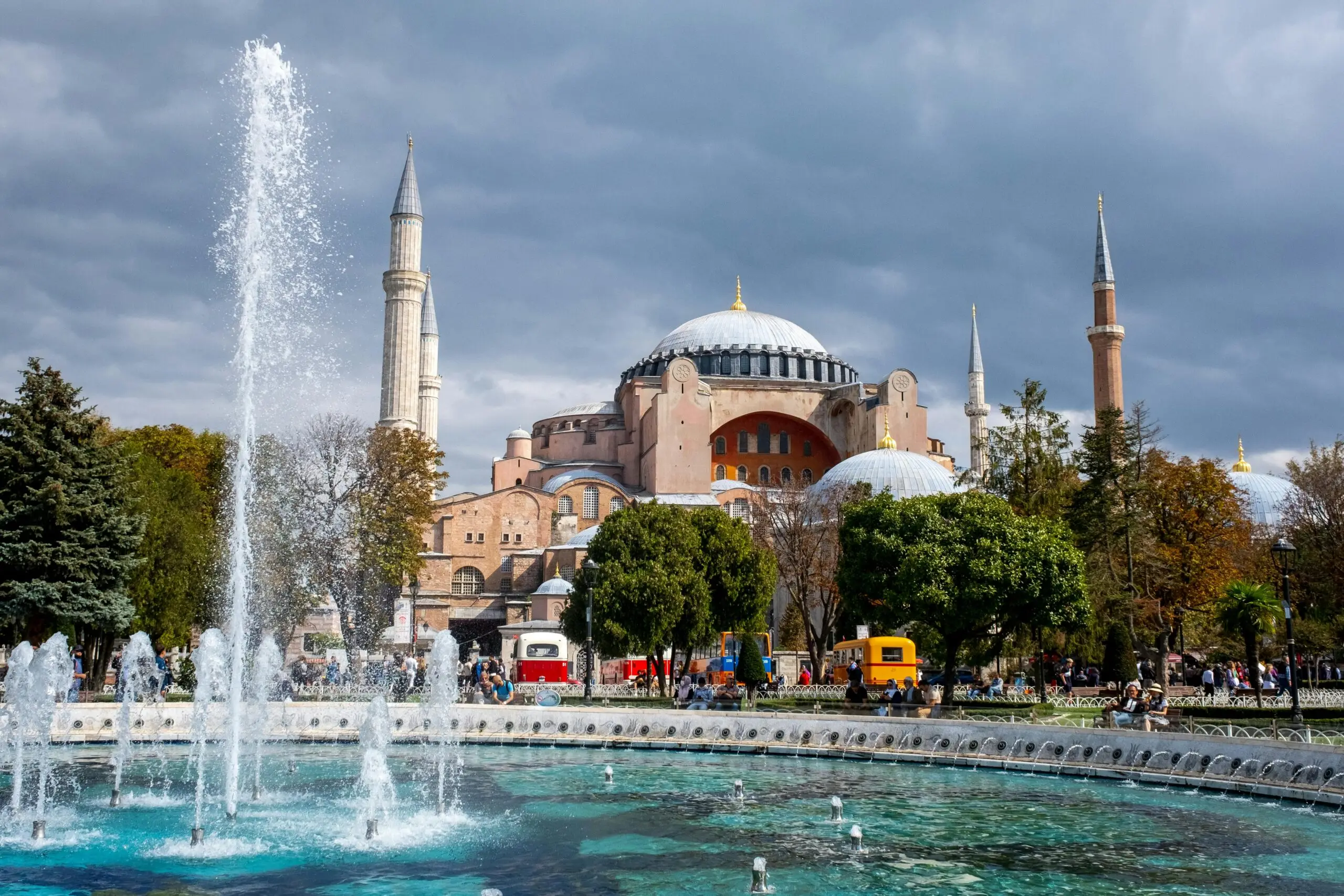
The historic core — Blue Mosque, Hagia Sophia, Topkapı Palace, Grand Bazaar. The most heavily policed tourist district in Turkey, with tourism police patrolling around the clock. Well-lit streets active with families from sunset to around 22:00. Hotels range from atmospheric boutiques to international 5-star. The trade-off: tourist density concentrates petty theft and touting. Keep valuables secured, stay aware in the bazaar, and Sultanahmet is an excellent base for families with children under 10 who want walking-distance access to the main sites.
Beyоğlu / Galata
The neighborhood running from Galata Tower down to Karakоýy and up İstiklal Avenue. Very walkable during the day and early evening. İstiklal is a pedestrianized street with restaurants, bookshops, and ice cream queues — children like it. Stick to the main drag and named side streets. Galata and Karakоýy have become Istanbul’s coffee and restaurant belt and are comfortable for family evenings. A strong choice for families with teenagers who want evening energy.
Beşiktaş
Istanbul’s most livable premium neighborhood, on the European side along the Bosphorus. Mostly local professionals and families. Waterfront accessible, market days excellent. Less tourist infrastructure than Sultanahmet but more upscale hotels and restaurants with English menus. Families routed through Beşiktaş consistently report lower petty theft incidents — it is less tourist-concentrated. A strong choice for families wanting a base that feels like a real city.
Kadıkоý (Asian Side)
Cross the Bosphorus by ferry (20 minutes from Eminоönü) and you are in a completely different register — younger, more local, seafront promenades, outstanding food market, relaxed street atmosphere. Not a hotel hub but some families base here intentionally. The ferry commute adds a pleasant transit element, especially for children who enjoy boat travel.
Neighborhood
Day Safety
Night Safety
Family Restaurants
English Spoken
Petty Theft Risk
Sultanahmet
Excellent
Good (lit streets)
High
High
Moderate
Beyоğlu / Galata
Excellent
Good (main streets)
High
High
Moderate
Beşiktaş
Excellent
Good
High
Moderate
Low
Kadıkоý
Excellent
Good
Very High
Moderate
Low
Tarlabaşı
Avoid
Avoid
Low
Low
High
Tarlabaşı, immediately north of İstiklal Avenue, is a neighborhood in long-term urban renovation. Daytime transit through is fine; it is not a base option and not a destination.
Turkey Family Tours has booked more than 3,000 family-room nights across Sultanahmet, Beyоğlu, Beşiktaş, Ortakоý, and Kadıkоý. The consistent pattern: families with younger children (5–10) do best in Sultanahmet for walking-distance access to the main sites. Families with teens often prefer Beşiktaş or Galata/Karakоýy — more evening life, easier ferry access, better restaurant variety. We avoid recommending Taksim Square hotels for families new to Turkey; the area is lively but lacks the calm-evening feel many parents prefer.
Health and Hygiene: Water, Food, Hospitals
Tap Water
Do not drink Istanbul’s tap water. Locals do not drink it due to high chlorine levels and older pipe infrastructure in some areas. Bottled water is the default for international tourists and most Istanbul residents — it is inexpensive and provided as standard in hotel rooms. Brushing teeth with tap water is fine. In Cappadocia and Antalya, bottled water is the standard even among locals.
Street Food and Restaurants
Turkey has a strong food culture with broadly high kitchen hygiene standards. Low-risk, high-reward items: freshly made gözleme (flatbread), kebap from busy restaurants with high turnover, balık-ekmek (fish sandwich at the Eminоönü waterfront — made to order, eaten immediately), and simit (sesame bread rings). Seasonal cut fruit from street carts in peak summer requires more judgment. Children generally love Turkish food — bread, grilled meat, rice, ayran, baklava, dondurma — without adventurous eating pressure.
All three have English-speaking physicians across emergency, pediatric, and internal medicine. All are familiar with major international insurance workflows. Save all three numbers before departure.
For Cappadocia, Nevşehir State Hospital is the closest emergency facility. For serious cases, air ambulance to Ankara (45 min) or Istanbul (90 min) is the standard protocol. Turkey Family Tours has coordinated this once across all our family bookings, and the family was fine.
Pharmacies
Every neighborhood has a 24-hour rotating nöbetçi eczane (duty pharmacy). The address is posted on the door of any closed pharmacy. Over-the-counter access to children’s paracetamol, antihistamines, rehydration salts, and most standard medications is broad. Emergency number: 112 is the unified emergency line in Turkey — routes to ambulance, police, or fire depending on the call.
Transport Safety: Getting Around
Istanbul Public Transport
The Istanbul metro, tram, and ferry system — all accessible with the Istanbulkart — is genuinely excellent for a city of this size. The T1 tram line connects Sultanahmet to Kabataş and is child-friendly. Ferries across the Bosphorus are clean, punctual, and a travel experience in themselves. Metro plus ferry handles 80% of family movements without taxi dependency.
Taxis
Istanbul has a documented taxi overcharging culture in tourist zones. The issues are specific and avoidable:
“Broken meter” — the meter is not running and a flat inflated price is announced at destination. Insist on meter before departure, or exit immediately.
Night rate during the day — the meter shows “2” (gece/night rate) instead of “1” (gündüz/day rate). Legitimate only after midnight.
Long-route diversion — rare but happens. Google Maps running the journey is an effective deterrent.
Premium van claiming to be a taxi — charges three to five times the normal rate. Use clearly marked yellow cabs only.
Best alternatives: BiTaksi app (Turkish licensed taxi aggregator with fare estimates and ratings), or Uber which operates in Istanbul in a limited form. Both apps log the journey and reduce driver leverage significantly.
Intercity Travel
Turkish Airlines operates extensively between Istanbul, Cappadocia (Kayseri airport), and Antalya — solid operational standard. Pegasus Airlines (low-cost, same airports) has a good safety record. For ground transport, Metro Tur and Kamil Koç operate premium coach services. Cappadocia from Istanbul is a 10–12 hour overnight coach option; most families fly.
Private Vehicle Transfers
Turkey Family Tours routes all family clients in private vehicles with a licensed driver for every transfer leg. This eliminates the taxi friction points entirely and provides a consistent, English-speaking point of contact throughout the trip. Our 10-Day Private Turkey Tour (USD 3,490 pp) includes all inter-city private transfers and domestic flights.
Street Safety: What to Watch For
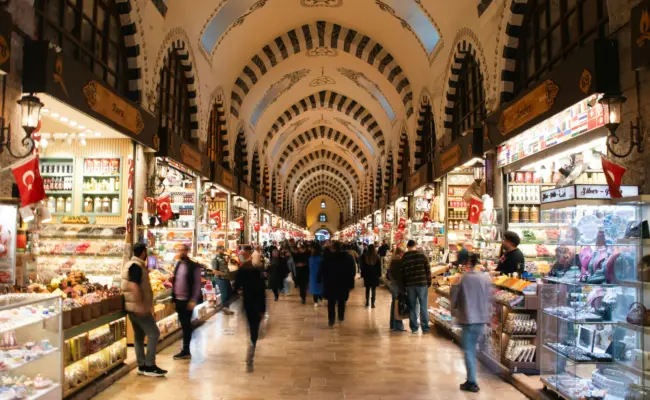
Pickpocketing in Sultanahmet, the Grand Bazaar, and the Taksim/İstiklal corridor is the primary concern. Standard precautions: bag carried in front, phone in inner pocket, wallet in front pocket, valuables in hotel safe. Children wearing backpacks should keep them in front in crowded bazaar settings.
Common Scam Formats
The shoeshiner drop — a shoeshiner “accidentally” drops a brush near you, offers to clean your shoes as a thank-you, then presents an inflated bill. Decline any unsolicited shoeshining interaction.
The “come for tea” invitation — a friendly local invites the family into a carpet shop for tea. The tea arrives, conversation develops, and leaving without a purchase becomes socially staged. A polite “no thank you” at the first invitation is the cleanest exit.
Unofficial currency exchange — street changers in the Grand Bazaar area offer rates that look good but involve sleight-of-hand with denominations. Use ATMs or bank exchange counters only.
Practical Measures
Carry a card in your child’s pocket with their name, your phone number, and the hotel address in Turkish
A local SIM card (Turkcell or Vodafone, available at the airport) costs under USD 15 for a week’s data and is strongly recommended
The major tourist neighborhoods are active until 22:00–23:00. After that, take taxis rather than walking unlit side streets
Emergency number 112 connects to English-speaking operators in the main tourist zones
What Government Travel Advisories Say
Government travel advisories are frequently cited in dramatic terms without the actual text being read. Here is an accurate summary of what major English-speaking governments currently advise about Turkey.
The Consistent Pattern Across All Major Advisories
Most major Western governments currently place the standard Turkey tourist corridor at their baseline “exercise normal precautions” or “exercise normal safety precautions” level. This is the same rating applied to France, Germany, Japan, and most popular European and Asian destinations.
Elevated caution advisories consistently apply only to southeastern border provinces — Hatay, Şanlıurfa, Hakkari, Şırnak — which sit 900–1,200 km from Istanbul and are not part of any standard family itinerary. Some governments also note a heightened terrorism caution for Turkey overall (separate from geographic zone restrictions) — the same type of note that appears for France, Belgium, and most of Western Europe given the broader global security environment.
Summary: all major English-speaking governments draw the same geographic line. Southeastern border provinces are flagged; the tourist circuit is not. A family booking Istanbul, Cappadocia, or the Aegean coast travels under a normal-precautions advisory from their government. That is the accurate statement.
We recommend checking your own government’s travel portal before departure, as ratings are updated periodically. Links to official travel advice are available through your national foreign affairs ministry’s website. For Turkey-specific weather and natural-event alerts, the Turkish State Meteorological Service (MGM) publishes official forecasts in English.
What the Advisories Do Not Say
No major government advises against travel to Istanbul, Cappadocia, the Aegean coast, or Antalya
No major government rates Turkey at their highest restriction level for standard tourist areas
The elevated caution notes that do exist are geographically specific to provinces that no planned family itinerary visits
Advisory ratings are updated regularly; check your government’s portal for the current status before your departure date
Emergency Contacts
Turkish Emergency Services
112 — unified emergency number (ambulance, police, fire). Connects to English-speaking operators in major tourist areas.
155 — police only
110 — fire only
Tourism Police Istanbul (Sultanahmet): +90 212 527 4503 (English-speaking, dedicated to tourist issues, available 24/7)
Before departure, locate your country’s embassy in Ankara and any consulate in Istanbul via your government’s travel portal. Save the emergency consular line to your phone. In a genuine emergency — lost passport, medical evacuation, serious incident — your embassy is the fastest route to consular support. Most major Western countries maintain an embassy in Ankara and a consulate general in Istanbul.
Frequently Asked Questions — Is Turkey Safe to Visit?
Yes. Turkey’s main tourist areas — Istanbul, Cappadocia, the Aegean coast, and Antalya — are safe to visit for families. Most major governments rate the tourist corridor at their standard “exercise normal precautions” level, the same applied to France, Germany, and Japan. Elevated caution advisories apply only to southeastern border provinces that sit 900–1,200 km from Istanbul and that no standard itinerary visits. The risks that exist — petty theft, taxi overcharging, scams — are ordinary tourist-context issues found in any major destination and are well-documented and avoidable. Turkey Family Tours, TURSAB-licensed (no 13538), has operated family private tours across the main tourist corridor with no serious safety incidents on a planned route.
Yes, across the main tourist neighborhoods. Istanbul’s Numbeo Crime Index sits at approximately 37 (2025) — lower than Bangkok (50), broadly comparable to Prague (33) and Lisbon (38). Sultanahmet, Beyоğlu/Galata, Beşiktaş, and Kadıkоý are safe for families during the day and into the evening. After 22:00–23:00, take a licensed taxi or app-booked ride rather than walking unlit side streets — the same advice that applies in any large city. The one area to avoid as a base is Tarlabaşı (immediately north of İstiklal Avenue). Tourism police patrol Sultanahmet 24 hours. For neighborhood-by-neighborhood detail, see our Istanbul travel guide.
Yes, for the main tourist circuit. Turkey receives approximately 50 million international tourists annually, and the infrastructure serving families — hotels, hospitals, transport — is established and functional. Turkish culture is genuinely child-friendly; restaurants accommodate children without fuss, and street-level interactions with children are warmly received. The practical concerns for families are the same as in any busy destination: petty theft in crowded bazaars, taxi overcharging, and tap water. All three are avoidable. A private guided tour eliminates the highest-friction points and adds 24/7 operator support in case anything unexpected occurs. See our Turkey travel guide for full family-planning detail.
No — the 2023 Kahramanmaraş earthquake epicenter was more than 1,000 km from Istanbul and caused no structural damage to tourist infrastructure. Cappadocia sits away from the primary active fault lines and has not experienced major seismic events in the modern tourist era. Antalya and the Aegean coast are similarly removed from recent seismic activity. Istanbul is near the North Anatolian Fault, and Kandilli Observatory notes a long-term probabilistic risk — a decades-scale planning statement, not an imminent forecast. Hotels built or substantially renovated after 2018 comply with updated Turkish seismic codes. Turkey Family Tours books post-2018 renovated 4–5 star properties for all Istanbul stays.
Do not drink the tap water in Istanbul or Cappadocia. Locals do not drink it — due to high chlorine levels and older pipe infrastructure in some areas — and neither should you. Bottled water is inexpensive (around TRY 10–15 per 1.5L), universally available, and provided as standard in hotel rooms. Brushing teeth with tap water is fine. Boiling tap water before drinking is an option but unnecessary when bottled water is this accessible. In Antalya, quality is somewhat better but most families continue with bottled water as a habit. Turkey Family Tours private vehicles carry chilled bottled water for every transfer leg as standard.
Istanbul’s licensed yellow taxis are physically safe for families — the documented issue is overcharging, not security. Common problems: no meter running, night rate shown during daytime, longer route taken. Fix: confirm the meter shows “1” (day rate) before the car moves, and use BiTaksi or Uber app (both log the route and give a fare estimate). The metro, tram, and Bosphorus ferry cover the majority of tourist movements without taxi dependency at all. Turkish Airlines and Pegasus Airlines operate the Istanbul–Cappadocia–Antalya routes with solid safety records. Private vehicle transfers — as booked through Turkey Family Tours on our 8-Day and 10-Day tours — eliminate all of the above friction.
Most major Western governments currently rate Istanbul and the standard tourist circuit at their baseline “exercise normal precautions” level, the same applied to most of Europe. Elevated caution notes apply specifically to southeastern border provinces (Hatay, Şanlıurfa, Hakkari, Şırnak) that sit 900–1,200 km from the tourist corridor and are not part of any standard family itinerary. Some governments also carry a general terrorism awareness note for Turkey — comparable in language to notes for France, Belgium, and Germany. All draw the same geographic line: border provinces flagged, tourist circuit not. Check your own government’s travel portal for the current status, as ratings are updated periodically.
Yes, in measurable ways. A private guided tour eliminates the most common family friction points: no taxi meter disputes, no pharmacy language barriers, no independent navigation of the hospital system. Your licensed local guide carries the three Istanbul hospital emergency numbers, speaks English fluently, and has handled unexpected situations before. Turkey Family Tours provides 24/7 operator support from the moment you land. Private transfers mean no dependence on street taxis. For families new to Turkey, the most practical safety upgrade is choosing a TURSAB-licensed operator — it converts unpredictable street logistics into a managed, supported experience. Our 5-Day Istanbul & Cappadocia (USD 1,690 pp) is the most-booked entry point; the 10-Day Private Turkey Tour (USD 3,490 pp) covers the full circuit.
Plan Your Private Turkey Tour
The information above gives you the framework. The next step is a structured itinerary that accounts for where your family is coming from, how many days you have, and what your children’s ages mean for pacing and activity mix.
Turkey Family Tours, TURSAB-licensed (no 13538), runs private family departures year-round across five itineraries. Routes below are designed around the safety priorities covered in this guide — vetted hotels, private transfers throughout, and 24/7 operator support.
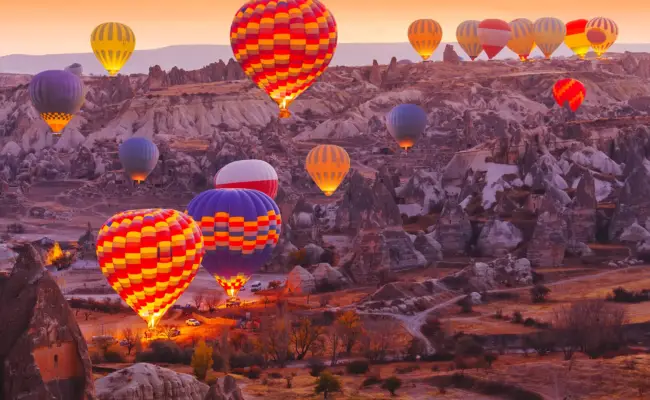
5-Day Istanbul & Cappadocia — USD 1,690 pp. The minimum viable Turkey for a family that wants substance without exhaustion: Istanbul highlights, one overnight hot air balloon morning in Cappadocia.
8-Day Private Turkey Tour — USD 2,790 pp. Adds Ephesus and Pamukkale to the core circuit. Strong for families with children 8+.
10-Day Private Turkey Tour — USD 3,490 pp. Full circuit with an Antalya coast leg. Best paired with longer school-break windows.
14-Day Private Turkey Tour — USD 4,450 pp. Whole country including Gallipoli and Troy. For families with an extended break and older children (10+).
Tell us your dates, group size, and any specific concerns. We reply within 24 hours with a draft itinerary. 25% deposit secures dates; the balance is paid on arrival in Turkey.
The best time to visit Turkey in October: a warm, settled autumn shoulder season with ~90% Cappadocia balloon mornings and thin crowds — private tour itineraries and costs. TURSAB-licensed.
The best time to visit Turkey in August: hot inland with dawn starts for the ruins and the Cappadocia balloon, warm seas on the coast — private tour itineraries and costs. TURSAB-licensed.
The best time to visit Turkey, month by month: ~90–95% Cappadocia hot air balloon reliability from May to October, sea temperatures, school-holiday windows and booking lead times.
Hagia Sophia tour explained: the €25 upper-gallery ticket, free entry under 8, prayer-pause timing, dress code and the gallery mosaics — with the entry included on our private Old City tour.
December is Turkey’s quietest touring month. Expect about nine hours of daylight and 11.8 °C highs in Istanbul. Cappadocia hot air balloons fly on roughly half of December mornings. Land costs run USD 1,435–4,450 per adult.
The full 11-day overland route — Istanbul to Gallipoli with no domestic flights: leg-by-leg drive times, the Silk Road stops flights skip, and one fixed quote from USD 3,795.
A private Turkey trip runs from USD 190 for a day tour to USD 1,690 for 5 days and USD 4,450 for two weeks — domestic flights, a licensed local guide, hotels and entrance fees included, with per-day costs broken down route by route.
Turkey in September: 26–27°C sea, ~92% Cappadocia hot air balloon fly rate and the grape harvest below the sunrise flights. Private tours from USD 1,690 pp.
✦ Tailor-Made
Let's Plan Your Private Turkey Trip
Tell us about your family — we reply within 24 hours.
 English
 Dutch
Dutch Japanese
 Korean
 Chinese