Visiting Hagia Sophia: Tickets, Opening Hours & Tour Tips
Quick Answer:Visiting Hagia Sophia today means walking the upper-gallery route, while the ground floor is kept for prayer. Sightseers use a separate visitor gate across from the Fountain of Sultan Ahmed III. The ticket is €25, and children under 8 enter free. From 1 April to 1 October the gallery opens at 08:00; the rest of the year it opens at 09:00. It closes at 19:30 all year. On Fridays the visitor area is closed from 12:00 to 14:00. Plan 30–45 minutes on your own, or about an hour with a guide. Our private Istanbul Old City tour costs from USD 190 per person, with a licensed local guide. It includes the Hagia Sophia ticket, the Blue Mosque, Topkapı Palace and the Grand Bazaar. Turkey Family Tours is TURSAB-licensed (no 13538). A 25% deposit confirms the booking; 75% is paid on arrival. Get a Private Quote →
Visiting Hagia Sophia changed on 15 January 2024. Since that day, sightseers walk the upper gallery on a €25 ticket. The ground floor under the 55.6-metre dome is kept for worship. The famous Byzantine mosaics are in the gallery, so the best of the building is still on the tourist route. Three things matter: where the visitor gate is, when Friday prayers close the building and which of two €25 tickets you buy. The opening times and prices come from the official museum information page. For the rest of the city, see our Istanbul travel guide.
By Fatih — Founder & Tour Director, Turkey Family Tours · TURSAB licence 13538 · Last updated: September 2026
Planning a private Turkey tour?
We build family-paced private itineraries with hand-picked 4-5 star hotels and send a written plan and fixed price within 24 hours.
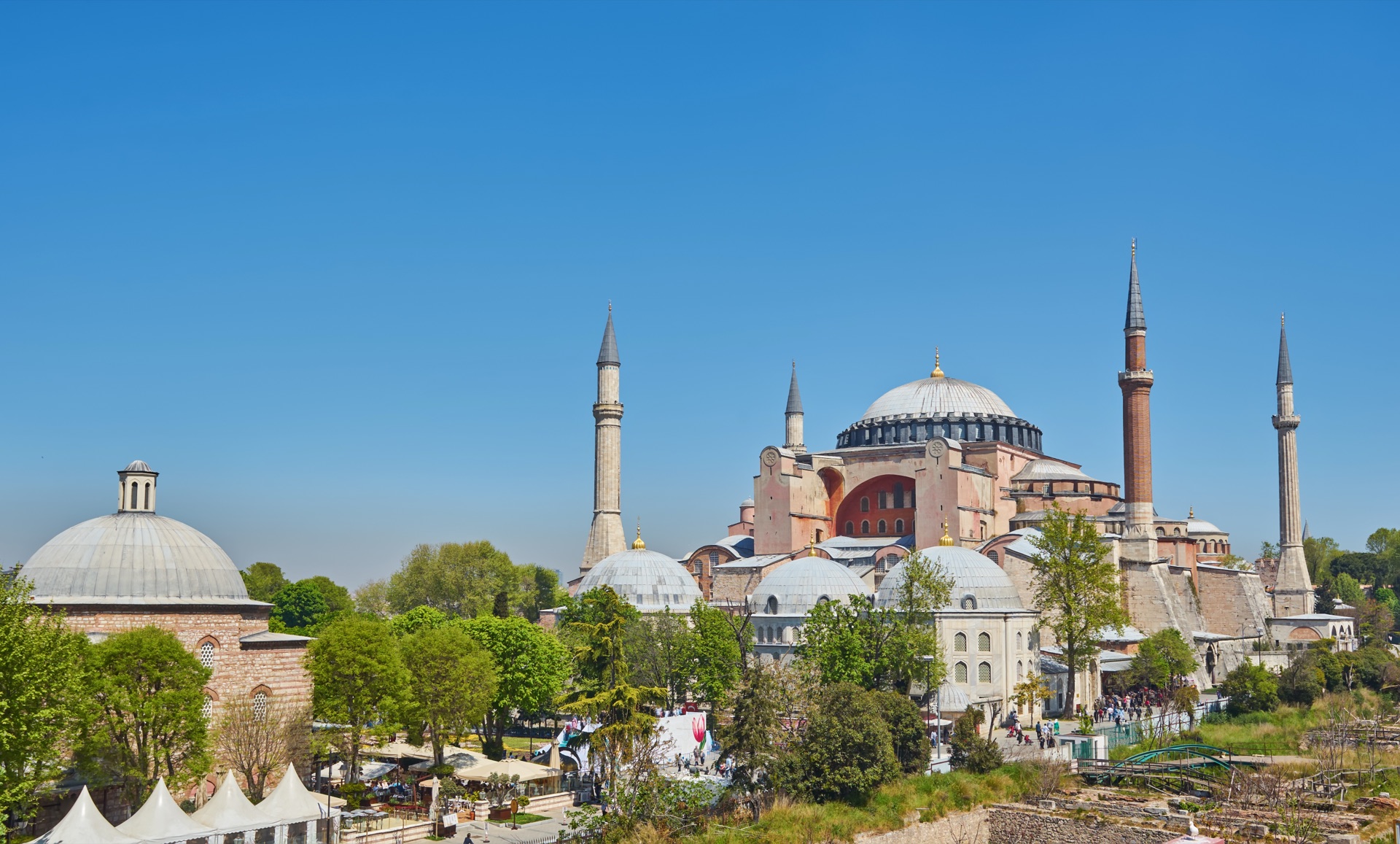
Visiting Hagia Sophia now means the upper gallery: sightseers use a separate gate, and the ground floor under the dome is kept for prayer.
Visiting Hagia Sophia Today: The Gallery for Sightseers, the Ground Floor for Prayer
Tourists can still visit Hagia Sophia every day, from the upper gallery. The building returned to use as a mosque in July 2020, after 85 years as a museum. For four years, worshippers and sightseers shared the same floor and the same doors. On 15 January 2024 the two were separated, and a ticket was introduced for foreign visitors.
Worshippers now enter the ground floor through the main gates, free of charge. Sightseers use a separate gate and follow a one-way route up to the upper gallery. From the gallery rail you look down onto the prayer hall, the Ottoman roundels and the dome. Daily Sabah reported the change when it began.
What the new arrangement means for a visit
The split made the visit shorter and easier to plan. The route has a clear start and end. The crowd on the prayer floor is no longer part of the tourist visit. The best mosaics sit at eye level along the way. What you give up is the walk across the floor under the centre of the dome.
Three things to plan around
The ticket. The €25 ticket covers the gallery route only. It does not include the prayer floor, and it is not the same ticket as the History and Experience Museum nearby.
Friday midday. The visitor area closes from 12:00 to 14:00 every Friday for the main weekly prayer.
Clothing. Shoulders and knees are covered for everyone, and women cover their hair.
The rest of Sultanahmet sits within a ten-minute walk. Our Blue Mosque guide and Grand Bazaar guide cover the next two stops of the same day.
Hagia Sophia Tickets and Entrance Fee: €25 for the Gallery, Free Under 8
The Hagia Sophia entrance fee for foreign visitors is €25 per person. Children under 8 enter free when they come with an adult and show a passport or ID card. Worship on the ground floor costs nothing. Every other “Hagia Sophia ticket” sold online is this same €25 entry. Some sellers bundle it with a guide, an audio track or another attraction.
Who
What the ticket covers
Price
Foreign visitor, age 8 and over
One-way upper-gallery route with the main mosaics
€25
Child under 8, with an adult
The same gallery route; passport or ID needed
Free
Worshipper
Ground-floor prayer hall through the main gates
Free
Visitor with a guide
Gallery route plus the guide’s commentary
€25 + the guide’s fee
Buying at the gate or online
Tickets are sold at the ticket office by the visitor gate, which stops selling at 19:00. They are also sold online. From June to August, the ticket line and the security line can both be long around midday. A ticket bought in advance saves one of the two queues. From November to March, a ticket bought at the gate at opening time is rarely a problem. The Museum Pass Istanbul does not cover the Hagia Sophia gallery.
Two things to check in online offers
First, several widely advertised “Hagia Sophia tour” products say entrance fee not included in the small print. The €25 is then paid again at the gate. Second, no product can put sightseers on the prayer floor, whatever the photos show. The gallery is the tourist route for everyone.
What a family pays
A family of four with children aged 6 and 9 pays for three tickets, not four: €75 instead of €100. There is no youth rate from age 8 upwards. For comparison, Galata Tower across the Golden Horn charges €30; our Galata Tower guide explains its ticket. On our private Old City tour, the Hagia Sophia ticket is already inside the tour price.
Hagia Sophia Mosque or the History and Experience Museum? Two Separate €25 Tickets
Two different places in Sultanahmet sell a €25 ticket with “Hagia Sophia” in the name. One is the gallery of the mosque itself. The other is the Hagia Sophia History and Experience Museum, a separate building on the Hippodrome, about 5 minutes away by walking. Booking sites sometimes sell the museum ticket next to the mosque ticket, and visitors do buy the wrong one.
Hagia Sophia (upper gallery)
History and Experience Museum
What it is
The real building, seen from the gallery
An exhibition about the building, on three floors
Where
Visitor gate across from the Fountain of Sultan Ahmed III
At Meydanı Sokak No. 10, on the Hippodrome
Ticket
€25, free under 8
€25
Hours
08:00 or 09:00 to 19:30, closed Friday 12:00–14:00
09:00–19:00 every day
What you see
Byzantine mosaics, the dome, the prayer hall from above
About 1,700 years of history, with screens and projections
The museum details come from the Turkish Museums page of the Ministry of Culture.
Which one to choose
If you have time for one, visit the mosque gallery. It is the building itself, and the mosaics are the originals. The museum makes sense as an addition on a rainy afternoon, or for a family whose children like screens more than stone. A family that wants both should plan about 2 hours in total.
Hagia Sophia Opening Hours by Season, the Friday Closure and Prayer Times
Hagia Sophia opening hours for visitors change twice a year. From 1 April to 1 October, the gallery opens at 08:00. For the rest of the year it opens at 09:00. It closes at 19:30 all year, and the ticket office stops selling at 19:00.
Period
Opens
Ticket office closes
Closes
1 April – 1 October
08:00
19:00
19:30
1 October – 1 April
09:00
19:00
19:30
Every Friday
Visitor area closed 12:00–14:00 for Friday prayers
The Friday closure
The only closure on the official timetable is Friday from 12:00 to 14:00. Some ticket sellers give 14:30 as the reopening time, because the gallery takes a while to fill again. On a Friday, come at opening time or after 14:30. The two hours in between are a good slot for lunch, the Grand Bazaar or the Basilica Cistern.
The five daily prayers
Hagia Sophia is a working mosque, and it holds five prayers a day. The official timetable does not list a closure for these. In practice, the visit can slow down or pause for a short time around a prayer. Prayer times move every day with the sun. A guide who works in the Old City checks them each morning and plans the entry around them.
The best hour to arrive
The first hour after opening. The shortest lines of the day and soft light through the gallery windows.
Late afternoon, after about 16:00. The big tour groups have moved on.
Avoid Friday 11:00–14:30. The line builds before the closure and takes time to clear afterwards.
In July and August, the security line stands in full sun; mornings are far easier than mid-afternoon.
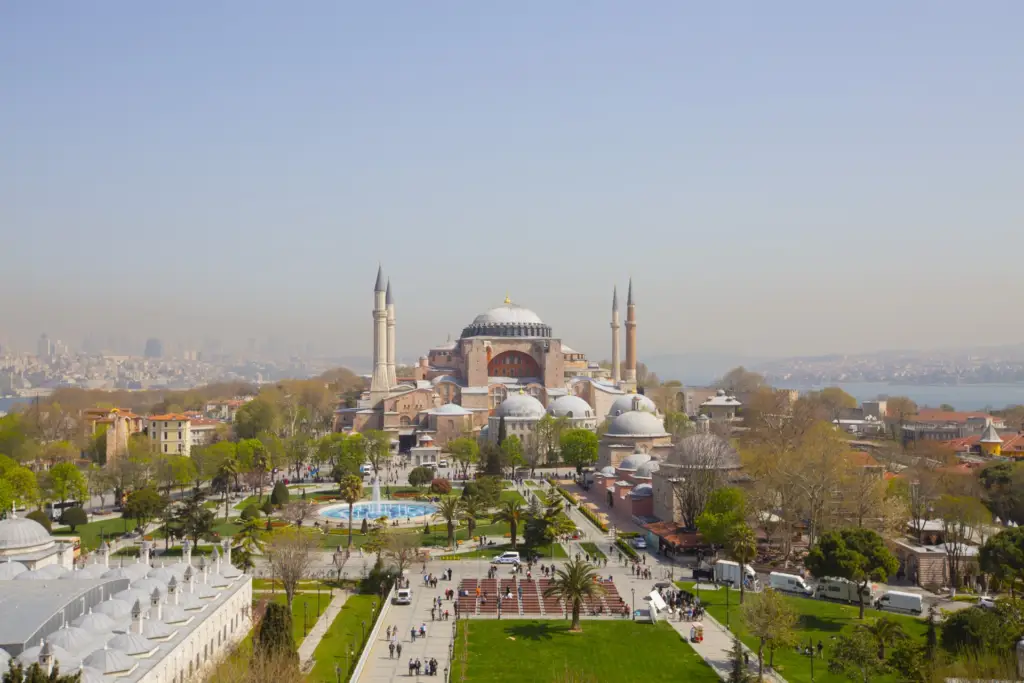
Hagia Sophia from above, with Sultanahmet park in front. The visitor gate is on the far side, facing the entrance to Topkapı Palace.
Finding the Hagia Sophia Visitor Entrance and Clearing Security
The Hagia Sophia visitor entrance is a separate gate across from the Fountain of Sultan Ahmed III. The fountain stands in front of the Imperial Gate of Topkapı Palace, on the side of Hagia Sophia that faces the palace. The main gates facing Sultanahmet Square are for worshippers. Many visitors join the wrong line there first, so walk around the building towards the palace gate.
Getting to Sultanahmet
The T1 tram stops at Sultanahmet, about 5 minutes by walking from the gate. Taxis drop at the edge of the square, because the streets around it are closed to traffic. Most Old City hotels are within a 10-minute walk. Our where to stay in Istanbul guide compares the neighbourhoods. On a private tour, the guide meets you in the hotel lobby and walks you to the right gate.
Security and what to bring
Every visitor passes a bag scanner at the visitor gate, with or without a ticket bought in advance. Large bags slow the line, so bring a small daypack. Put a scarf in it, plus water and the children’s passports for the under-8 free entry.
Once through security, the route starts up to the gallery. There is no re-entry after you leave, so see each part of the gallery before you move on.
Inside Hagia Sophia’s Upper Gallery: Mosaics and Marks to Look For
The Hagia Sophia upper-gallery route climbs by a wide Byzantine ramp paved with worn stones. It then follows the west and south galleries above the prayer hall and comes back down. From the rail you see the whole nave, the eight Ottoman roundels, and the dome at close to its own height. The route is one-way, and you walk it at your own pace.
Stop
Where
What to look for
The ramp
Start of the route
A stone ramp built instead of stairs, worn smooth over 1,500 years
Empress’s Lodge
West gallery, centre
A green marble circle on the floor marks where the empress stood
Viking inscription
South gallery parapet, if that section is open
Runes scratched into the marble, most likely the name “Halfdan”
Marble Door
Entrance to the south gallery
A marble door carved to look like wood, with panels
Deesis mosaic
South gallery
Christ between Mary and John the Baptist, from the 13th century
Imperial panels
East end of the south gallery
Empress Zoe’s panel and the Komnenos family panel
View of the dome
Along the whole rail
The four seraphim in the corners below the dome
The Omphalion
Seen from the rail, on the floor below
A circle of coloured marble where Byzantine emperors were crowned
The Deesis
The Deesis is the best-known mosaic in Hagia Sophia. It shows Christ in the centre, with Mary and John the Baptist turning towards him. It is usually dated to the 1260s, after Byzantine rule returned to Constantinople in 1261. The lower half has been lost, but the faces are complete, and the gallery route passes close to them.
Empress Zoe and the changed face
Further along, at the east end of the south gallery, Empress Zoe stands beside Christ. An emperor stands on the other side. The emperor’s head and name were changed. Historians think the panel first showed one of Zoe’s earlier husbands. The face of her third husband, Constantine IX, was put in later. The panel beside it shows Emperor John II Komnenos with his wife Irene.
The Viking inscription and the Empress’s Lodge
If the section is open, look for runes on the parapet of the south gallery scratched into the marble. They are usually read as “Halfdan”, the name of a Norse soldier in the emperor’s guard around the ninth century. In the centre of the west gallery, a green marble circle marks the place where the empress watched services.
What you cannot see from the gallery
You do not stand under the centre of the dome, and you do not walk the prayer floor. The apse mosaic of the Virgin and Child, at the far end of the hall, may be screened during prayer times. The eight roundels, each about 7.5 metres across, are clearer from the gallery than from the floor. For worship, the ground floor stays open and free, outside the tourist route.
Hagia Sophia Dress Code: Scarves, Shoulders and Knees
The Hagia Sophia dress code is the same as in any working mosque in Turkey. It is checked at the visitor gate. Everyone covers shoulders and knees. Women also cover their hair with a scarf. Shorts above the knee and sleeveless tops are the two items that most often send visitors back to change.
Bring your own scarf. It is quicker than looking for one at the gate, and the same scarf works at the Blue Mosque across the square.
Light trousers or a long skirt with a T-shirt pass in every season.
Children are treated more loosely in practice, but dressing the whole family the same way avoids any discussion at the gate.
Shoes stay on along the gallery route. Shoes come off only on the carpeted prayer floor, which the route does not cross.
Hagia Sophia for Grandparents, Pushchairs and Wheelchair Users
The Hagia Sophia gallery route is not step-free. The official information page says the entrance and exit of the visiting area have ramps and stairs. It calls them unsuitable for disabled visitors and for people who find walking difficult. The long Byzantine ramp to the gallery is also steep in places and paved with uneven stones.
What this means for a family
A grandparent who walks slowly can usually manage the route with time and a hand to hold. Allow about an hour instead of 45 minutes, and go at opening time, when the ramp is quiet.
A wheelchair user cannot reach the gallery. A better plan is to see the outside from the square. Then spend the time on the flat Hippodrome next door, where the guide tells the building’s story.
A pushchair is difficult on the ramp. A baby carrier is the easier choice, and the route is a single loop, so there is nowhere to leave a pushchair and come back to it.
On our private Old City tour, the guide sets the pace for the slowest walker in the family. Breaks for tea and lunch fit between the sites, and the order of the stops can be adjusted before you travel. Our guide to Istanbul with kids covers pushchairs and taxis across the city.
Hagia Sophia With Children: Free Under 8 and a 45-Minute Gallery Hunt
Hagia Sophia works well with children if the visit stays short. Children under 8 enter free with a passport or ID card, and the gallery circuit fits inside about 45 minutes. Give children a list of things to find instead of dates to remember.
A gallery hunt for children
The Viking name. Find the runes on the south gallery rail.
The green circle. Find where the empress stood in the west gallery.
The changed face. Find the emperor whose head was replaced in Zoe’s panel.
The seraphim. Find the four angels with six wings in the corners below the dome.
The door that is not wood. Find the Marble Door and work out why it looks like wood.
Three practical notes
Passports. Bring the children’s passports; free entry under 8 needs proof of age.
Snack break. Have water and a snack before the security line, not after. The route itself has no place to stop for food.
After the exit. Sultanahmet Square, between Hagia Sophia and the Blue Mosque, has benches and a fountain. It is a good place to rest before the next stop.
Hagia Sophia Tour Options: Private Guide, Group Tour or On Your Own
A guided Hagia Sophia tour follows the same €25 gallery route and takes about an hour, with the stories behind the mosaics. The signs inside are few, so a guide adds most on a first visit. There are three ways to see it. The right one depends on how much of the Old City you want to see that day.
On your own
Shared group tour
Private Old City day
Cost
€25 ticket
Tour price per person; many listings add the €25 ticket on top
From USD 190 per person, all entrance fees included
Time inside
30–45 minutes
About 1 hour
About 1 hour, at the family’s pace
Group
Your family
Shared with other travellers, often with headsets
Your family only, one licensed local guide
Timing
You wait out any pause where you stand
Fixed start time
The guide picks the entry time on the day
Rest of the day
Planned by you
Tour ends at the exit
Blue Mosque, Hippodrome, Topkapı Palace and the Grand Bazaar on our private Old City tour
When a guide is worth paying for
A guide is worth it on a first visit, with children, or for anyone who wants to understand the mosaics. They are easy to walk past without the story behind them. Why does the Deesis have no lower half? Why was an emperor’s face changed? For a second visit, or for a traveller who has read up, the ticket alone is enough.
What “skip the line” really means
Many booking sites sell a “skip the line” Hagia Sophia tour. Every visitor still passes the same security check at the gate. What a good guide saves is the wait: they know the quiet hours and plan the entry for one of them.
Hagia Sophia History in Four Chapters, 537 to Today
Hagia Sophia was finished in 537, in five years and ten months, under the Byzantine emperor Justinian I. Its architects were Anthemius of Tralles and Isidore of Miletus. They raised a dome 55.6 metres above the floor and about 31 metres across. It has been part of the Historic Areas of Istanbul on the UNESCO World Heritage List since 1985. Britannica gives the full architectural history.
Cathedral, 537 to 1453
For more than 900 years, Hagia Sophia was the cathedral of Constantinople and the largest church in the Christian world. Byzantine emperors were crowned here. The first dome collapsed in 558, after the earthquakes of 557, and was rebuilt higher. The gold mosaics you see in the gallery come from the later centuries of this period.
Ottoman mosque, 1453 to 1934
After the conquest of Constantinople in 1453, Sultan Mehmed II made the cathedral a mosque. The minarets, the mihrab and the eight large calligraphy roundels were added over the next centuries. The architect Sinan added more buttresses to the walls in the 16th century. The Ottomans covered many mosaics with plaster, which is one reason so many survived.
Museum, 1935 to 2020
The Turkish Republic opened Hagia Sophia as a museum in 1935. Restorers uncovered the mosaics that visitors see today, and the building became one of the most visited sites in Turkey.
Mosque again, since 2020
In July 2020, Hagia Sophia returned to use as a mosque. The separate visitor route and the €25 ticket followed in January 2024.
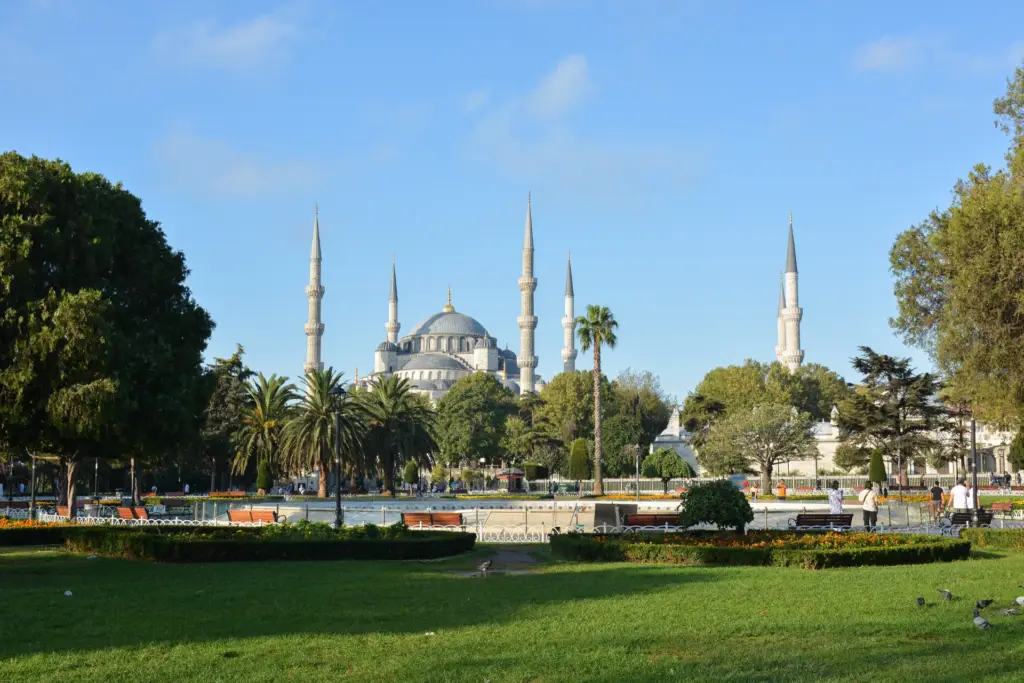
The Blue Mosque stands about five minutes by walking from Hagia Sophia, across the same park, so most families see both in one morning.
How Long Hagia Sophia Takes, and Pairing It With the Blue Mosque
Hagia Sophia takes 30–45 minutes on your own and about 1 hour with a guide. The Blue Mosque stands across the square. Topkapı Palace, the Basilica Cistern and the Grand Bazaar are all within a 10-minute walk. One planned day covers them all.
Hagia Sophia or the Blue Mosque?
If time allows only one, choose Hagia Sophia for history and the mosaics. Choose the Blue Mosque for the blue İznik tiles and free entry. The two buildings face each other across a park, about 5 minutes apart by walking. Most visitors see both in one morning. Both follow the same dress code, so the same scarf works twice. Our Blue Mosque Istanbul guide covers its hours and prayer closures.
A Sultanahmet day around Hagia Sophia
Time
Stop
Why in this order
09:00
Hagia Sophia
Short lines at opening; soft light in the gallery
10:15
Blue Mosque
Across the square, before the midday prayer
11:15
The Hippodrome
Egyptian obelisk and Serpent Column; a flat, open walk
12:30
Lunch in Sultanahmet
Falls during the midday prayer, so nothing is missed
13:45
Topkapı Palace
Courtyards and the Treasury after the morning crowds
16:00
Grand Bazaar
Ends the day under cover, with time to shop
Topkapı Palace is closed on Tuesdays and the Grand Bazaar on Sundays, so the order changes on those days. The Basilica Cistern is an easy addition between lunch and Topkapı. For how many days the whole city needs, see how many days in Istanbul, and for the Bosphorus, our Bosphorus cruise guide.
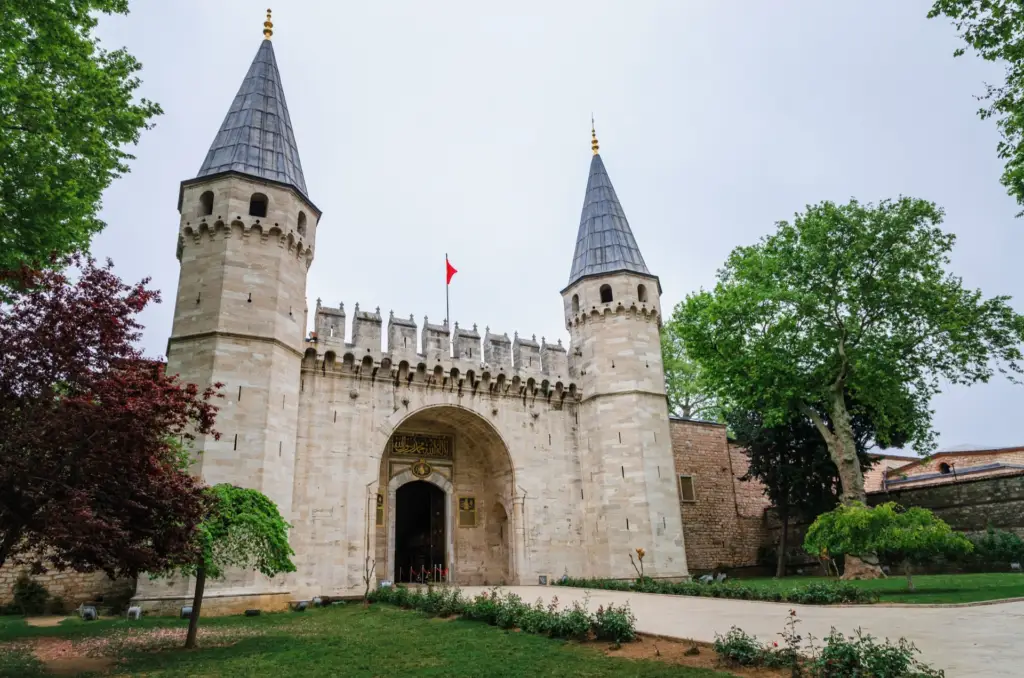
Topkapı Palace’s Gate of Salutation, about five minutes from Hagia Sophia. On our Old City day, the palace follows lunch.
Hagia Sophia on Our Private Istanbul Tours
At Turkey Family Tours, every Istanbul package includes a full Old City day with Hagia Sophia in it. So does every 5- to 14-day Turkey route. The €25 ticket is included in the tour price and arranged in advance. A licensed local guide meets you in your hotel lobby. The guide plans the entry around that day’s prayer times and the Friday closure, then walks the gallery at your family’s pace.
Private Istanbul Old City Tour: about 8 hours, with Hagia Sophia, the Blue Mosque, the Hippodrome, Topkapı Palace and the Grand Bazaar, all entrance fees included. From USD 190 per person.
5-Day Private Istanbul Tour: the Old City day plus the Bosphorus, Galata and the Asian side. From USD 1,435 per person.
The multi-day tours use hand-picked 4-5 star (boutique) hotels; in Istanbul that means a 4-star boutique hotel in the Old City. Every day has a licensed local guide. All options are on our private Istanbul tours page. For a longer route, compare the 5-day, 7-day and 8-day Turkey itineraries. Our Turkey tour cost guide shows what a trip costs. From Istanbul, most families fly on to Cappadocia; the plane, bus and car comparison explains the options.
Visiting Hagia Sophia: Frequently Asked Questions
Visiting Hagia Sophia is worth it on almost every first trip to Istanbul. The upper gallery holds the finest Byzantine mosaics. They include the Deesis from the 1260s and the imperial panels of Empress Zoe and the Komnenos family. From the gallery rail you also look down over the prayer hall, the eight Ottoman roundels and the dome. The visit takes 30–45 minutes on your own and costs €25, with children under 8 free. It is best seen at opening time, as the first stop of the day. The Blue Mosque, the Hippodrome and Topkapı Palace can follow. Our Istanbul travel guide shows where it fits in the rest of the city.
Visiting Hagia Sophia costs €25 per person for foreign visitors, and the ticket covers the upper-gallery route with the main mosaics. Children under 8 enter free with a passport or ID card. A family of four with children aged 6 and 9 pays €75. A guide is paid on top of the ticket, and some online tours leave the €25 out of their own price. Our private Old City tour costs from USD 190 per person. The Hagia Sophia ticket and every other entrance fee that day are included. Children aged 4–6 pay 40% less on the tour, and children aged 0–3 pay 70% less.
Tourists can still go inside Hagia Sophia, every day of the week. Since 15 January 2024, sightseers use a separate visitor gate across from the Fountain of Sultan Ahmed III. From there they walk a one-way route up to the upper gallery. The ground floor is kept for prayer and is free for worshippers, who use the main gates facing Sultanahmet Square. The gallery route passes the main mosaics and looks down onto the whole prayer hall. What visitors no longer do is walk the floor under the centre of the dome. The Blue Mosque across the square is still visited from its ground floor.
Hagia Sophia opens at 08:00 from 1 April to 1 October and at 09:00 the rest of the year. Yes, it closes on Fridays, but only from 12:00 to 14:00 for the main weekly prayer. It closes at 19:30 all year, and the ticket office stops selling at 19:00. Some sellers give 14:30 as the time the Friday line moves again. On a Friday, visit at opening time or after 14:30. Use the middle of the day for lunch or the Grand Bazaar. The official museum information page carries any change to these hours.
You do not need to book Hagia Sophia tickets in advance, but booking ahead helps from June to August. In those months the ticket line and the security line can both be long around midday. An online ticket saves the first of the two queues. From November to March, buying at the gate at opening time is usually fine. Everyone passes the same bag scanner at the visitor gate, whatever ticket they hold. For a private tour in April–June or September–October, 3–4 months ahead is comfortable, because Old City hotels fill first. On our private Istanbul tours, the tickets are arranged in advance, and the guide chooses the entry time on the day.
A private Old City day runs about 8 hours, from about 09:00 to 17:00. The licensed local guide meets you in your hotel lobby. The day usually starts at Hagia Sophia at opening time, then crosses to the Blue Mosque and the Hippodrome before lunch. After lunch come the courtyards and Treasury of Topkapı Palace, and the day ends in the Grand Bazaar. All five sites are within a 10-minute walk of each other. On Tuesdays, when Topkapı is closed, the order changes. The Old City tour is from USD 190 per person, and the same day sits inside every multi-day Istanbul route.
For a private Istanbul tour, cancelling fewer than 7 days before the start means the full tour price is due. A 25% deposit confirms the booking, and the remaining 75% is paid on arrival in Turkey. The deposit is non-refundable. The written day-by-day route you receive shows these terms in full. A reply to your message, with the route priced per person in USD, comes within 24 hours. Travel insurance that covers cancellation is worth taking out on the day you pay the deposit. For what a full trip costs, see our Turkey tour cost guide, and for the booking steps, the plan-my-trip form.
Hagia Sophia and the History and Experience Museum are two different places in Sultanahmet, each with a €25 ticket. Hagia Sophia is the mosque itself, visited from the upper gallery, with the original mosaics. The History and Experience Museum is a separate building on the Hippodrome, about 5 minutes away by walking. It is open 09:00–19:00, with an exhibition about the building’s history on three floors, using screens and projections. Booking sites sometimes list the two tickets side by side, and visitors do buy the wrong one. If you have time for one, choose the mosque gallery. A family that wants both should plan about 2 hours in total.
To visit Hagia Sophia, cover shoulders and knees; women also cover their hair with a scarf. The dress code is checked at the visitor gate. Shorts above the knee and sleeveless tops are the two items that most often send visitors back. Light trousers or a long skirt with a T-shirt pass in every season. Your own scarf is quicker than finding one at the gate. In practice, shoes stay on along the gallery route, because the route does not cross the carpeted prayer floor. The same clothes and scarf work at the Blue Mosque across the square. From June to August, loose linen is the most comfortable choice.
Hagia Sophia is not accessible for wheelchairs, and pushchairs are difficult, because the gallery route is not step-free. The official information page says the entrance and exit have ramps and stairs. It calls them unsuitable for disabled visitors and for people who find walking difficult. The Byzantine ramp to the gallery is long and paved with uneven stones, so a baby carrier is easier than a pushchair. A grandparent who walks slowly can usually manage the route. Allow about an hour and go at opening time, when the ramp is quiet. A wheelchair user cannot reach the gallery; the flat Hippodrome next door is the better stop. Our Istanbul with kids guide covers pushchairs across the city.
A guided Hagia Sophia tour takes about 1 hour; on your own, plan 30–45 minutes. The route is a single one-way loop with no re-entry, so see the south gallery properly before moving on. Because the visit is short, it works best in a day with the Blue Mosque, the Hippodrome and Topkapı Palace. All of them are within a 10-minute walk. Our private Old City tour covers them in about 8 hours. The guide also times the Hagia Sophia entry around that day’s prayers and the Friday closure. For how many days the whole city needs, see how many days in Istanbul.
Get a Written Istanbul Route With Hagia Sophia Timed In
Within 24 hours of your message, a written day-by-day route comes back, priced per person in USD. The Old City day is planned around Hagia Sophia’s opening time, that day’s prayers and the Friday closure. Every entrance fee is included. Multi-day routes use hand-picked 4-5 star (boutique) hotels, with a licensed local guide and a private vehicle with driver in every region.
With Turkey Family Tours, a 25% deposit confirms the booking; 75% is paid on arrival. Send your dates, the number of adults and children and the children’s ages through the plan-my-trip form. The contact page lists every way to reach us.
A 12 day Turkey itinerary across Istanbul, Cappadocia and the Turquoise Coast: eleven nights, three internal flights, two-night bases through Day 8 and a day-by-day private route from USD 4,150 per person.
How to plan a trip to Turkey in seven decisions: trip length (7–10 days suits a first visit), season, route, flights, private tour vs DIY, budget and paperwork — with the 5–14 day route ladder, USD cost bands and the five planning mistakes that cost the most.
The 12 best places to visit in Turkey across five regions — Istanbul to the Turquoise Coast, with the days each needs, how they connect, and which ones to save for a second trip.
Turkey in March: 18 °C and 6.7 hours of sun on the Antalya coast, 12 °C in Istanbul with the queues gone, frost at the Cappadocia sunrise and a 60–70% hot air balloon fly rate. Sea 16–19 °C, museums on winter hours, wide availability and private routes from USD 1,435.
A 10 day Turkey itinerary day by day: Istanbul, Cappadocia cave-hotel nights, Pamukkale, Ephesus, Troy and Gallipoli — nightly stops, per-person costs and the two-flight route that makes it work.
Cappadocia travel guide: sunrise hot air balloons, cave hotels, the Göreme Open-Air Museum and the underground cities — with the 2-day private tour from Istanbul at USD 895 pp.
The Gallipoli battlefields in one guide: the three sectors, Anzac Cove, Lone Pine, Chunuk Bair, the Turkish memorials and Troy, with distances, drive times, ground conditions and the Anzac Day access rules.
How many days in Istanbul: four sees the headline sights, five sees the city. Decision matrix for 2–5 day trips, USD cost bands from the 190 guided day to the 1,435 five-day package, the Istanbul-vs-Cappadocia fork and the 5-day shape day by day.
✦ Tailor-Made
Let's Plan Your Private Turkey Trip
Tell us about your family — we reply within 24 hours.

 English
 Dutch
Dutch Japanese
 Korean
 Chinese