 English
 Dutch
 Japanese
 Korean
 Chinese
15 Things to Do in Cappadocia: Valleys, Caves and Costs
Cappadocia travel guide: sunrise hot air balloons, cave hotels, the Göreme Open-Air Museum and the underground cities — with the 2-day private tour from Istanbul at USD 1,030 pp.



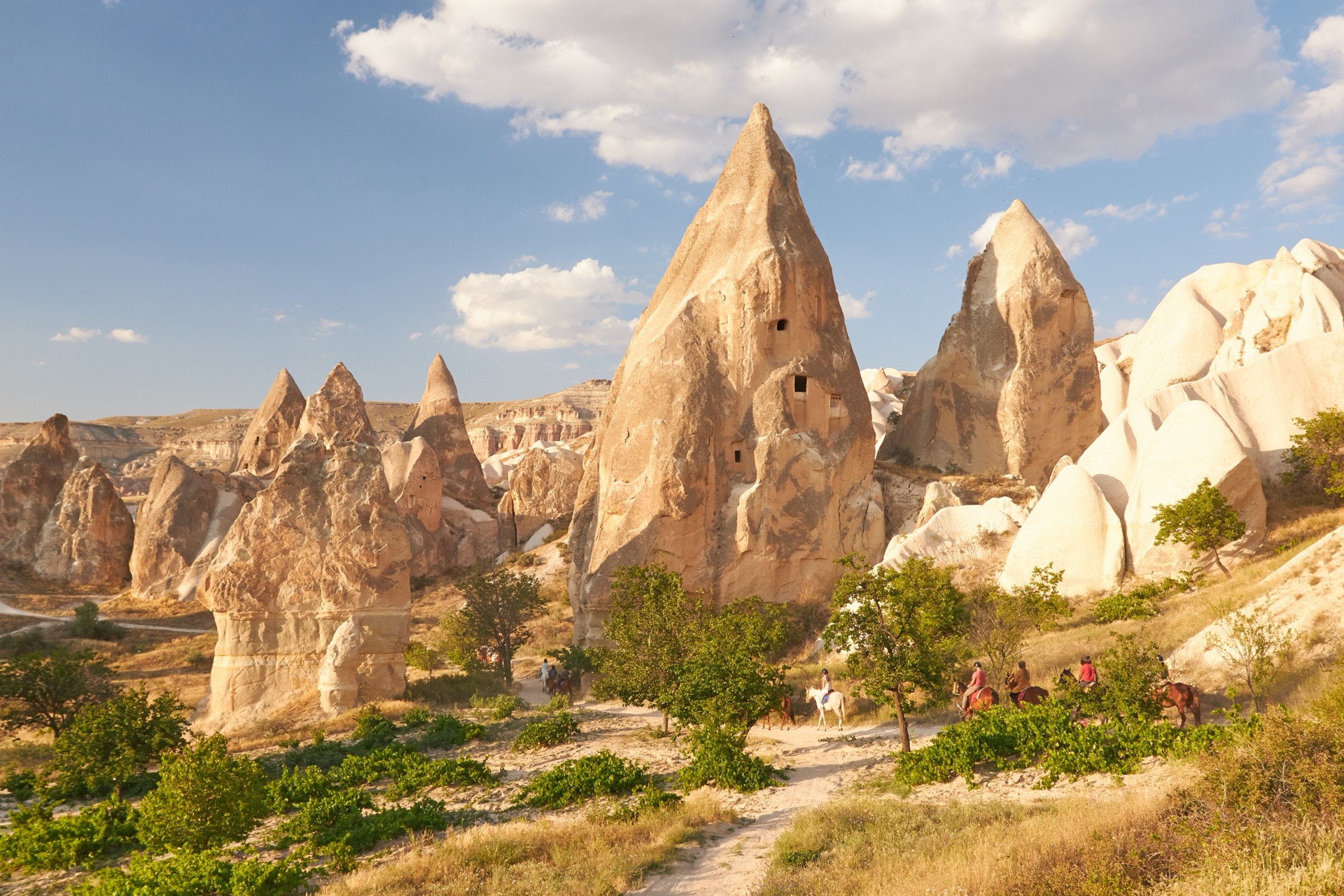
Quick Answer: Turkey in March suits a family trip built on Istanbul, Cappadocia and the ancient cities, and does not suit a beach holiday. The Antalya coast is the warm part, at 18.0 °C (64 °F) by day with 6.7 hours of sun. Istanbul stays at 12.4 °C (54 °F) with thirteen wet days, and Cappadocia wakes to 0.7 °C (33 °F) sunrises. Hot air balloons, arranged separately, fly on 60–70% of March mornings, so our routes give Cappadocia two nights and two chances. Queues at Hagia Sophia and Ephesus are the shortest of the year. A private Turkey tour in March runs USD 1,645–5,395 per adult, with hand-picked 4-5 star (boutique) hotels, breakfasts, admissions, domestic flights and a licensed local guide with a private vehicle in every region. Turkey Family Tours is TURSAB-licensed (no 13538). A 25% deposit confirms the booking; 75% is paid on arrival. Your written day-by-day plan arrives within 24 hours. Get a Private Quote →
Turkey in March averages 12.4 °C (54 °F) in Istanbul, 10.3 °C (51 °F) in Cappadocia and 18.0 °C (64 °F) in Antalya on an ordinary afternoon. The same week means a coat in one city and a T-shirt in another. Antalya collects more sunshine than any other stop on our routes. Istanbul sees rain on thirteen days, and Cappadocia launches its hot air balloons into a sunrise near freezing. The month is the quietest of the touring year at the monuments, and the day gets 80 minutes longer between the 1st and the 31st. Below: the weather in Turkey in March by region, whether the sea is swimmable, the hot air balloon odds, the two dates that fill domestic flights, and which private route fits the month.
Planning a private Turkey tour?
We build family-paced private itineraries with hand-picked 4-5 star hotels and send a written plan and fixed price within 24 hours.
March is a good time to visit Turkey for a trip built around Istanbul, Cappadocia and the ancient cities, and the wrong month for a beach. March gives a family the emptiest Sultanahmet of the year, wide hotel availability in every region we use, and an Antalya coast at 18 °C (64 °F). The hot air balloon mornings improve as the month goes on. It withholds the sea, the tulips and the long warm evenings; those belong to April and May.
The long warm evenings, because sunset is 18:55 on the 1st and the air drops fast after it. Swimming, because the sea is 16–19 °C (61–66 °F) all month. A guaranteed hot air balloon flight on a single Cappadocia night. Some coast resort hotels, which stay closed until late March. And the Istanbul tulips, which open in April; a family that wants them should read our April guide instead.
March is shoulder season, which means hotels have rooms and the domestic flights we book into Kayseri and Izmir have seats at short notice. We price a March trip the same as an April one. The route costs the same, from USD 1,645 per adult for five days in Istanbul to USD 5,395 for fourteen days across the country. What the family gets for the money is time: no minute of a March day is spent in a line. Our month-by-month guide to the best time to visit Turkey sets March next to the other eleven months.
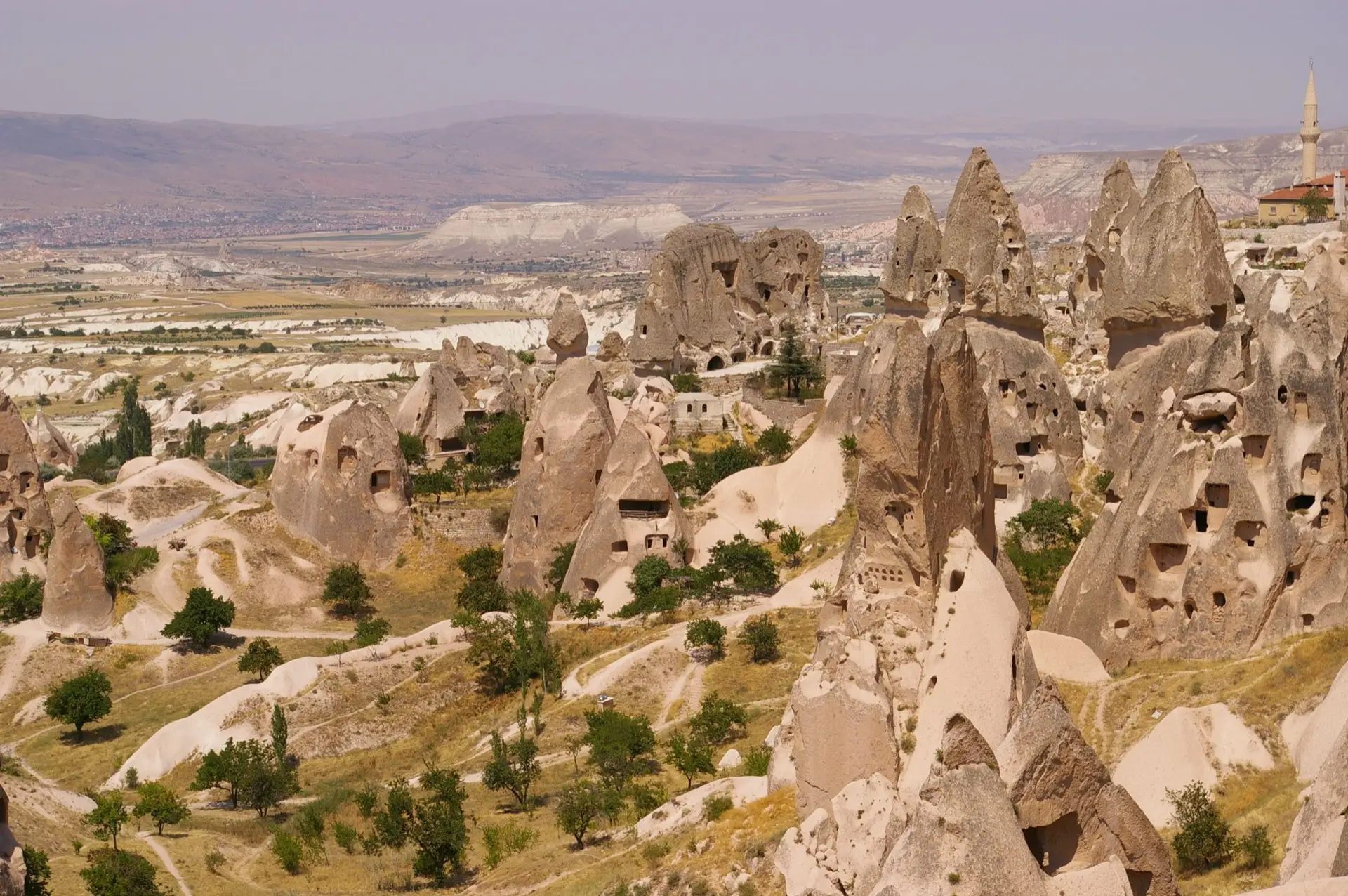
Turkey weather in March averages 12.4 °C (54 °F) in Istanbul, 10.3 °C (51 °F) in Cappadocia and 18.0 °C (64 °F) in Antalya by day. That six-degree spread between the plateau and the sea widens at night. Istanbul’s nights sit at 5.5 °C (42 °F). Cappadocia, measured at the Nevşehir station, falls to 0.7 °C (33 °F) before dawn, the temperature a family stands in for the hot air balloon launch. Antalya’s nights hold 8.1 °C (47 °F), and Izmir, the station for Ephesus, reaches 16.4 °C (62 °F) by day. The figures are long-term normals from the Turkish State Meteorological Service; a warm or cold March sits three degrees either side of them.
| Region | Station | Daytime high | Night low | Wet days | Rain | Sunshine per day | Record high / low |
|---|---|---|---|---|---|---|---|
| Marmara | Istanbul | 12.4 °C (54 °F) | 5.5 °C (42 °F) | 12.6 | 62 mm | 4–5 hours | 28.6 / −5.6 °C |
| Central Anatolia | Cappadocia (Nevşehir) | 10.3 °C (51 °F) | 0.7 °C (33 °F) | 13.1 | 48 mm | 5.3 hours | — / −18.0 °C |
| Central Anatolia | Konya | 11.8 °C (53 °F) | −0.2 °C (32 °F) | 8.8 | 29 mm | — | — |
| Mediterranean | Antalya | 18.0 °C (64 °F) | 8.1 °C (47 °F) | 8.5 | 91 mm | 6.7 hours | 29.4 / −1.6 °C |
| Mediterranean | Muğla (Fethiye, Dalaman) | 18.5 °C (65 °F) | 8.0 °C (46 °F) | 7.8 | 62 mm | — | — |
| Aegean | Izmir (Ephesus, Kuşadası) | 16.4 °C (62 °F) | 7.7 °C (46 °F) | 9.2 | 74 mm | 6.5 hours | — |
| Inland Aegean | Denizli (Pamukkale) | 16.1 °C (61 °F) | 5.5 °C (42 °F) | 11.1 | 63 mm | — | — |
| Marmara south | Bursa | 13.9 °C (57 °F) | 3.6 °C (38 °F) | 12.5 | 70 mm | — | — |
| Eastern Anatolia | Erzurum | 2.7 °C (37 °F) | −7.0 °C (19 °F) | 12.5 | 35 mm | — | — / −33.2 °C |
The monthly average hides the slope. The first week of March in Istanbul behaves like February: afternoons near 10 °C (50 °F), a north wind off the Black Sea, and the year’s last chance of snow on the Old City domes. Our Turkey weather in February page gives that month as 10.2 °C (50 °F) by day, with 3.5 snow days in Istanbul. The last week behaves like early April, with afternoons that touch 15–16 °C (59–61 °F) and the first café tables outside on İstiklal. April’s Istanbul afternoon averages 17.4 °C (63 °F), and most of that climb happens after the 20th. Cappadocia makes the same jump, from 10.3 to 16.0 °C, the coast a smaller one, from 18.0 to 21.4 °C. A family choosing a March week should prefer the last ten days if the dates are free.
March is a wet month by count and a light one by volume. Istanbul records rain on 12.6 days but only 62 mm across them, so the typical March rain is a two-hour shower, not a lost day. Cappadocia has its highest count of wet days of the year in March, 13.1, yet only 48 mm falls, part of it as a morning flurry that has melted by lunch. Antalya is the opposite: fewer wet days, 8.5, but 91 mm, because Mediterranean rain comes in short heavy bursts between long clear spells. A licensed local guide reads the morning sky and swaps the order of the day, indoor sites in the wet hours and open-air ones in the dry, as the Istanbul section shows.
Istanbul’s March record high is 28.6 °C (83 °F) and its record low −5.6 °C (22 °F); a normal March week sits between 8 and 15 °C. Antalya’s records are 29.4 °C (85 °F) and −1.6 °C (29 °F). Nevşehir’s −18.0 °C (0 °F) belongs to a night in the archive, but it explains why we recommend gloves for the March launch and why our Cappadocia hotel is a heated cave house.
The Mediterranean coast around Antalya is the warmest part of Turkey in March, at 18.0 °C (64 °F) by day with 6.7 hours of sunshine. The warmth runs east to Side and Alanya and west to Fethiye and Dalaman. Muğla province, which covers Fethiye and Dalaman, reads 18.5 °C (65 °F) under the same sun. That sunshine figure matters more than the temperature: Istanbul in March averages 4 to 5 hours of sunshine a day, about two hours less than Antalya. A grey week in the city and a bright week on the coast happen at the same time. Families who ask where they can find 25 °C in March get a plain answer: nowhere in Turkey. The ordinary Antalya afternoon is 18, a warm one 21 or 22.
| Coast | Afternoon | Sunshine per day | Sea | Wet days | How we use it in March |
|---|---|---|---|---|---|
| Antalya, Side, Alanya | 18.0 °C (64 °F) | 6.7 hours | 17–19 °C (63–66 °F) | 8.5 | Kaleiçi old town, Aspendos, Perge, a boat along the cliffs |
| Fethiye, Dalaman, Ölüdeniz | 18.5 °C (65 °F) | about 6.5 hours | 17–19 °C (63–66 °F) | 7.8 | Saklıkent gorge, Kayaköy, the Lycian Way in walking weather |
| Kuşadası, Ephesus coast | 16.4 °C (62 °F) | 6.5 hours | 16–17 °C (61–63 °F) | 9.2 | Ephesus, Şirince, the Ephesus Museum on a wet hour |
| Bodrum | about 18 °C (64 °F) | about 6.5 hours | 17–18 °C (63–64 °F) | about 8 | Castle and marina; most beach hotels still closed |
Four and a half extra hours of sun a day on the coast decide the order of a March route. A family that starts in Istanbul and finishes on the coast ends the trip in the best weather of the trip. That is the order our 10-Day Istanbul, Cappadocia and Antalya tour follows, at USD 4,010 per adult. Run the other way, coast first, it sends the family into the grey Istanbul week at the end, when they are tired. Antalya in March is also a museum city: the Antalya Museum, Aspendos theatre and the ruins of Perge are open all year and walked in a light jacket. What it does not have is beach weather; the next section gives the sea temperatures.

You cannot swim comfortably anywhere in Turkey in March: the sea is 16–19 °C (61–66 °F) on every coast. The sea off Antalya averages 17.7 to 19.0 °C (64 to 66 °F) across the month, and Fethiye is almost the same. Bodrum is a degree cooler and Kuşadası on the Aegean two degrees cooler at 16 to 17 °C (61 to 63 °F). The figures are three-year March averages from the Open-Meteo marine archive. The striking thing is how flat they are: the Mediterranean bottoms out in February, holds through March, and only climbs in the second half of April. A child will go in for four minutes on a hot afternoon; nobody stays in.
| Coast | Sea, 1 March | Sea, 31 March | Sea in April | Verdict for March |
|---|---|---|---|---|
| Antalya | 17–18 °C (63–64 °F) | 18–19 °C (64–66 °F) | 18–20 °C (64–68 °F) | Sunbathing on a warm afternoon, boat deck, no swimming |
| Fethiye, Ölüdeniz | 17–18 °C (63–64 °F) | 18 °C (64 °F) | 18–19 °C (64–66 °F) | Same; the lagoon is a viewpoint in March |
| Bodrum | 17 °C (63 °F) | 17–18 °C (63–64 °F) | 18 °C (64 °F) | Castle and marina, not the beach |
| Kuşadası | 16 °C (61 °F) | 16–17 °C (61–63 °F) | 17–18 °C (63–64 °F) | Ephesus base, nothing more |
Sunbathing in Antalya in March works on the warm afternoons, and there are more of them than the temperature suggests because the sun is out for 6.7 hours a day. A family on the Konyaaltı promenade at two in the afternoon on a clear March day is in T-shirts. The same family at six is in jackets, because the night low is 8 °C (47 °F). Some of the coast hotels we use heat their pool, which is worth asking about when the coast week is planned, since a heated pool is the only March swim. The sea rises to 18–20 °C in April and 20–22 °C in May, where swimming starts for adults; our May guide covers the first real beach month.
The right use of the coast in March is a deck, not a towel. A private boat from Antalya’s old harbour runs along the Düden cliffs in an hour and a half, and a gulet out of Fethiye reaches the Butterfly Valley cove and back in a half day. Both run on calm March days and both are cancelled by the guide on a windy one, which happens more in the first half of the month than the second. The rest of a coast day goes to what the coast does best in cool weather: Aspendos, Perge and the Antalya Museum from Kaleiçi, or Saklıkent gorge and Kayaköy from Fethiye. Our 12-Day Cappadocia and Turquoise Coast tour gives the coast four days in that pattern, at USD 4,770 per adult.
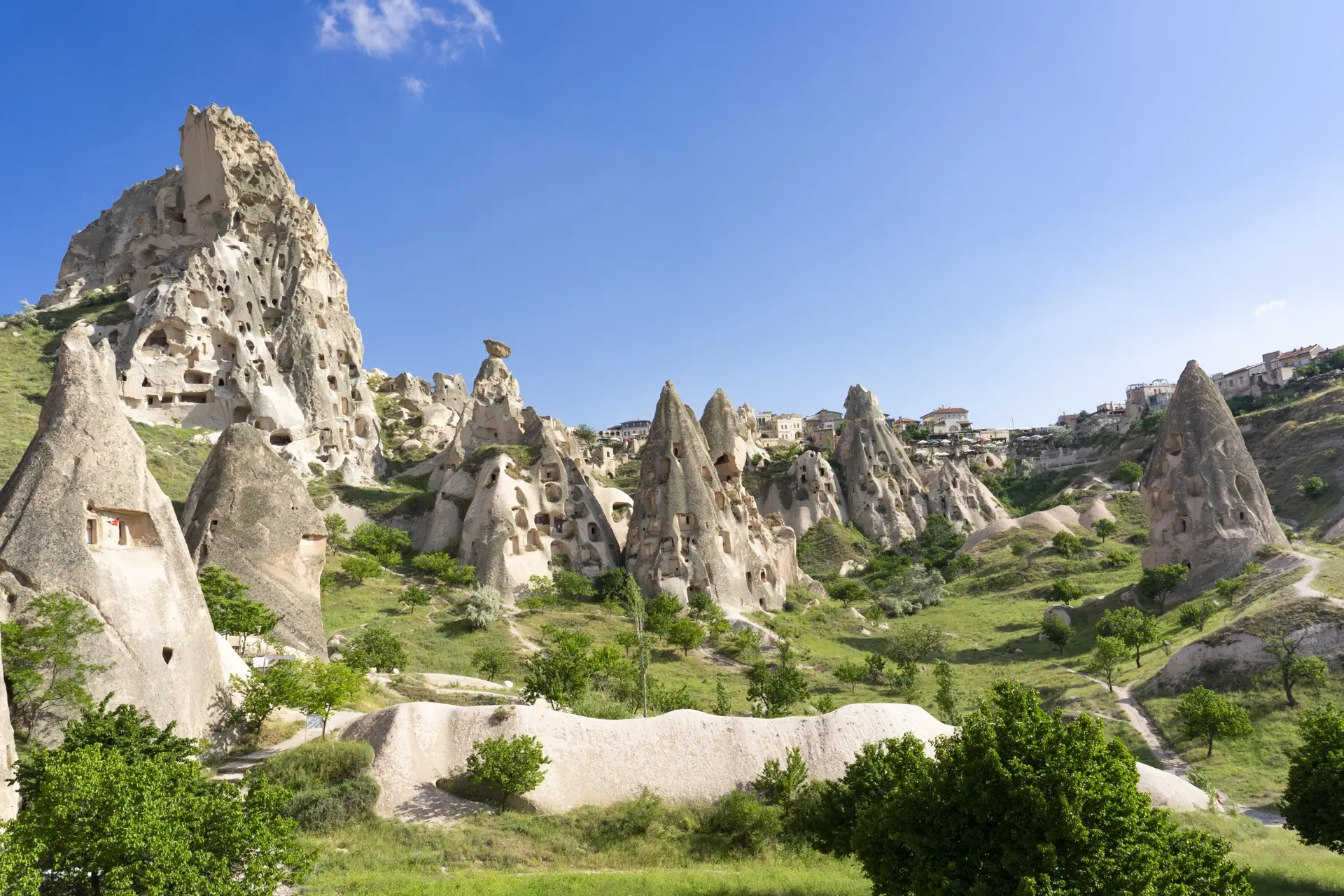
Cappadocia in March reads 10.3 °C (51 °F) by afternoon and 0.7 °C (33 °F) at the hot air balloon launch, on a plateau at 1,000 metres coming out of winter. The dawn is what the family is up for: hotel pickup for the hot air balloon comes 60–90 minutes before a sunrise near 06:35 at the start of the month and 06:28 by the end. Snow lies on the ridges above Göreme in the first fortnight and on the cone of Erciyes, the 3,917-metre volcano behind Kayseri, all month; a half day in real snow can be added on request. Down in the valleys the change is fast: Rose Valley and Love Valley turn green in the last ten days, and the almond trees on the Ürgüp road flower at the end of the month.
Do hot air balloons fly in Cappadocia in March? On roughly 60–70% of mornings, the lowest fly rate of the touring months we recommend and the reason March needs two Cappadocia nights. The Civil Aviation authority grounds the flight when wind at launch height exceeds the limit, and March is the month the winter westerlies loosen their grip. Our Cappadocia hot air balloon guide records the pattern from our own trips: the first fortnight closer to 60%, the second closer to 70%, and by April near 80%. Temperature at launch is not the issue, since the hot air balloons fly at −5 °C without complaint; the wind is.
| Cappadocia in March | Figure | What it means for the family |
|---|---|---|
| Hot air balloon fly rate | 60–70% | Two Cappadocia nights on every route of 7 days or more |
| Chance both mornings are grounded | about 10–15% | Fee rebooked or refunded; valley viewpoint by vehicle instead |
| Temperature at launch | 0.7 °C (33 °F) average | Gloves, hat, two layers under the coat |
| Sunrise | 06:35 → 06:28 | Pickup 60–90 minutes before sunrise, back at the hotel for breakfast by about 08:30 |
| Wet days | 13.1, mostly light | Underground cities and the Göreme Open Air Museum take the wet hours |
| Afternoon walking | 10.3 °C (51 °F) | Rose Valley and Paşabağ in a jacket; no heat, no dust |
A single-night stay leaves the flight to one morning, and in March that morning is grounded about one time in three, so a one-night stay carries 30–40% odds of missing the flight. That is why every route of seven days or more gives Cappadocia two nights. The 5-Day Istanbul and Cappadocia tour, at USD 1,940 per adult, and the 2-Day Cappadocia tour from Istanbul each have one Cappadocia night, so for a March date we suggest adding a second night to either. On a two-night stay, if the first morning flies, the second is a lie-in; if not, the second is the flight. A grounded flight is rebooked or refunded, and the licensed local guide drives the family to a valley viewpoint for the sunrise. Turkey Family Tours plans two Cappadocia nights on every March route of seven days or more for this reason.
The rest of a Cappadocia day in March is walked, and the walking is good. At 10 °C the valley trails are cool and empty, and the Göreme Open Air Museum, a shadeless bowl in July, is comfortable at noon. Kaymaklı underground city holds a constant 13 °C all year and is warmer than the surface in March. We keep families in a heated cave hotel in Göreme, because cave rooms hold warmth in a way a courtyard hotel does not.
Daylight in Istanbul grows by 80 minutes in March, the fastest gain of the touring year. On 1 March the sun rises in Istanbul at 07:39 and sets at 18:55, giving 11 hours 16 minutes of daylight; on the 31st it rises at 06:50 and sets at 19:27, giving 12 hours 37 minutes. The equinox falls on or about 20 March, and Turkey does not change its clocks, so the gain is real rather than a shifted hour. That 80-minute difference is a whole extra site: a family arriving in the last week can leave Ephesus at 17:00 and still walk Şirince in daylight, which a family in the first week cannot. The times are from the NOAA solar calculator for each town.
| Place | 1 March sunrise → sunset | 15 March | 31 March | Daylight, 31 March |
|---|---|---|---|---|
| Istanbul | 07:39 → 18:55 | 07:17 → 19:10 | 06:50 → 19:27 | 12 h 37 min |
| Cappadocia (Göreme) | 07:14 → 18:33 | 06:53 → 18:47 | 06:28 → 19:03 | 12 h 35 min |
| Antalya | 07:29 → 18:51 | 07:09 → 19:04 | 06:45 → 19:18 | 12 h 33 min |
| Çanakkale (Gallipoli) | 07:49 → 19:06 | 07:27 → 19:21 | 07:01 → 19:37 | 12 h 36 min |
Cappadocia’s sun rises 25 minutes earlier than Istanbul’s because it lies further east on the same clock, which is why the hot air balloon pickup there comes half an hour earlier than an Istanbul clock suggests. The museums do not stretch with the day. Ministry sites run winter hours through March, opening around 09:00 and closing in the late afternoon. The extra daylight at the end of March therefore goes to the places with no gate: the Bosphorus ferry, the Ürgüp valley trails, the Kaleiçi harbour and the Pamukkale travertines. A licensed local guide plans a late-March day as a 09:00 site, a second site after lunch, and an open-air hour at 18:00 that a February visitor never had.
Istanbul in March averages 12.4 °C (54 °F) by afternoon, and the Hagia Sophia line that takes forty minutes in May takes five. The morning starts at 5.5 °C (42 °F), and the sun is out for a little over two hours a day; the empty queues are the exchange. The Basilica Cistern is walked at a family’s own pace, and Topkapı’s Harem is seen without a tour group at every doorway. Our Istanbul travel guide explains the neighbourhoods and the ferries; what follows is the March version of the days we run there.
Rain falls on 12.6 March days in Istanbul, and almost all of it in showers of an hour or two. The licensed local guide does not cancel; they re-order. A March day that starts wet begins under a roof and moves outside when the sky clears. The Old City is built for it: its four biggest sites are within 400 metres of each other and three have roofs.
| Hour | Wet morning version | Clear morning version |
|---|---|---|
| 09:00 | Hagia Sophia (indoors, no queue) | Blue Mosque and Hippodrome, then Hagia Sophia |
| 10:30 | Basilica Cistern (indoors) | Topkapı Palace courtyards and Harem |
| 12:00 | Lunch in Sultanahmet | Lunch in Sultanahmet |
| 13:30 | Topkapı Palace, Harem and treasury first | Basilica Cistern, then Grand Bazaar |
| 15:30 | Grand Bazaar (covered), Spice Bazaar | Bosphorus ferry from Eminönü in the clearest light |
| 17:00 | Back at the hotel; Bosphorus moved to a clear day | Galata and İstiklal on the walk back |
The Bosphorus crossing is moved to the clearest afternoon rather than fixed to a day. At 12 °C with a north wind, an open ferry deck is 8 °C, and the point of the crossing is the light on the shore palaces, which a grey sky removes. On a five-day Istanbul stay there is always one clear afternoon, and the guide keeps the crossing for it. Our Bosphorus cruise guide compares the public ferry with the private boat; in March the public ferry is the better answer, because it has a heated saloon.
Does it snow in Istanbul in March? Rarely, and only in the first ten days. The record March low is −5.6 °C (22 °F), and a dusting on the Süleymaniye domes happens perhaps one March in four. It closes nothing; the sites open, the ferries run, and the photographs are the best of the trip. What March does not have is the tulips: the first blooms open in the last days of a mild March, and the peak in Emirgan Park and Sultanahmet is April. A family whose reason for Istanbul is the tulips should read Turkey in April and move the trip by three weeks. A family whose reason is the city itself has it to themselves in March, on a 5-Day Private Istanbul tour at USD 1,645 per adult or a single Old City day at USD 220.
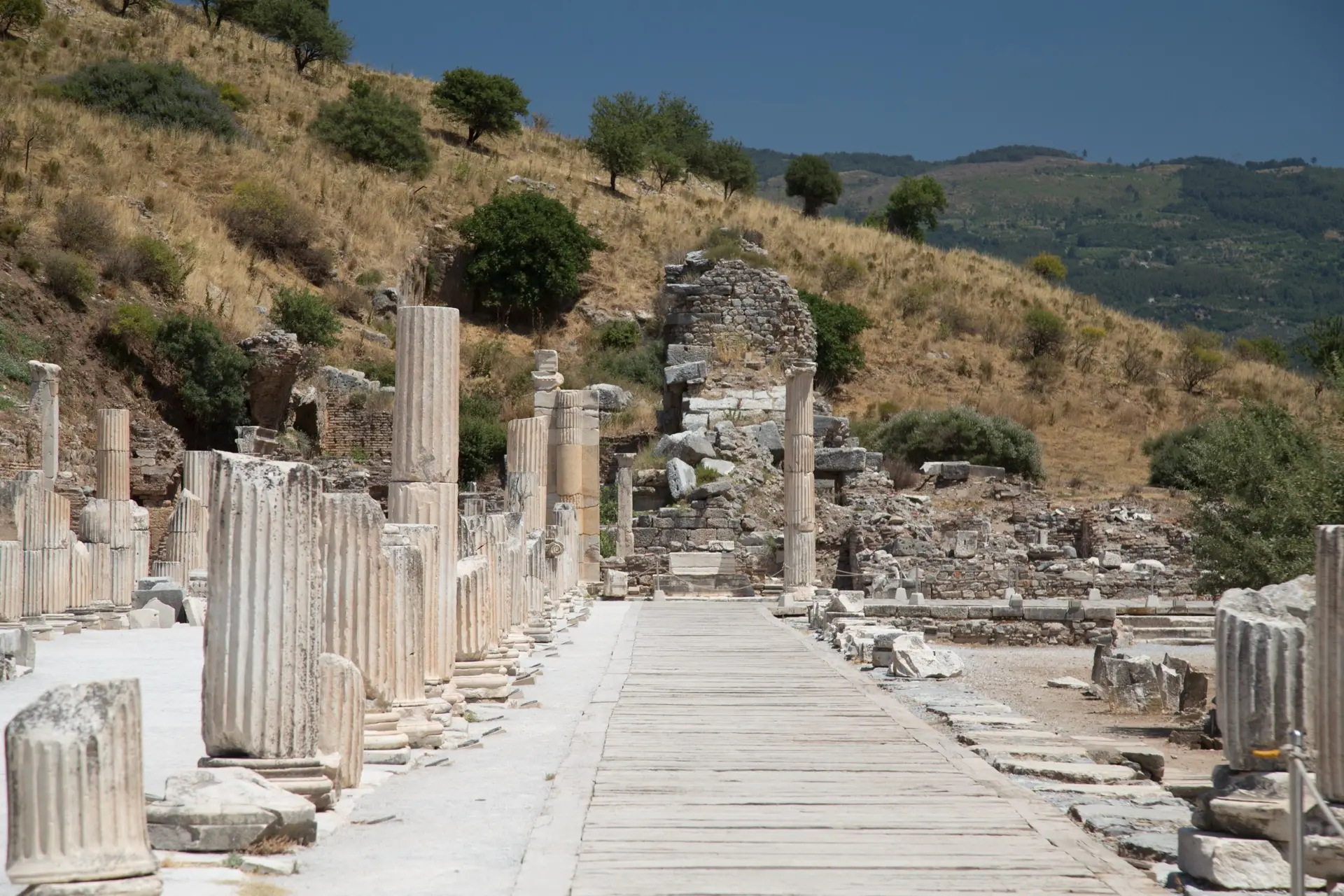
Ephesus in March is walked at 16.4 °C (62 °F) with no cruise groups, Pamukkale at 16.1 °C (61 °F), and Gallipoli is empty on every day except 18 March. In July the same site reads 33 °C; in March the marble of Curetes Street is not yet hot underfoot. The coach groups from the Kuşadası cruise pier, which fill the Library of Celsus from April, have not started; a family at the upper gate at 09:00 has the Terrace Houses to itself. At Pamukkale the travertine water is warm from the spring and walked barefoot in March as in any month. The afternoon wind across the terraces wants a jacket. Our Ephesus guide and Pamukkale guide cover both sites, and the 8-Day route, at USD 3,205 per adult, gives each a full day.
| Site | March afternoon | Wet days | March advantage | How we reach it |
|---|---|---|---|---|
| Ephesus (Izmir) | 16.4 °C (62 °F) | 9.2 | No cruise groups, cool marble, Terrace Houses empty | Morning flight to Izmir, or on the 7 and 8-day routes |
| Pamukkale (Denizli) | 16.1 °C (61 °F) | 11.1 | Warm spring water against cool air; sunset over the terraces at 19:00 | Three hours by road from Ephesus |
| Gallipoli (Çanakkale) | about 12 °C (54 °F) | about 12 | Empty cemeteries, long views; avoid 18 March | Four hours by road from Istanbul, or 2-day route with Troy |
| Aspendos and Perge (Antalya) | 18.0 °C (64 °F) | 8.5 | Theatre and stadium in shirt-sleeves; no heat haze | Half day from Kaleiçi |

Gallipoli in March is cold, windy and empty, and the cemeteries are at their most affecting in that weather. The exception is 18 March, the anniversary of the naval battle of the Dardanelles, when the Allied fleet lost three battleships to mines in a single day, and Turkey marks it as Çanakkale Victory and Martyrs’ Day. The state ceremony is held at the Çanakkale Martyrs’ Memorial at the tip of the peninsula, with official delegations and school groups arriving from early morning. Access to the southern end of the peninsula may be restricted around it. It is not a public holiday, so the rest of the country runs as normal, but a family on the peninsula that day sees a security cordon rather than Lone Pine. The Gallipoli Historic Site Directorate publishes the programme each year.
A Gallipoli day on 17 or 19 March sees the same cemeteries with the peninsula empty again. Our 2-Day Gallipoli and Troy tour, at USD 945 per adult, is timed around the 18th when it falls in a family’s week. On the 10-Day Gallipoli and Troy route at USD 3,815 the peninsula day is simply moved. The crossing uses the 1915 Çanakkale Bridge, opened on 18 March 2022 with a 2,023-metre main span, the longest of any suspension bridge. Anzac Day on 25 April, the other date that changes the peninsula, belongs to April; our Gallipoli travel guide sets out both.

March has no fixed Turkish public holiday, but two moving dates land in it often enough to plan around. The first is Eid al-Fitr, the three-day national holiday that ends the month of fasting. It follows the lunar calendar, so it arrives about 11 days earlier each year. It falls in the second half of March in one year and the first half the next, and then slips into February. The second is Easter, which is not a holiday in Turkey at all but is the week many families travel, and in some years its weekend falls in the last days of March. Neither closes the country. Both fill seats and rooms.
On the first day of the holiday the banks and government offices are shut, the Grand Bazaar closes for the holiday days, and the ministry museums open from the afternoon. The sites, restaurants and hotels never close. What we do is book the domestic flights and hotels for that week 10–12 weeks out instead of six, because those are the seats and rooms that go first.
Easter closes nothing in Turkey, but the hotels in Sultanahmet and Göreme are fuller that weekend with families from abroad, and the cave hotel with the view is the first to go. 18 March at Gallipoli, covered above, is not a third date: it affects one peninsula for one day and nothing else in the country.
The Eid holiday is the date that changes the lead time. Turkey’s own families travel in those three days, and when they fall on a weekend the holiday is sometimes extended to nine. Domestic flights to Kayseri, Izmir and Antalya sell out, the cave hotels in Göreme fill with Istanbul families, and the coast hotels that have opened early are full. Nothing about the trip changes on the ground; what changes is the lead time. A family whose March week overlaps the holiday needs the flights and hotels fixed ten to twelve weeks ahead rather than six; the booking section below sets the dates out. Our guide to April in Turkey covers Children’s Day on 23 April, the next fixed date after March.
Every site on our routes is open in March, on winter hours of roughly 09:00 to 17:00. The ministry-run museums and archaeological sites, which include Hagia Sophia’s upper gallery, Topkapı, Ephesus, Hierapolis and the Göreme Open Air Museum, keep the Turkish Museums winter timetable through March. Doors open at about 09:00 and close in the late afternoon; the exact hours for each site are on that register. The Bosphorus ferries run their full winter schedule. Hot air balloons fly whenever the wind allows. The two things not fully open are the sea-front resort hotels and the gulet charter season, which begins in late April. Our coast nights in March are in hotels that stay open all year, on the Antalya cliffs and at the Fethiye marina.
The resort hotels of Belek, Side and Ölüdeniz are the ones a family finds closed. Many do not open until late March and some not until April, because their business is the pool and the beach. We do not use them in March. The coast nights on our routes are in Antalya, on the cliffs a short drive from Kaleiçi, and at the marina in Fethiye town. Both are hotels open all year, with the restaurants and old-town lanes within a walk. Gulet and yacht charters are the other seasonal closure: day boats run on calm March days, multi-day charters begin in late April. Rooftop dinners in Istanbul move indoors or under glass; the view is the same.
A March booking made six weeks out still finds rooms. March is shoulder season, so a cave hotel in Göreme that needs three months’ notice in May can usually be held at six weeks, and the domestic flights between regions have seats. That gives a March family a freedom the summer family lacks. A route can change two weeks out, a night can be added in Cappadocia for a third hot air balloon try, a coast hotel swapped for a better room. The routes are priced the same in every month; in March the plan can still change two weeks out, and the family’s saving is queue time at Topkapı and Hagia Sophia.
A 12-day private Turkey tour in March, across Istanbul, Cappadocia and the coast, costs USD 4,770 per adult and is the route families ask about most. It is the right length because March needs its slack. Two Cappadocia nights cover the hot air balloon, the coast is used for ancient cities and a boat rather than beach days, and an Istanbul half day is kept for the Bosphorus to find its clear afternoon. Our 12-Day Cappadocia and Turquoise Coast tour is that shape, priced per adult with two sharing. The price includes a licensed local guide and a private vehicle with driver in every region, domestic flights, admissions and hand-picked 4-5 star (boutique) hotels. The table shows how each of our standard lengths behaves in March.
| Route | Days | Per adult, 2 adults sharing | March fit | March adjustment |
|---|---|---|---|---|
| 5-Day Private Istanbul | 5 | USD 1,645 | Very good: no queues, Bosphorus on the clear day | None; a cold-weather city trip |
| 5-Day Istanbul and Cappadocia | 5 | USD 1,940 | Good: one Cappadocia night, one hot air balloon morning | Fly Istanbul–Kayseri on day 3; add a second Cappadocia night for a spare morning; gloves |
| 7-Day Istanbul, Cappadocia and Ephesus | 7 | USD 2,815 | Best fit for March: three empty sites, no coast promise | Ephesus at the 09:00 gate; Şirince at 17:00 |
| 8-Day with Pamukkale | 8 | USD 3,205 | Very good: travertines warm, terraces empty | Pamukkale sunset at 19:00 late in the month |
| 10-Day Gallipoli and Troy | 10 | USD 3,815 | Good; Gallipoli in its quietest month | Move the peninsula day off 18 March |
| 10-Day with Antalya | 10 | USD 4,010 | Good: ends in the sunniest weather | Antalya days as Aspendos, Perge, harbour boat |
| 12-Day Cappadocia and Turquoise Coast | 12 | USD 4,770 | Good: the route the twelve-day question is asking about | Coast as ruins and boat, not beach |
| 14-Day Private Turkey | 14 | USD 5,395 | Good for a family with the days; last week of March preferred | Start in Istanbul, finish on the coast |
In March the coast days go to ruins and a boat; in May the same twelve days include the sea, at the same price.
For a family with less time, the 7-day route is the one we recommend for March above the others, because every one of its three stops is a place March improves. For a family whose reason for Turkey is Gallipoli, the 10-day Gallipoli and Troy route does the peninsula in its quietest month and only needs the 18th kept clear. Every route is private, with a licensed local guide and a private vehicle with driver in every region, and every one is re-shaped to the family’s dates. The private Turkey tour collection page explains what is inside every price.
A March trip to Turkey can be booked 6 to 8 weeks ahead for an ordinary week, and needs 10 to 12 weeks if the dates touch the Eid holiday or a late-March Easter weekend. The shorter lead time is enough to hold the cave hotel in Göreme, the boutique hotel in Sultanahmet and the domestic flights at sensible fares. The longer one is needed because the Istanbul–Kayseri and Istanbul–Antalya flights are the first things to fill and the last a private tour can do without.
The other decision that cannot be left late is the second hot air balloon morning. A family that wants the 60–70% March fly rate turned into two sure chances needs two Cappadocia nights, and a third if the onward flight leaves too early for a rebooked dawn. That is a hotel night and a flight time, and both are fixed when the plan is written. On a route that never touches Cappadocia, such as the 4-Day Gallipoli, Ephesus and Pamukkale tour, the question does not arise. Everything else about a March trip can move. A wet Istanbul day is re-ordered on the morning itself, a Gallipoli day is moved off 18 March when the plan is written. A coast day becomes a boat day or a ruins day by looking at the sky at breakfast.
The booking itself is the same in every month. Tell us the dates, the party size and the children’s ages through the plan-my-trip form. A day-by-day plan with a fixed per-person price comes back within 24 hours. A 25% deposit confirms the booking; 75% is paid on arrival. The deposit is what holds the hotel rooms, the domestic flights and the hot air balloon morning in the family’s name, and until it is paid nothing is reserved. Turkey Family Tours is licensed by TURSAB under number 13538, and the licence is checkable on the Association of Turkish Travel Agencies register.

Packing for Turkey in March means covering a 0.7 °C hot air balloon dawn in Cappadocia, a 12 °C wet Istanbul afternoon and an 18 °C Antalya afternoon in 6.7 hours of sun, all in one suitcase. The mistake families make is to pack for the average, and the average March day is 12 °C. The list below is what our guides see families wish they had brought, by the place it earns its space.
| Item | Where it earns its place | Why in March |
|---|---|---|
| Gloves, hat and a warm layer | Cappadocia, the hot air balloon basket | Dawn at 0.7 °C; the basket is in the open air for an hour before sunrise warms it. We recommend them from October to March |
| A waterproof shell, not an umbrella | Istanbul | Thirteen wet days and the wind on the Bosphorus turns umbrellas inside out; a shell works on the ferry deck |
| Walking shoes with grip | Ephesus, Pamukkale, the Cappadocia valleys | Marble streets are slippery after rain, and the travertines are walked barefoot but the approach is wet stone |
| Sunscreen and sunglasses | Antalya, Fethiye, Pamukkale | The coast has three times Istanbul’s March sunshine, and white travertine doubles the glare |
| A swimsuit | Hotels with a heated pool, and the thermal pools at Pamukkale | The sea is 16–19 °C and not for swimming, but some hotel pools are heated and the Cleopatra pool at Hierapolis is a constant 36 °C |
| One warm evening layer | Everywhere | Evenings drop to 5 °C in Istanbul and below freezing in Göreme; restaurant terraces are heated but the walk back is not |
Two things are not needed. A heavy winter coat is more than March asks for anywhere south of Istanbul; the layered shell does the same job on the cold morning. Beach kit beyond one swimsuit goes unused, because the sea is 16–19 °C in March, as the sea section explains. For the children, one waterproof pair of shoes each is the item that decides whether the Istanbul wet day is a good day or a bad one. Everything else is what they wear at home in early spring. A small day bag for the layers taken off between the 0 °C dawn and the 10 °C noon in Cappadocia is the most useful thing in the vehicle.

April is five degrees warmer than March in Istanbul, 17.4 °C against 12.4 °C, and flies hot air balloons on about 80% of mornings against 60–70%; March has no queues and wider hotel choice. Which of those matters more is a family decision, and it is the question we are asked most about March. The table puts the two months side by side on the numbers that change a trip.
| Measure | March | April | Which month it favours |
|---|---|---|---|
| Istanbul afternoon | 12.4 °C, 4 to 5 hours of sun, thirteen wet days | 17.4 °C, more sun, ten wet days | April |
| Cappadocia dawn and afternoon | 0.7 °C / 10.3 °C | 5.1 °C / 16.0 °C | April |
| Antalya afternoon | 18.0 °C, 6.7 hours of sun | 21.4 °C, 7.9 hours of sun | April, but a March afternoon is already warm |
| Sea temperature | 16–19 °C, sunbathing not swimming | 18–20 °C, still cold for most families | Neither; May is the first swimming month |
| Hot air balloon fly rate | 60–70%, two mornings needed | About 80% | April |
| Queues at Hagia Sophia, Topkapı, Ephesus | None | Building from mid-month | March |
| Hotel and flight availability | Wide all month outside the Eid week | Tightens around the tulip peak and 25 April | March |
| Fixed dates | 18 March at Gallipoli only | Tulip festival, Children’s Day on 23 April, Anzac Day on the 25th | April if the tulips or Anzac Day are the reason; March if they are not |
A family whose trip is Istanbul, Cappadocia and the ruins, and whose priority is walking into Hagia Sophia without a queue, should take March, and the last ten days of it if the dates are free. A family that wants the tulips in Emirgan, warmer valley walks and a better hot air balloon percentage should read our Turkey in April guide and take the second half of that month. A family whose trip depends on the sea should read neither and go to May. The hub guide to the best time to visit Turkey ranks all twelve months on the same measures. The December guide and the coldest-month guide for January cover the deep-winter version of the route, where the museum hours and cave-hotel logic match early March.
The price does not decide it, because our private tour prices are the same in both months; the 7-Day route is USD 2,815 per adult whether it runs on 10 March or 10 April. March adds choice at the same price: the exact hotel, the exact room type and the domestic flight time the family prefers. Six weeks out, March usually still offers all three, and April often does not.
March is a good time to visit Turkey for a family whose trip is Istanbul, Cappadocia and the ancient sites, and a poor one for a family that wants to swim. Istanbul averages 12.4 °C (54 °F) by day with thirteen wet days, Cappadocia reaches 10.3 °C with frost at dawn, and Antalya holds 18.0 °C (64 °F) in 6.7 hours of daily sun. Every museum and site is open, the queues at Hagia Sophia and Ephesus have not formed, and hotels and flights are widely available outside the Eid week. The last ten days are better than the first ten. Our month-by-month guide ranks March against the other eleven.
Antalya and the Mediterranean coast east of it are the warmest part of Turkey in March, at an average afternoon of 18.0 °C (64 °F) with 6.7 hours of sunshine and about nine wet days. Fethiye and Bodrum on the Muğla coast are within half a degree, and İzmir on the Aegean reads 16.4 °C. Nowhere in Turkey averages 25 °C in March; the warmest Antalya afternoons reach the low twenties in the last week. Inland is cold: Cappadocia 10.3 °C by day and 0.7 °C at dawn. Our 10-Day Antalya route ends the trip in that warmest weather.
You can sunbathe in Antalya in March but not swim. On a clear afternoon at 18 °C in 6.7 hours of sun, a sheltered hotel terrace or the old harbour wall is warm enough to sit in a T-shirt. The sea is another matter: 16–19 °C (61–66 °F) all month, which is cold-water swimming for adults and a few minutes for children. Families swim in a heated hotel pool where there is one and use the beach for walking; a boat trip from the harbour is comfortable on a calm day. The first month with a sea most families will swim in is May, at 20–22 °C, which our Turkey in May guide covers.
Hot air balloons fly in Cappadocia in March on roughly 60–70% of mornings, and the rate improves through the month as the winter wind settles. That is well below the 90% or more of summer, which is why we book two Cappadocia nights in March so the flight has two chances. A single night carries about a 30–40% chance of missing it. Pickup comes 60–90 minutes before a sunrise near 06:35, at 0.7 °C, so gloves and a hat are needed. If the Civil Aviation Authority grounds every booked morning, the fee is rebooked or refunded. The full March picture is in our hot air balloon guide for Cappadocia.
It snows in parts of Turkey in March, but not where most families travel. Cappadocia keeps snow on the ridges into the first half of the month, and a fresh fall on the fairy chimneys happens in some years; the Nevşehir March record is −18.0 °C. Erzurum in the east reaches 2.7 °C by day and −7 °C at night, still full winter. Istanbul sees snow in March rarely and only in the first days, and it is gone by lunchtime. Antalya, Fethiye, Ephesus and Pamukkale have no March snow. For a family that wants the snow version of the same route, our Turkey in December guide is the guide to read.
For a family, April is the warmer month and March the emptier one. Istanbul goes from 12.4 °C to 17.4 °C between the two months, Cappadocia’s dawn from 0.7 °C to 5.1 °C, and the hot air balloon fly rate from 60–70% to about 80%. In return March gives a family Hagia Sophia and Ephesus without queues, its choice of hotel six weeks out, and no fixed dates except 18 March at Gallipoli. April adds the Istanbul tulips, Children’s Day on 23 April and Anzac Day on the 25th, and the queues that arrive with them. Neither month has a sea to swim in. Our guide to April in Turkey gives the other side of the comparison.
A private Turkey tour in March costs from USD 1,645 per adult for the 5-Day Private Istanbul route to USD 5,395 for the 14-Day Private Turkey tour, based on two adults sharing. The 7-Day route is USD 2,815 and the 12-Day route USD 4,770. The price includes hand-picked 4-5 star boutique hotels with breakfast, domestic flights, all transfers, a licensed local guide and a private vehicle with driver in every region, and entrance fees. Children aged 4 to 6 pay 60% of the adult price and children under 4 pay 30%; from age 7 the adult price applies. The Turkey tour packages page lists what is inside every price.
A 10 to 12-day March itinerary runs Istanbul, Cappadocia, then south to the coast and back through the ruins. Our 12-Day Private Turkey Tour gives Istanbul two days and Cappadocia two cave-hotel nights for the hot air balloon. Antalya then has two days for Perge, Aspendos and the old harbour, Fethiye two for Saklıkent and Kayaköy. The route ends with Pamukkale, Ephesus and an evening flight to Istanbul, at USD 4,770 per adult. In March the coast days are ruins, gorges and a boat morning rather than the beach. The 10-day versions drop either the Turquoise Coast (USD 4,010, ending in Antalya) or the Mediterranean altogether for Gallipoli and Troy (USD 3,815).
Book a March trip to Turkey 6 to 8 weeks ahead for an ordinary week, and 10 to 12 weeks ahead if the dates touch the three-day Eid holiday. The same applies to the Easter weekend in the years it falls in late March. Domestic flights and the better Cappadocia cave hotels fill first for those dates. Outside them March is the easiest spring month to book late: hotels have rooms and flights have seats. What must be decided at booking is the second Cappadocia night for the hot air balloon. A written plan with a fixed price comes back within 24 hours of the planning form.
A 25% deposit confirms a March booking and 75% is paid on arrival in Turkey, in every month and for every route. The deposit reserves the hotel rooms, the domestic flights and the hot air balloon morning in the family’s name. The hot air balloon is booked separately from the tour price. If the Civil Aviation Authority grounds every morning the family has booked, that fee is rebooked or refunded and the licensed local guide takes the family to a valley viewpoint instead. A cancellation within 7 days of departure, or a no-show, is charged in full; the earlier cancellation steps are on the booking FAQ.
A March plan starts with one question: which ten days of the month, because the last ten are the best. Send us the week the family can travel, how many of you there are and the children’s ages through the plan-my-trip form. A day-by-day plan with a fixed per-person price comes back within 24 hours. If the dates touch 18 March we move the Gallipoli day. If they touch the Eid week we book the flights first. If the family wants the hot air balloon we build in the second Cappadocia morning without being asked. Turkey Family Tours is TURSAB-licensed (no 13538). A 25% deposit confirms the trip and 75% is paid on arrival. The private guided tours of Turkey page shows how every route is built, and the contact page has WhatsApp for a quick question.



Tell us about your family — we reply within 24 hours.