 English
 Dutch
Dutch Japanese
 Korean
 Chinese
Istanbul to Cappadocia: The 75-Minute Flight, Airports and Private Transfer
Istanbul to Cappadocia: the 75-minute flight, which airports to use, the 40–75 minute transfer into Göreme and how the leg works on a private tour.


Quick Answer: Turkey in November is the last month in which Istanbul, Cappadocia and the coast fit one comfortable route. The weather in Turkey in November means daytime highs of 21.4 °C (71 °F) in Antalya, 16.1 °C (61 °F) in Istanbul and 11.8 °C (53 °F) in Cappadocia. Cappadocian nights fall to 2.5 °C (37 °F), and Istanbul has around eleven rain days. Hot air balloons in Cappadocia fly on roughly 75% of November mornings, against 90% in October and 50–55% in December. The first two weeks read as late autumn, the last ten days as early winter. A private Turkey tour in November runs USD 1,435–4,450 per adult for the land arrangements. That price includes hand-picked 4-5 star (boutique) hotels, breakfasts, admissions and domestic flights. It also covers a private vehicle with driver and a licensed local guide in every region. Turkey Family Tours is TURSAB-licensed (no 13538), and your written day-by-day plan with a fixed quote arrives within 24 hours. Get a Private Quote →
Turkey in November runs 9.6 degrees warmer on the Mediterranean coast than in Cappadocia on the same day. Antalya holds 21.4 °C in the afternoon, Istanbul sits at a walkable 16.1 °C, and Cappadocia manages 11.8 °C over nights that touch freezing. Hot air balloons fly on about three mornings in four. A plan written for 5 November does not fit 25 November.
Planning a private Turkey tour?
We build family-paced private itineraries with hand-picked 4-5 star hotels and send a written plan and fixed price within 24 hours.
November is a good time to visit Turkey for families who want Istanbul and Cappadocia with short queues at the headline sites. Istanbul holds 16.1 °C by day, and hot air balloons fly on three mornings in four. It is the wrong month for a beach week or a balloon flight tied to one fixed morning.
Daylight sets the third limit: just under ten hours at mid-month. Together these make November the last month in which Istanbul, Cappadocia and the classical coast can be combined on one comfortable route. Our 12 day Turkey itinerary is one of them, with two nights each at Antalya, still 21.4 °C in the afternoon, and Fethiye before Pamukkale and Ephesus. From December the coast drops out of most family plans. Queues at the headline sites run at a fraction of the summer figure, and a preferred hotel room is usually still open six weeks out.
What the month asks in return is flexibility about order. Rain arrives in short spells rather than long ones, so a private route can move an outdoor morning to the afternoon and lose nothing. A fixed coach departure cannot.
The choice comes down to five places: Istanbul, Cappadocia, Ephesus, Pamukkale and Antalya. What to do in each follows the thermometer. Istanbul gives the indoor monuments and a Bosphorus crossing between showers. Our Istanbul with kids guide lists the stops that hold a young child on a grey afternoon. Cappadocia gives the hot air balloon flight, dry valley walks and the underground cities, which run whatever the surface temperature is. Antalya gives Perge, Aspendos and the old harbour at 21 °C (70 °F), with a beach afternoon in the first half of the month. Pamukkale’s thermal water makes sense in cold air, and Ephesus is walked at midday without the summer heat. Any of the five fits a November route. The limit is how many of them ten hours of daylight hold.
Our best time to visit Turkey hub sets November against the other eleven months on the same measures. If the trip is still unshaped, how to plan a trip to Turkey covers sequence, flights and lead time before the calendar decision.
Turkey in November runs from 21.4 °C on the coast to 2.5 °C before dawn in Cappadocia. The coast is mild, Istanbul is cool and wet, and inland nights are cold. One family can stand in all three inside four days, and Istanbul is the wettest of them. So, is Turkey cold in November? Inland, yes, from the middle of the month: Cappadocia’s afternoons reach 11.8 °C (53 °F), but its nights sit near freezing. On the coast, no: Antalya’s afternoons average above 20 °C (68 °F). The sea there is warmer than the air above it. Which of the three a family feels depends less on the date than on which side of the Taurus mountains the day is spent.
| Region | Daytime high | Night low | Monthly rain | Rain days |
|---|---|---|---|---|
| Istanbul (Marmara) | 16.1 °C (61 °F) | 9.9 °C (50 °F) | 78.1 mm | ~11 |
| Cappadocia (Central Anatolia) | 11.8 °C (53 °F) | 2.5 °C (37 °F) | 34.3 mm | ~9 |
| Antalya (Mediterranean) | 21.4 °C (71 °F) | 10.9 °C (52 °F) | 127.7 mm | ~7 |
| Ephesus and Kuşadası (Aegean coast) | 18.7 °C (66 °F) | 10.8 °C (51 °F) | 92.3 mm | ~9 |
| Pamukkale (inland Aegean) | 17.6 °C (64 °F) | 7.3 °C (45 °F) | 54.7 mm | ~8 |
The coast also keeps about 6.3 hours of sunshine a day against 4.6 in Cappadocia.
Daytime highs fall by roughly five degrees against October in every region of Turkey. The spread between regions matters more than the drop: a 9.6-degree gap separates the coast from the plateau, often inside the same week of one family itinerary. Rainfall is not evenly shaped either. Antalya records the highest monthly total, 127.7 mm, across the fewest rain days, about seven, because its rain arrives in a handful of heavy bursts. Eastern Anatolia is colder again and sits below freezing overnight through most of the month, which is why no standard November itinerary runs east of Cappadocia. Every figure comes from long-term station records held by the Turkish State Meteorological Service.
The Mediterranean coast from Antalya to Alanya is the warmest part of the country, at 71 °F by day for readers who think in Fahrenheit. Early November runs above that monthly average and the last week below it. Ephesus and Pamukkale sit a step behind, and Cappadocia marks the cold end of any standard route. The Mediterranean is the warmest part of Turkey in every winter month. November is the last one warm enough for a beach afternoon with children.
Is Istanbul too cold in November? Not for touring. The city averages 16.1 °C by day and 9.9 °C overnight, with about eleven rain days spread across the month. Wind off the Bosphorus takes several degrees off what the thermometer promises, and children feel it before their parents do. The city’s advantage is that its headline sites do not care about weather. Hagia Sophia, the Basilica Cistern, Topkapı Palace and both bazaars are covered. Our Istanbul travel guide lists opening days for each, and Istanbul with kids covers the indoor stops that hold younger children on a grey afternoon.

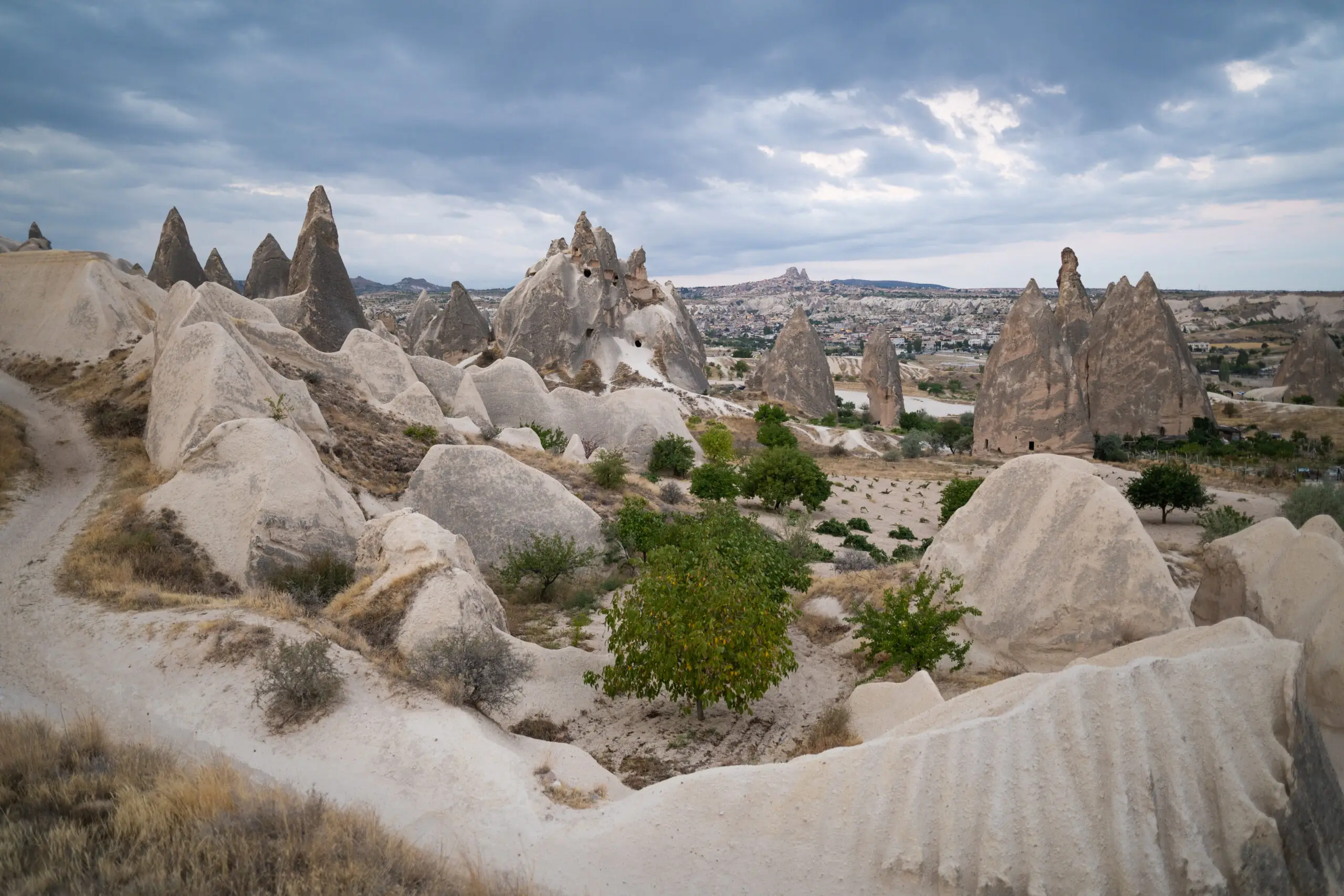
Cappadocia in November is the coldest region on any standard route, at 11.8 °C by day and 2.5 °C at night. It is also the driest, at 34.3 mm across roughly nine rain days. Frost before sunrise is normal from mid-month, and snow on the fairy chimneys is possible in the last week. Valley walking is comfortable for a family once the sun is up, and the underground cities hold a steady temperature whatever the surface is doing. See our Cappadocia travel guide for the valley routes that stay dry underfoot.
Antalya holds 21.4 °C daytime through November. The Mediterranean cools more slowly than the air above it. By the Antalya sea temperature record, it still reads around 23 °C in the first week, near 21 °C in the last. What ends the swimming season here is not the water but the wind, the short afternoon and the closed hotel. The Aegean runs a degree or two behind, so İzmir at 18.7 °C means a family walks Ephesus comfortably in the middle of the day. Antalya’s 127.7 mm of rain sounds severe until you see the seven rain days: the month delivers its water in short, heavy episodes. Our Antalya travel guide covers the ancient sites that work when the beach does not.
Denizli averages 17.6 °C by day and 7.3 °C at night, with 54.7 mm of rain. That cool air is what makes the terraces work. In August the white travertine reflects heat and families cross it quickly. In November the 36 °C thermal water sits well above the air temperature, and children stay in far longer than their parents expect. Read our Pamukkale travel guide for the barefoot route across the terraces.
November splits at about the 15th, and a family arriving on either side of that date needs a different itinerary. Between 1 and 15 November Istanbul keeps sunset after 17:45, the Mediterranean sits near 23 °C and most coastal hotels are still open. From the 16th sunset falls to 17:37, Cappadocia nights reach freezing, the sea eases to about 21 °C and the seasonal resorts close. Both halves make a good trip for a family. Which half you want is the first thing to settle, before flights or hotels.
| Dimension | 1–15 November | 16–30 November |
|---|---|---|
| Daylight in Istanbul | 10 h 26 m on 1 November | 9 h 29 m on 30 November |
| Istanbul sunset | 18:01, falling to 17:46 | 17:46, falling to 17:37 |
| Cappadocia valley colour | Holding, past peak | Bare, with first snow possible |
| Coastal hotel opening | Many seasonal properties open | Most seasonal properties closed |
| Mediterranean sea temperature | Around 23 °C | Around 21 °C |
| Cappadocia night low | 4 °C | Around freezing |
| Best-suited route | Istanbul, Cappadocia and coast | Istanbul and Cappadocia |
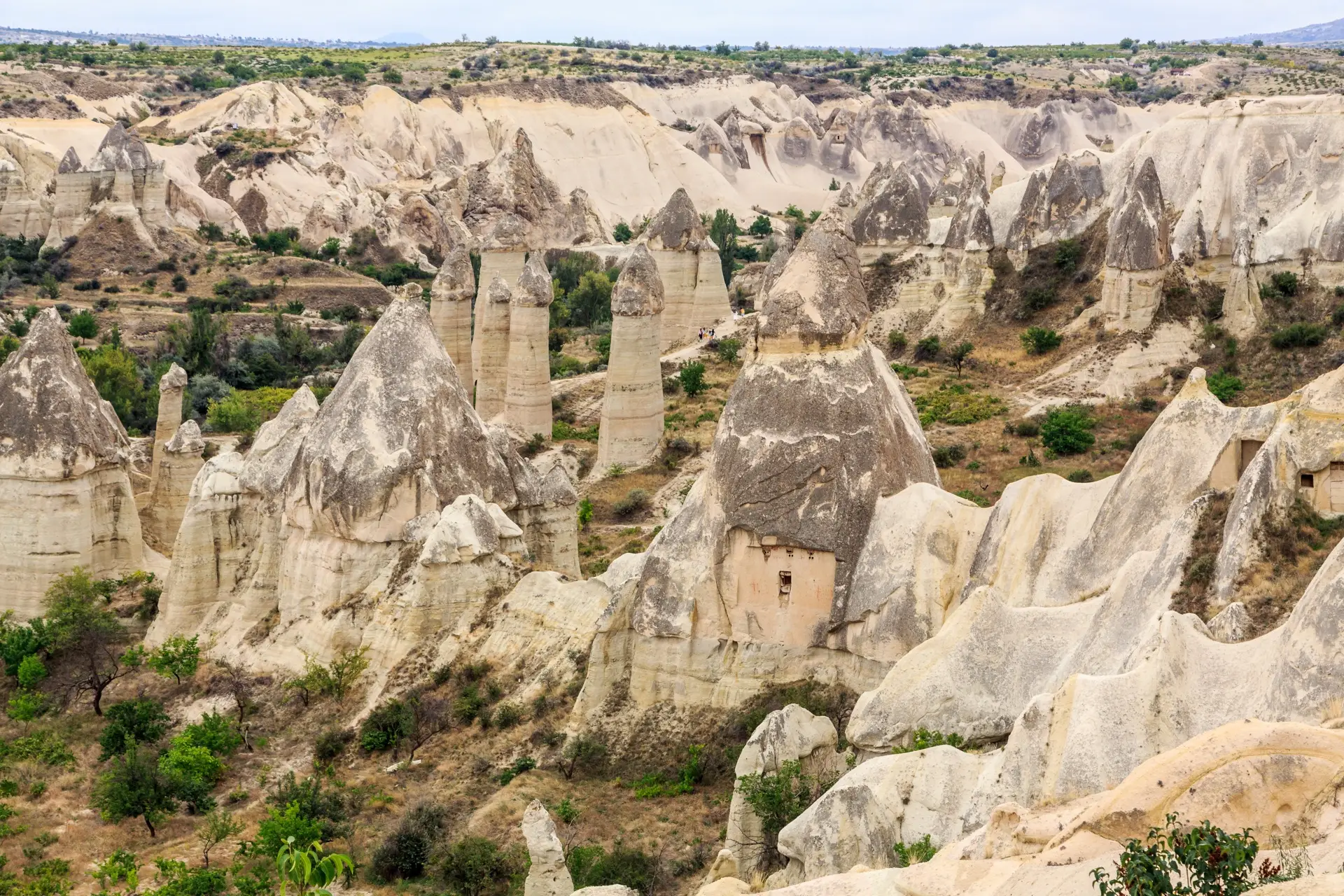
Early November carries the last of the autumn colour in the Rose and Pigeon valleys, and the light is low enough all day for photography. Coastal sites such as Aspendos and Perge are still comfortable in the early afternoon. A route that takes in Istanbul, Cappadocia and the coast has enough daylight to move between them without the day feeling rushed. Families who want all three regions should aim at these two weeks.
Late November is the quietest touring fortnight of the year for a family before the year-end week. Cappadocia’s landscape is stripped back and photographs well under low cloud. Istanbul’s museums are close to empty on weekday mornings, and restaurant tables need no booking. The route that suits this half is the two-city classic covered in how we run the Cappadocia leg on private tours, with the coast left for another trip.
Turkey does not change its clocks, so Istanbul’s November sunset times decline steadily, with no autumn jump. Istanbul opens the month with 10 hours 26 minutes of daylight and closes it with 9 hours 29 minutes. Ten hours fits four stops in a comfortable family day, and nine and a half fits three plus a covered bazaar. That is the biggest structural difference from a summer itinerary, where six stops are normal.
Istanbul’s sun comes up at 07:34 on 1 November and 08:08 on 30 November, by the timeanddate sunrise tables for Istanbul. Turkey keeps UTC+3 all year and never puts the clocks back, which is why its winter mornings start so late for the longitude. By the end of the month an 08:00 hotel pick-up happens in the dark, and the first hour of any drive is a night drive. That is why we re-time the day rather than simply shortening it.
| Istanbul | Sunrise | Sunset | Daylight |
|---|---|---|---|
| 1 November | 07:34 | 18:01 | 10 h 26 m |
| 15 November | 07:51 | 17:46 | 9 h 55 m |
| 30 November | 08:08 | 17:37 | 9 h 29 m |
The compensation is the light itself. A sun that never climbs high gives long shadows and warm colour from mid-morning to mid-afternoon, which is why the valleys and the Bosphorus photograph better now than in July. A November touring day also starts later and finishes sooner than a summer one, which most families with young children prefer.
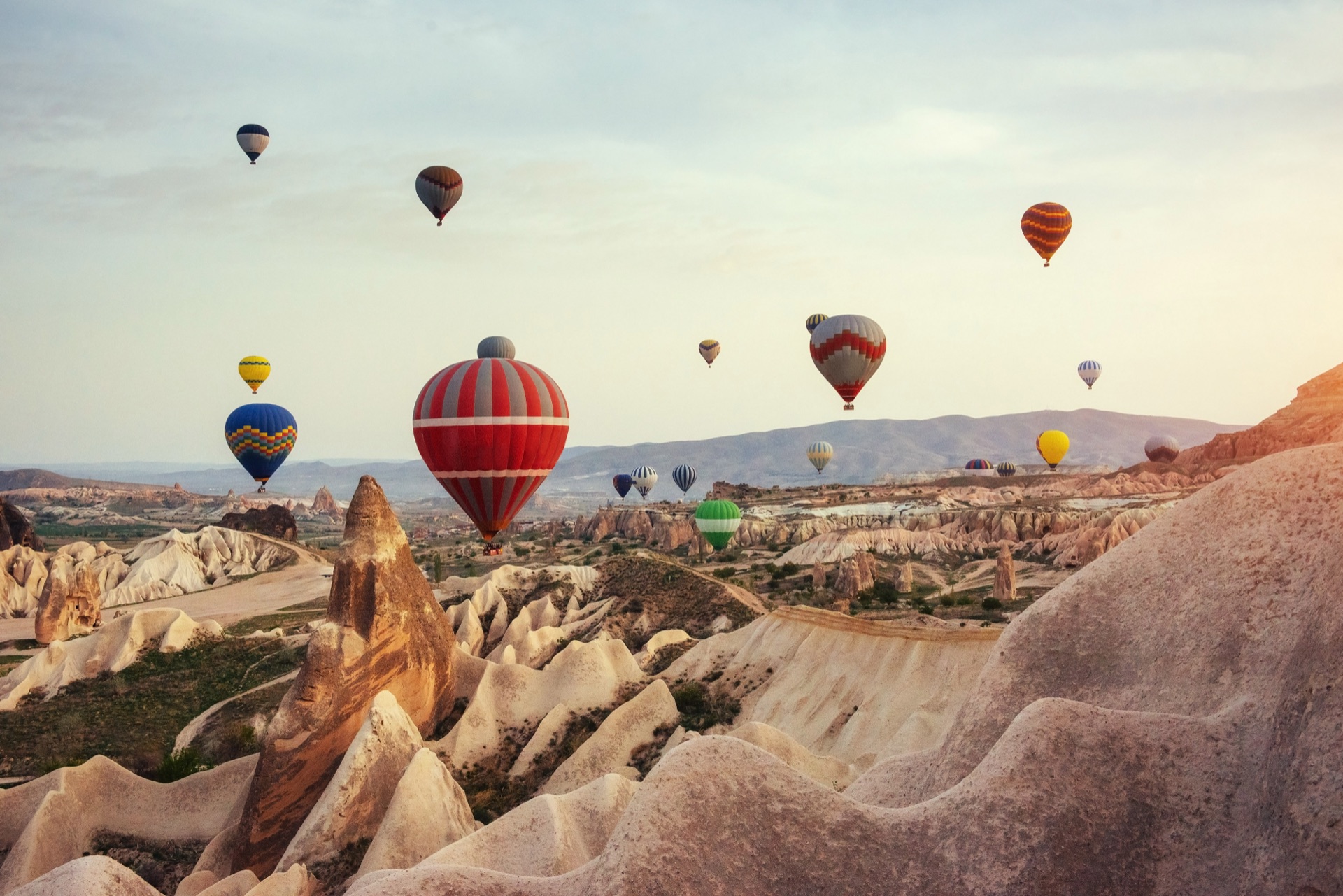
Cappadocia’s hot air balloons launch on roughly 75% of November mornings, about three days in four, compared with 90% in October and 50–55% in December. The Turkish civil aviation authority clears each launch at first light, and the call is made on surface wind and ground visibility rather than temperature. Cold air actually helps, because a colder atmosphere gives the envelope more lift. What grounds a November flight is valley-level wind, or fog sitting in the hollows after a wet night.
A single morning in Cappadocia carries a one-in-four chance of not flying in November, which is a poor bet for a family who came for the flight. Two mornings cut that to about one in sixteen. Three mornings, which is what we schedule on any November route where the flight matters, take it to about one in sixty-four. Two extra nights in a cave hotel cost far less than a missed flight. Our Cappadocia hot air balloon guide sets out how the flight is booked, what the basket holds and the minimum age operators apply.
A no-fly morning in November is not a lost day. The Göreme National Park and the Rock Sites of Cappadocia are a UNESCO World Heritage property. The underground cities, rock churches and Zelve valley all run whatever the wind is doing. Families who want the landscape rather than the flight often prefer the ground itinerary anyway, and families with children under six usually have to take it. How many nights the region needs is answered in how many days in Cappadocia, and the room types worth holding are covered in Cappadocia cave hotels.
Two dates on the Turkish calendar shape a November family trip, and neither appears in the usual guides. One is a week-long school break in the middle of the month; the other is 09:05 on the tenth. Neither closes a single museum. Both change what the country around you is doing on the day.
Turkish schools take a one-week autumn mid-term break in the second half of November. The Turkish Ministry of National Education sets the exact dates each year, so they shift, but the week always lands in the same part of the month. During it, domestic family travel jumps. Cappadocia cave hotels fill with Turkish families, the Istanbul–Kayseri and Istanbul–Nevşehir flights tighten, and the Göreme hot air balloon slots are the first thing to go. It is the only genuinely busy week in an otherwise quiet month. We check the published school calendar before quoting any mid-November trip. Then we either book the hotels and the flight earlier than usual, or move the Cappadocia nights a few days either side. Families who want the emptiest possible Turkey should aim at the first ten days or the last five.
At 09:05 on 10 November sirens sound across every Turkish city and the country observes a minute of silence for Atatürk, who died at that hour in 1938. Traffic halts on the bridges. Drivers get out and stand beside their cars. Pedestrians stop mid-pavement, and children stand still in school yards. It is the one thing on the Turkish calendar that no visitor forgets, and it happens only in November. Families who know it is coming find it moving. Families who do not know are simply confused for sixty seconds.
Two sites draw genuine crowds on 10 November. Dolmabahçe Palace in Istanbul is where Atatürk died, and the clock in his room still reads 09:05; queues there run long all day. Anıtkabir in Ankara takes hundreds of thousands of visitors. We keep both off the plan on that date and put Dolmabahçe on the day before or after, which costs nothing and avoids the only serious queue of the month.
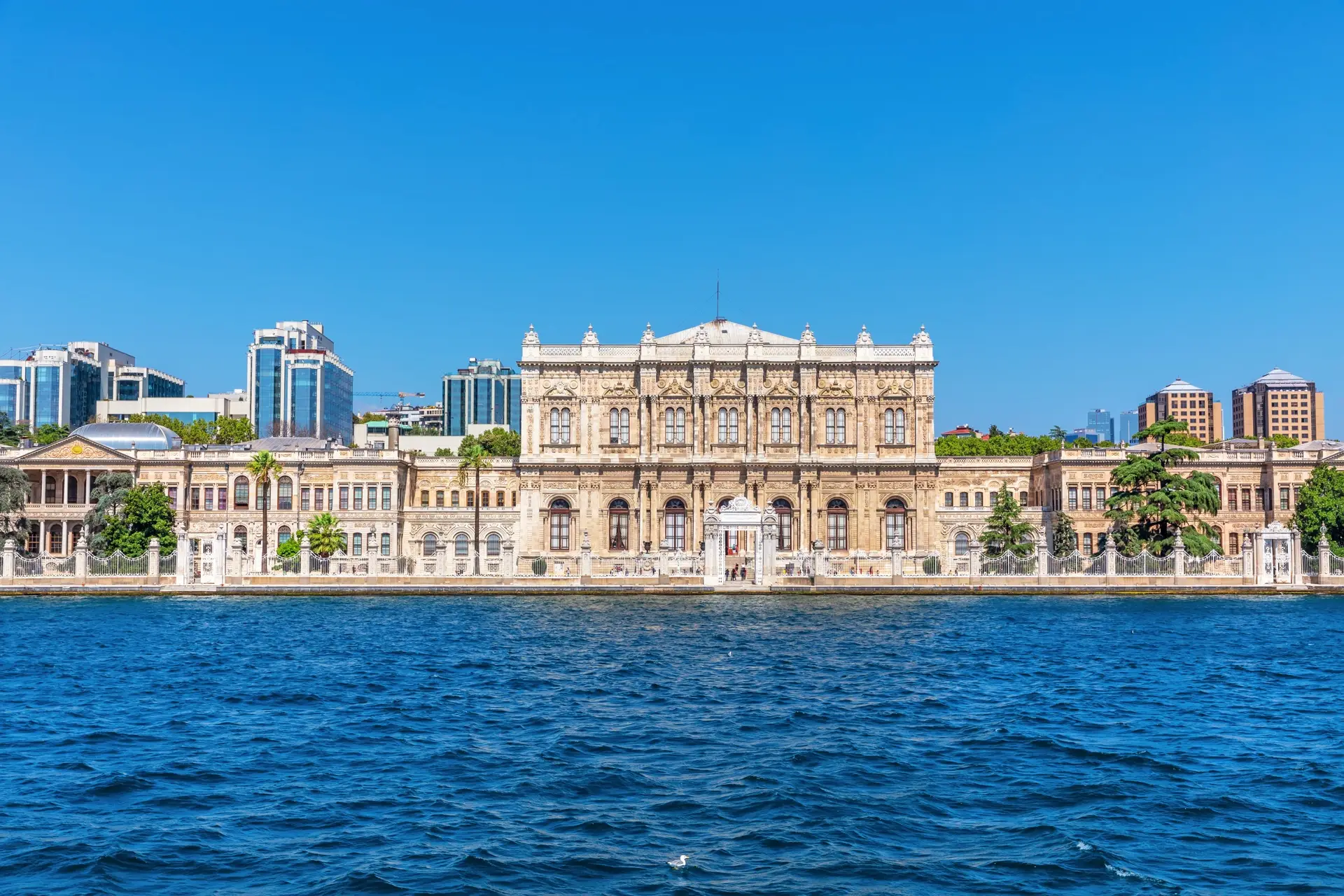
Between the end of October and mid-November the seasonal resort hotels in Belek, Kemer, Ölüdeniz and much of Kuşadası close for the winter. The boat-trip fleets come out of the water with them. What stays open is the part of the coast that was never about the beach: the old towns, the harbours and the ancient cities. At 21.4 °C those are better in November than in August, when the same sites are walked at 34 °C.

A family route in November puts its coastal leg around ancient sites and old towns rather than around a hotel with a pool. The hotel itself is chosen in a town, not on a resort strip. In the second half of the month we usually advise a family to drop the coast entirely and add those nights to Istanbul or Cappadocia.
Istanbul records about eleven rain days and 78.1 mm across November, which sounds worse than it plays. The rain is usually a spell of two or three hours rather than a full day, and the buildings a family came to see are all covered. A private route handles this by keeping one indoor block in reserve each day and moving it when the sky changes. What we control is the order of the day, not the weather.
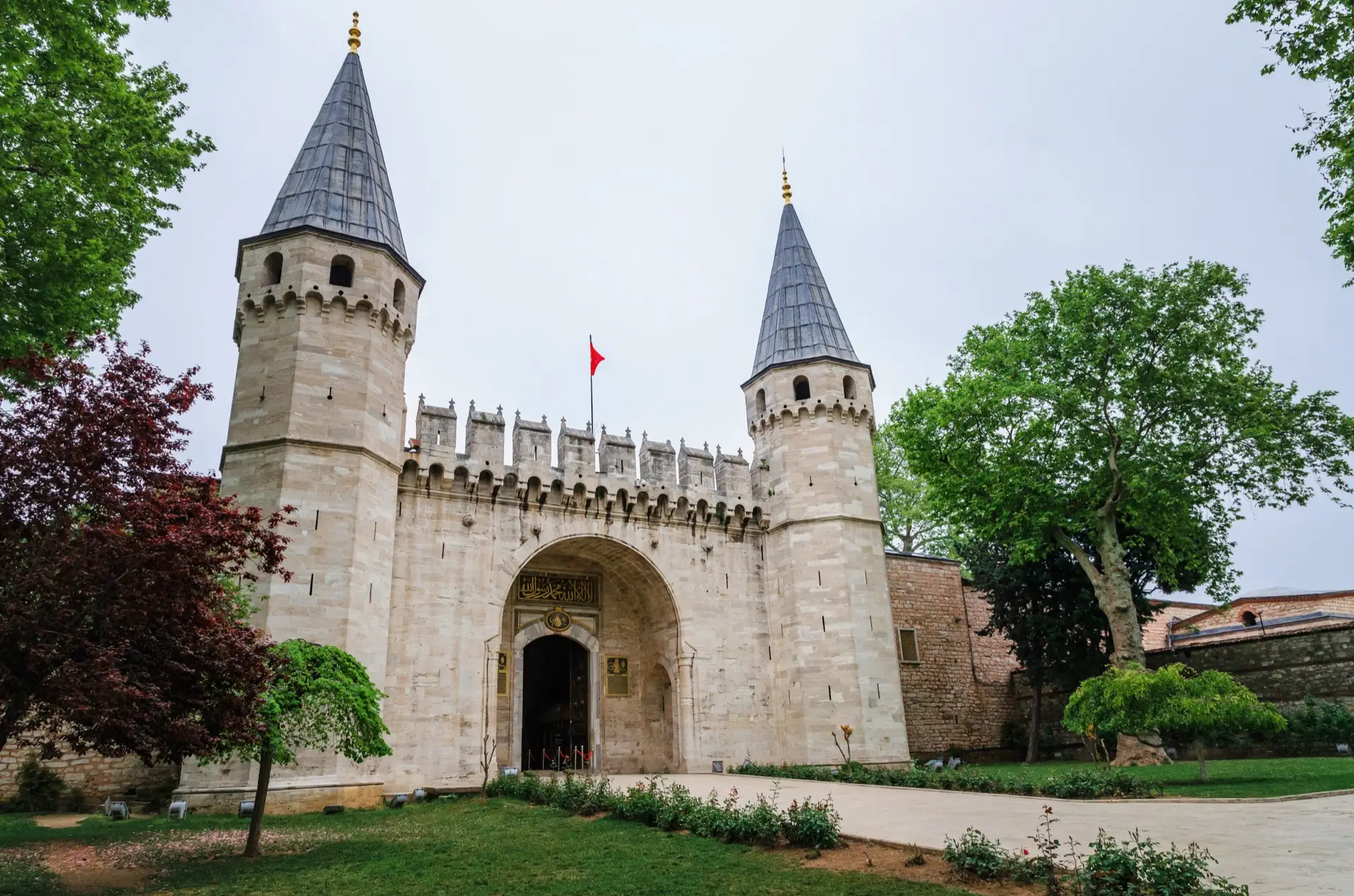
A Bosphorus cruise is the one thing families expect to lose to rain, and it is rarely the right thing to cancel. The boats run all winter, the saloons are heated and the light after a squall is the best of the year. What changes is the hour, not the plan. Our Bosphorus cruise guide explains the public and private options and which suits a cold afternoon. The same logic applies to the Galata district: Galata Tower is worth reaching on a clear hour, and the streets below it work in any weather.
Princes’ Islands day trips and long ferry legs are the exception. In a strong southwesterly the sea gets rough and some services are suspended, usually with a few hours of notice. We treat the islands as an optional add-on in November rather than a fixed day, and no itinerary depends on them. How many days the city really needs is set out in how many days in Istanbul.
Istanbul to Cappadocia is about nine hours by road against ninety minutes by air, and in November that gap decides the itinerary. With under ten hours of light, a five-hour drive leaves nothing on either end. The rule we apply to every November itinerary is simple: any leg over about four hours goes by air, and any leg under three hours can carry a stop on the way.
| Leg | By road | How we run it in November |
|---|---|---|
| Istanbul → Cappadocia | ~9 hours | Domestic flight, 1 h 25 m |
| Istanbul → Ephesus / Kuşadası | ~7 hours | Fly to İzmir, then 1 hour by road |
| Cappadocia → Antalya | ~8 hours | Flight, or an overnight stop at Konya |
| Ephesus → Pamukkale | ~3 hours | Drive, with the day starting at 09:00 |
| Pamukkale → Antalya | ~3.5 hours | Drive, arriving before dark |
| Kayseri airport → Göreme | ~1 hour | Private transfer on arrival |
| Istanbul → Gallipoli | ~4 hours | Overnight at Çanakkale, not a day trip |
A November road day between Istanbul and Cappadocia would begin in the dark, run through the two wettest hours of the afternoon and arrive after sunset, with nothing seen. The same journey by air costs about ninety minutes and hands the family an afternoon in the valleys. Domestic flights are included in our multi-city itineraries for exactly this reason. The full comparison of the two options, including the by-road route that some families genuinely prefer, is set out in our guide to driving via Ankara. Families who want the whole trip on the road have our 11-day fully by-road tour, built around the season’s shorter days. The Turkey road trip itinerary explains where the driving is worth it.
Morning fog at Nevşehir and Kayseri is the most common November flight delay, and it usually clears by mid-morning. We book the Cappadocia arrival on a midday flight rather than the first departure. And we never schedule a hot air balloon on the morning after a late-evening arrival. The buffer costs nothing and protects the one morning families came for.
Under ten hours of light, a route with fewer bases and more nights in each is the one that works. Shorter days make one-night stops expensive in time. The two extra Cappadocia mornings that protect the hot air balloon also have to come from somewhere. Prices below are per adult for the land arrangements, and children pay less on the sliding scale set out in our frequently asked questions.
Every November itinerary below is private, and the quoted price covers:
Two things are quoted separately, and we say so before you book rather than at the gate. Separately ticketed sections — the Topkapı Harem and the Ephesus Terrace Houses sell their own tickets and are priced on request. International flights and lunches are also outside the land price.
| Itinerary | Nights | From (per adult) | November fit |
|---|---|---|---|
| 5-day Istanbul | 4 | USD 1,435 | Weatherproof: every headline site is indoor |
| 5-day Istanbul & Cappadocia | 4 | USD 1,690 | Tight on hot air balloon mornings; best in early November |
| 7-day Istanbul, Cappadocia & Ephesus | 6 | USD 2,450 | The best-balanced November route |
| 8-day with Pamukkale | 7 | USD 2,790 | Thermal pools are at their best in cold air |
| 10-day Turkey | 9 | USD 3,320 | Three Cappadocia mornings without cutting elsewhere |
| 10-day with Antalya | 9 | USD 3,490 | Coast as ancient sites and old town, not beach |
| 12-day Turkey | 11 | USD 4,150 | Room to lose a wet morning and not notice |
| 14-day Turkey | 13 | USD 4,450 | The whole country while the coast is still open |
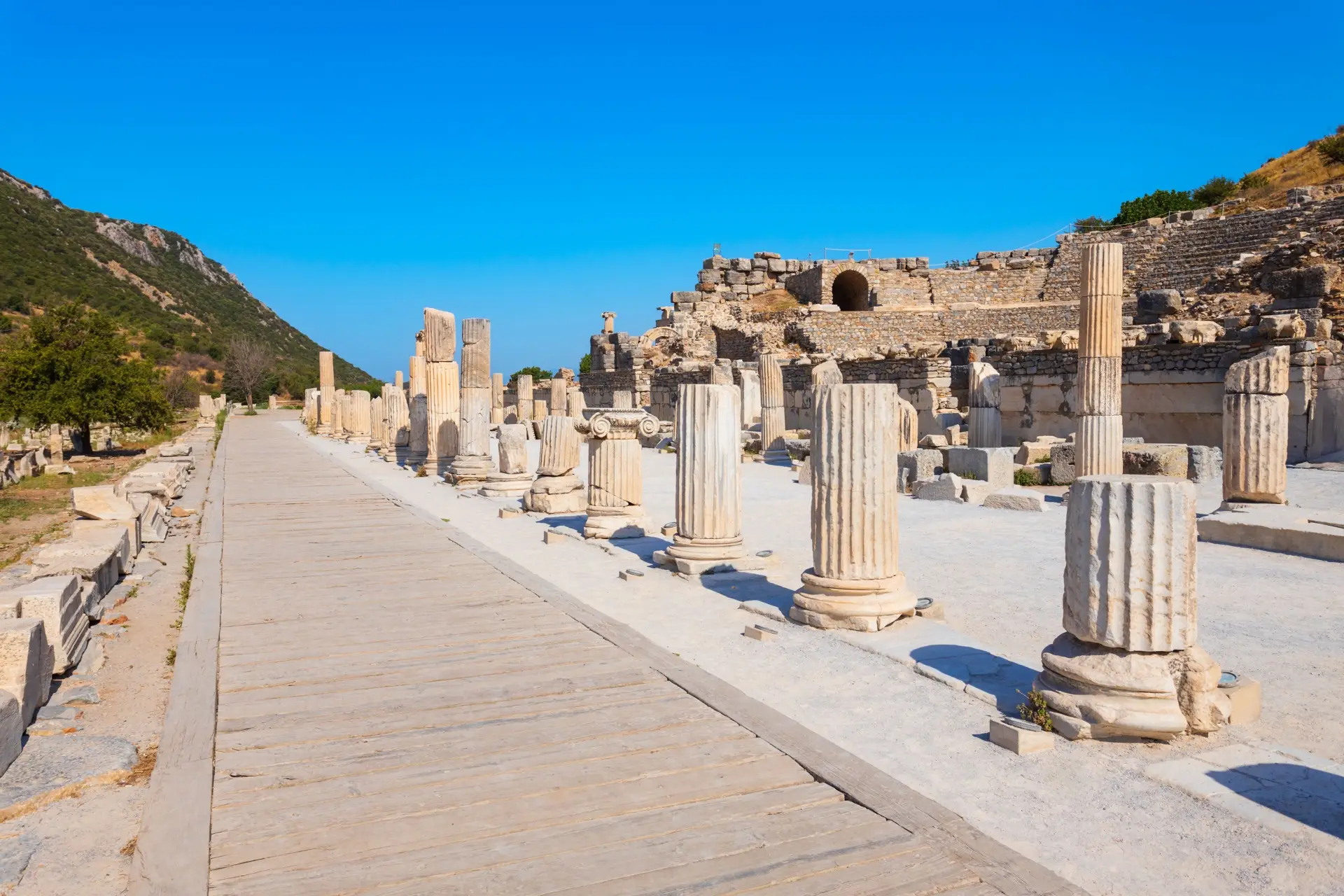
A short November trip is spent well by a family on Istanbul plus one other region. The 5-day Istanbul itinerary is the one route that is entirely weatherproof, because Hagia Sophia, Topkapı, the Cistern and both bazaars are covered. Adding Cappadocia at five days gives only one hot air balloon morning. In a 75% month that is a real gamble. If the flight is the reason for the trip, the 7-day route is the shortest plan that protects it. Our 5-day Turkey itinerary and 7-day Turkey itinerary guides set out both day by day.
At eight nights the arithmetic changes. There is room for three Cappadocia mornings, a Pamukkale day that uses the cold air rather than fighting it, and a spare half-day to absorb a wet Istanbul afternoon. The 8-day itinerary is the most requested November length for families with two children, and the 10-day tour adds the coast while it is still open. Compare the shapes in our 8-day and 10-day Turkey itinerary guides.
A full circuit taking in Istanbul, Cappadocia, Pamukkale, Ephesus and the Mediterranean is comfortable in November and awkward in December, when the coastal leg loses its point. The 12-day and 14-day tours carry enough slack that a single scrubbed hot air balloon morning or a rough ferry day changes nothing for the family. Our 2-week Turkey itinerary shows how the nights are distributed. Anything outside these shapes is handled through tailor-made Turkey tours.
Outside the Turkish school break, four to eight weeks is enough lead time for a private November itinerary with the hotels a family actually wants. Inside that one week the month behaves like high season, and the booking window moves out to ten or twelve. For a family it is the easiest month of the year to book late, and the easiest month to be caught out.
| What you are booking | Comfortable lead time |
|---|---|
| Private itinerary, standard November dates | 4–8 weeks |
| Named cave hotel room in Göreme | 6–10 weeks |
| Any date inside the Turkish school break week | 10–12 weeks |
| Hot air balloon flight | Confirmed with the itinerary, flown on the day |
| Last ten days of November | 3–4 weeks is usually enough |
What a November trip costs in total, including international flights and spending money, is broken down in our Turkey tour cost guide. If you are weighing a private itinerary against a group departure, the operator comparison sets out the difference.
A single November day can start at around 2 °C on a Cappadocian launch field and finish at 21 °C on an Antalya harbour front. That is a nineteen-degree range inside one itinerary, and it is why packing for the monthly average is the mistake families make most often. Layers are the only thing that covers both ends.
What is not needed: snow boots, thermal base layers or anything built for a genuine winter. November is cold in the mornings and mild by lunchtime. Our packing list goes to every family about two weeks before departure, with the specific mornings that need the warm layer marked against the dates.
October, November and December run Istanbul at 20.6 °C, 16.1 °C and 11.8 °C by day, with hot air balloon fly rates of 90%, 75% and 50–55%. Which of the three fits your family depends on one question: does the trip need the coast, the hot air balloon, or the empty museum?
| October | November | December | |
|---|---|---|---|
| Istanbul daytime high | 20.6 °C | 16.1 °C | 11.8 °C |
| Cappadocia daytime high | 18.3 °C | 11.8 °C | 6.2 °C |
| Antalya daytime high | 26.6 °C | 21.4 °C | 16.7 °C |
| Hot air balloon fly rate | ~90% | ~75% | 50–55% |
| Coastal hotels open | Yes | First half only | Town hotels only |
| Crowds | Moderate | Low | Lowest |
Choose October if the hot air balloon is the whole reason for the trip and the family wants to swim. Choose November if you want the same country with a quarter of the people, still with the coast available in the first two weeks. Choose December if the trip is Istanbul-led and the empty museum matters more than the flight. The month-by-month figures for all twelve sit in our best time to visit Turkey hub. The neighbouring months have their own guides: Turkey in October, Turkey in December and, at the other end of the shoulder season, Turkey in September.
November is a good time to visit Turkey for families who want the whole country on one route without the crowds. It is the last month before the coast drops out of most itineraries, and Istanbul, Cappadocia, Ephesus and Antalya all still work together. Istanbul averages 16.1 °C by day, Cappadocia’s hot air balloons fly on about 75% of mornings, and queues at the headline sites run at a fraction of the summer figure. The trade-offs are real: under ten hours of daylight, about eleven rain days in Istanbul, and most seasonal beach resorts closed by mid-month. Families whose trip is built around swimming or a guaranteed hot air balloon date are better served by October.
Turkey’s November weather splits sharply by region. Long-term station records give daytime highs of 16.1 °C in Istanbul, 11.8 °C in Cappadocia, 21.4 °C in Antalya, 18.7 °C at Ephesus and 17.6 °C at Pamukkale. Nights are colder than visitors expect: Cappadocia drops to 2.5 °C and frost before sunrise is normal after mid-month. Rainfall runs 78.1 mm across about eleven days in Istanbul and 34.3 mm in Cappadocia, the driest region on any standard route. Antalya records the highest monthly total at 127.7 mm but the fewest rain days, because its rain arrives in short heavy bursts rather than steady drizzle. The month-by-month figures for all twelve months are in our best time to visit Turkey hub.
Layers. One November day can start near 2.5 °C (37 °F) on a Cappadocian launch field and end at 21 °C (70 °F) in Antalya. Pack a hooded waterproof outer layer for every member of the family. Istanbul’s eleven rain days make it the one item that is not optional. Add two mid-layers, a fleece and a light padded jacket, worn together on a Cappadocia morning. Shoes with grip matter, because the marble of Ephesus and the travertines of Pamukkale are slick when wet. From mid-November a hat and gloves go in for the hot air balloon morning. Pack swimwear for the 36 °C thermal pools at Pamukkale, covered in our Pamukkale travel guide. Snow boots and thermal base layers are not needed.
In the first half of the month, yes, on the Mediterranean coast on a mild afternoon, while the Aegean runs a degree or two cooler. Antalya averages 21.4 °C (71 °F) by day, and the sea holds around 23 °C (73 °F) in the first week and near 21 °C (70 °F) in the last. Air at 21 °C feels cold when a child comes out, and the sun is gone by 17:40. Most beach resorts, pools and boat trips close by mid-month. An hour on a town beach and a quick swim in early November is normal. A beach holiday is not. Our Antalya travel guide covers the ancient sites and the old town that carry a November coastal day instead.
Roughly 75% of November mornings fly in Cappadocia, against about 90% in October and 50–55% in December. Flights are cleared at first light on the day and the decision turns on surface wind and visibility, not on cold. A single morning carries a one-in-four chance of not flying. So we schedule three Cappadocia mornings on any November route where the flight matters, which takes the risk of missing it to roughly one in sixty-four. A scrubbed flight is refunded or re-flown the next morning, so the cost is a lost sunrise rather than lost money. Cold itself is no obstacle: a colder atmosphere gives the envelope more lift. Full detail is in our Cappadocia hot air balloon guide.
Not for touring. Istanbul averages 16.1 °C (61 °F) by day and 9.9 °C (50 °F) at night in November. About eleven rain days bring 78.1 mm. Wind off the Bosphorus takes a few degrees off the thermometer, so children need a hooded waterproof and a fleece. The wet days are usually a spell of two or three hours rather than a washout. Every headline site in the city is covered: Hagia Sophia, the Basilica Cistern, Topkapı Palace, the Grand Bazaar and the Spice Bazaar. A private itinerary keeps one indoor block in reserve each day and moves it when the sky changes. Which sites carry a wet morning is set out in our Istanbul travel guide.
Our private November itineraries run USD 1,435–4,450 per adult for the land arrangements, from a 5-day Istanbul trip to a 14-day full circuit. The 7-day Istanbul, Cappadocia and Ephesus tour starts at USD 2,450 and the 10-day tour at USD 3,320. Every price includes a private vehicle with driver, a licensed local guide, hand-picked 4-5 star (boutique) hotels with family rooms, breakfasts and domestic flights, and every site named in your itinerary is paid for. Children are charged on a sliding scale by age. International flights, lunches and separately ticketed sections such as the Topkapı Harem are quoted apart; the full breakdown is in our Turkey tour cost guide.
Plan on seven days as the working minimum if Cappadocia and the hot air balloon are part of the trip, because November needs three mornings in the region rather than one. Five days is enough for Istanbul alone, which is the one fully weatherproof route in this month. Eight to ten days is the most requested November length for families, adding Ephesus, Pamukkale and a spare half-day to absorb a wet afternoon. Twelve to fourteen days covers the full circuit including the coast, which November is the last month to do comfortably. Short daylight is why we use fewer bases and more nights in each: at nine and a half hours a one-night stop costs most of its value in transfers.
Four to eight weeks is comfortable for most November dates, and the last ten days of the month can often be arranged in three. Two things need longer. A specific cave hotel room in Göreme wants six to ten weeks. Any date inside the Turkish school mid-term break in the second half of November wants ten to twelve, because domestic families fill Cappadocia and the internal flights that week. We check the published school calendar before quoting any mid-November trip. You will have a written day-by-day plan and a fixed quote within 24 hours of your enquiry, and you can start that at plan my trip.
A 25% deposit confirms your itinerary, hotels and guide, and it is non-refundable. The remaining 75% is paid on arrival in Istanbul, before the touring starts. Cancellation within 7 days of the start date is charged in full. Once a quote is accepted the price does not move, whatever happens to exchange rates before you travel. Turkey Family Tours is licensed by TURSAB, the Turkish travel agency association, under number 13538, which is what makes those terms enforceable. Nothing is charged before you have seen a written day-by-day itinerary, so the deposit is paid against a plan rather than against a placeholder. Full conditions are in our frequently asked questions, and what the total trip costs is broken down in our Turkey tour cost guide.
Rain in two-hour spells, a hot air balloon that flies three mornings in four, nine and a half hours of daylight, a coast that closes mid-month: all of it is manageable when someone can reorder the day. None of it is manageable on a fixed coach departure. That is why November is the month a private itinerary earns its keep for a family. We are a family-run, TURSAB-licensed operator (no 13538) based in Istanbul, and we run private Turkey tours for English-speaking families travelling with children.
Tell us your dates, how many of you are travelling and the ages of the children, and you will have a written day-by-day itinerary and a fixed quote within 24 hours. If November is not the right month once you have seen the numbers, we will say so and suggest one that is. Nothing is charged until you have approved the plan.
Get a Private Quote → · See all Turkey tour packages · Build a tailor-made route



Tell us about your family — we reply within 24 hours.